
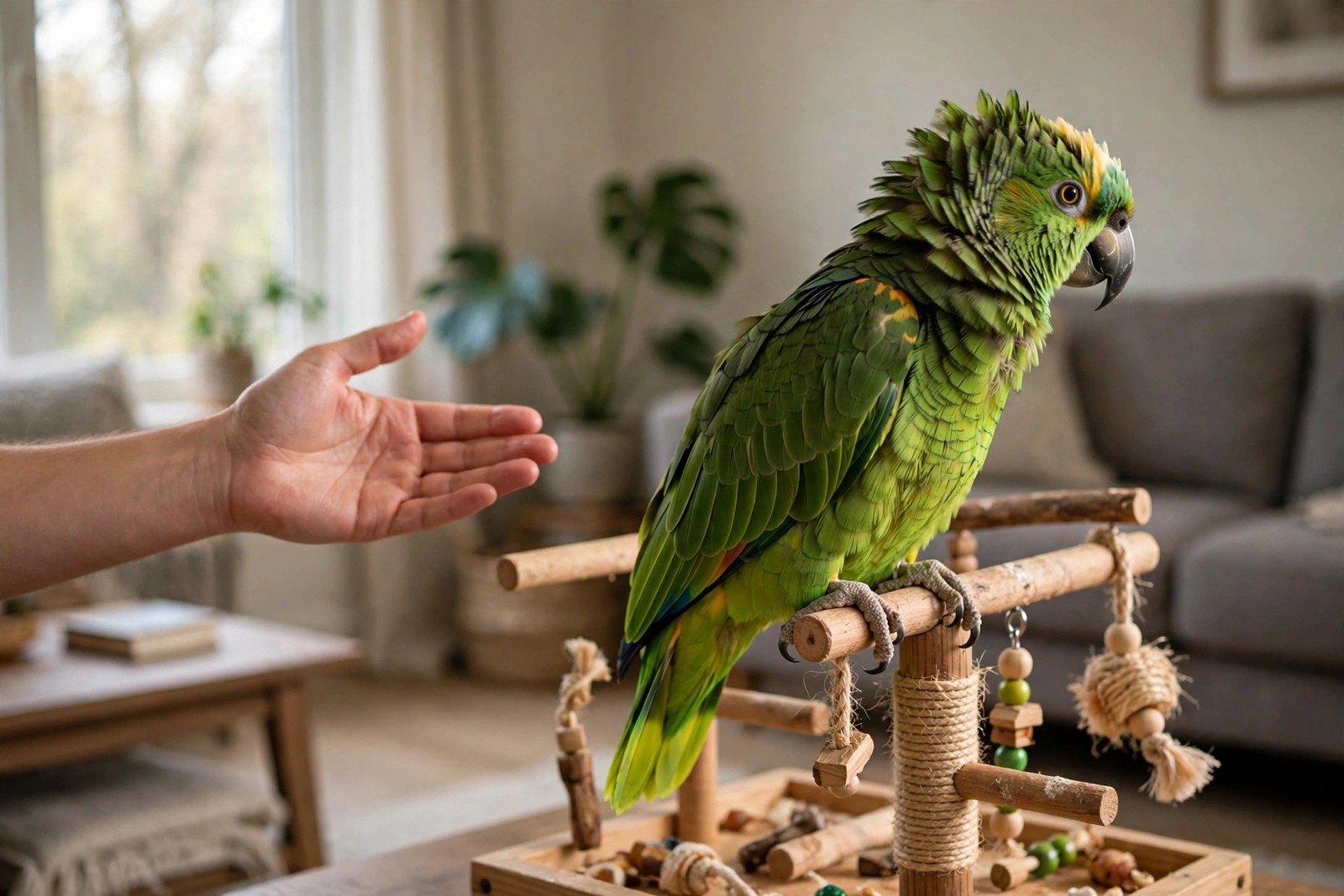
A parrot that bites when you reach to pick him up is almost never being "mean" — biting is communication, usually meaning fear, tiredness, overstimulation, or a plain "not right now." The bite is the last resort, not the first; most parrots warn clearly beforehand, and learning to read and respect those warnings is how the biting fades.
The Warning Signs You Might Be Missing
Before most bites, a parrot's body tells the story. Watch for eye pinning — pupils rapidly shrinking and expanding — paired with fluffed head and neck feathers, a stiff, leaning-away posture, or a beak held slightly open. Some birds fan their tails, raise their crest (in cockatoos and cockatiels), or start beaking the perch nervously. An Amazona that's already excited and displaying is especially likely to bite the hand that reaches in anyway. If your parrot leans away, sidesteps, or turns his back, he has answered your request — overriding that answer teaches him that polite signals don't work, so he has to skip straight to the beak.
Common Reasons Behind the Bite
Think about timing and context before blaming attitude:
- He doesn't want to stop. Being picked up often means fun ends — back to the cage, playstand time over. If biting reliably delays that, it gets reinforced.
- He's overstimulated. A parrot wound up from rough play, loud visitors, or a favorite person arriving may bite almost reflexively.
- He's tired, hormonal, or unwell. Less sleep, seasonal hormones, or pain can shorten any bird's fuse.
- The hand approach is scary. Reaching over the head, grabbing around the body instead of offering a step-up, or a stranger's unfamiliar hand can all trigger a defensive bite.
- Territorial moments. Reaching into the cage, near a favorite toy, or around a perceived "mate" (sometimes one favored person) raises the odds.
What to Do Instead, Step by Step
Go back to basics with a proper step-up: present your hand or a handheld perch just in front of his lower belly, say the cue once, and reward the step with a prized treat — a small piece of walnut or almond works for many larger parrots. Practice step-ups at neutral, nothing-is-ending moments, then put him right back where he was, so the cue stops predicting "fun's over." If the warning signs flash, pause, soften your voice, and try again in a few minutes rather than pushing through. Never punish a bite — no shouting, no cage banishment marathons. Dramatic reactions can actually reward the behavior with attention, and fear-based responses damage trust. If you do get bitten, stay as calm as you can, set the bird down somewhere safe and neutral, and review what the signals were telling you.
When Biting Needs Extra Help
Sudden biting from a previously gentle parrot, especially alongside eating changes, droppings that look different, fluffing up for long periods, or reduced vocalizing, deserves a prompt visit to an avian veterinarian — pain and illness are common hidden drivers. Persistent aggression around one person, one room, or breeding season is worth discussing with a certified parrot behavior consultant, who can watch your interactions and spot patterns you'd never see from inside them. Be especially careful letting children pick up a bird that's in a biting phase; supervise closely and let the child offer treats instead of hands.
One Set of Rules for the Whole Household
A parrot learns fastest when every person responds the same way — same step-up cue, same respect for a lean-away, same rule that warnings end the request. With KinsLe's Family Sharing, your parrot's per-pet care circle can share those handling notes and roles, so a partner, teenager, or visiting relative doesn't undo your progress by grabbing where you've learned to invite. Consistency turns "sometimes the hand is safe" into "the hand is always safe," and that's when biting loses its purpose. Through the Family Sharing view on KinsLe, your teenager can read exactly which step-up cue you use and how a lean-away ends the request for him.