
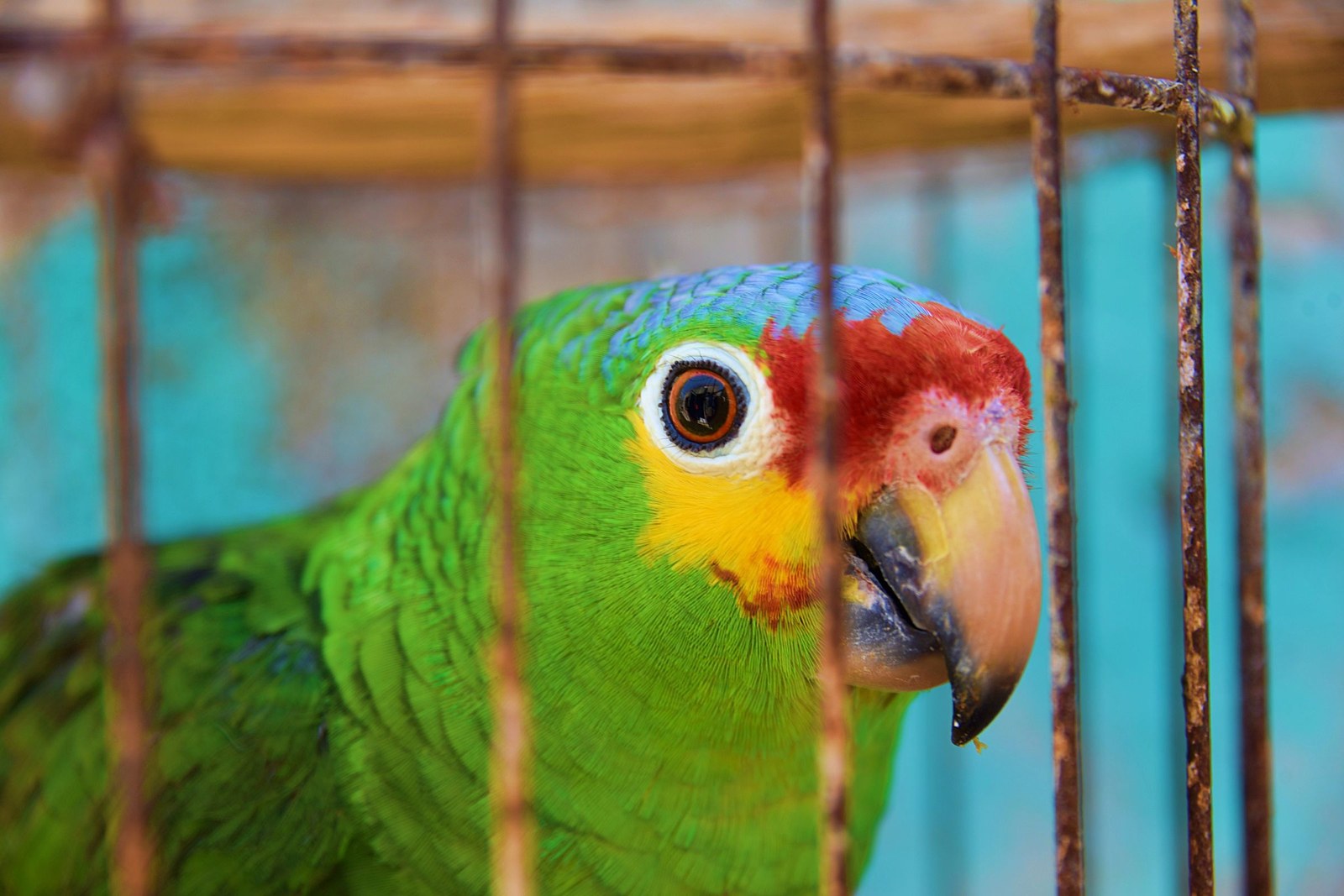
Your parrot guards its cage because, from its point of view, the cage is home territory worth defending — and lunging, biting at hands through the bars, or charging anyone who reaches inside is common, normal parrot behavior, not a sign of a bad bird. Territorial behavior often intensifies during hormonal seasons, when a bonded bird treats the cage as a nest site. The practical goal is not winning battles at the cage door; it is rearranging life so nobody needs to invade defended ground in the first place.
Why the Cage Is Different
Notice how many “aggressive” parrots step up sweetly once they are a few feet from the cage on a play stand. Location changes everything. Inside and on top of the cage, your bird is a homeowner; away from it, the same bird is a guest in neutral territory and far more relaxed. Species known for strong cage opinions include Amazons, macaws, and many conures, but even gentle species can object to a hand entering their space while they are eating, sleeping, or feeling hormonal. Respecting that distinction prevents most bites before they are ever offered.
Rearrange Chores and Handling
Do cage chores — food and water changes, paper swaps, toy rotation — while your bird is out playing elsewhere, and your hands stop being invaders. Teach a reliable step-up onto a hand-held perch or T-stand away from the cage, rewarded every time, and use that neutral perch for moves instead of reaching in and grabbing. If your bird must come out and will not step up, open the door and let it climb out on its own, then ask. Target training, where the bird follows a stick for a treat, gives you a cooperative way to move a territorial parrot without a confrontation.
Household Rules That Prevent Bites
Keep handling consistent among everyone at home: the same cues, the same step-up perch, the same rule that nobody reaches into the cage while the bird is inside. Reduce hormonal fuel by keeping sleep at ten to twelve hours, limiting stroking to the head and neck, and removing nest-like hideouts or shredding corners that encourage breeding mode. Warn visitors plainly that the cage is the bird's private space. Children especially should admire from a respectful distance rather than poking fingers through bars, which teaches biting and risks small fingers.
When Aggression Needs a Professional Eye
Get help if territorial behavior is new and sudden, spreads to all locations, or comes with appetite, droppings, or energy changes — pain can turn a tolerant bird defensive, and an avian vet should rule that out. A behavior consultant can help when bites are drawing blood regularly or when a hormonal season seems to last all year. Keep notes on timing, triggers, and who was handling the bird; patterns across weeks are exactly what professionals need, and they are hard to reconstruct from memory alone.
How KinsLe Helps
Territorial flare-ups often trace back to someone not knowing the rules, and KinsLe's Family Sharing solves that communication problem: as the per-pet care circle with defined roles, it keeps handling rules — chores only when the bird is out, step-ups on the neutral perch — visible to everyone who cares for your parrot. One shared playbook means no preventable bites from mixed messages. Visitors can look over the cage-door rules in the Family Sharing section on KinsLe beforehand, learning that chores happen while the bird is out and step-ups use a neutral perch.