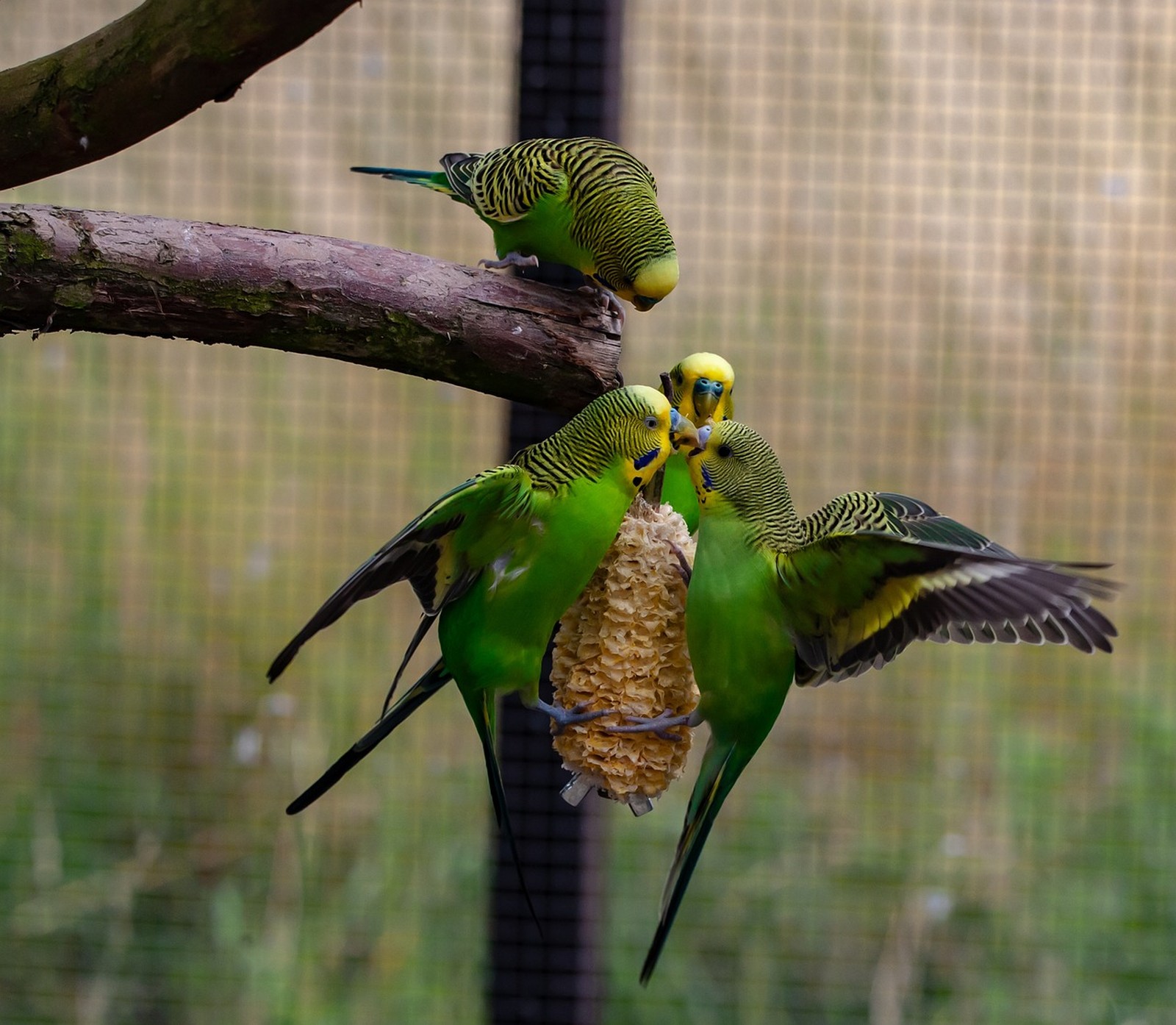
Budgies wear their mood openly once you know the vocabulary. Happiness in a budgie is not one gesture but a daily rotation of sound, movement, and relaxed body language, and it is best judged against your own bird's normal character — a naturally quiet hen will never perform like a showy young male, and she does not need to.
The Sounds of a Contented Budgie
A happy budgie fills the day with noise. Expect cheerful chattering, warbling, and soft singing, often directed at a favourite toy, a mirror-free companion, or you. Contented budgies also chatter quietly to themselves before a nap, a low muttering that signals deep relaxation. The sound to savour most is beak grinding: a soft, crackling shuffle of the beak as your bird grows drowsy in the evening. Like a cat's purr, it means your budgie feels completely safe. Sudden silence from a normally vocal bird, by contrast, is an early warning worth investigating.
Body Language That Says Relaxed
Look for feathers held smooth and sleek, not puffed up tight for long periods and not clamped flat in fear. Happy budgies bob their heads, especially males courting a favourite person or toy, and they bink around the cage with short, busy flights and wing stretches. The full stretch — one leg and the wing on the same side extended together — is a sign of a bird who feels secure. Relaxed birds also preen calmly, bathe enthusiastically when offered shallow water, grind through a cuttlebone or mineral block, and nap on one leg with the head tucked comfortably.
Appetite, Play, and Curiosity
A contented budgie eats keenly, works at foraging toys, shreds destructible toys with real enthusiasm, and investigates new objects after a cautious first look. Singing along when the household gets lively, joining in with music, and flying to a familiar hand for millet all point the same way. Play is a particularly honest signal: a stressed or unwell budgie conserves energy and ignores toys, while a happy one invents games, hangs upside down, and rings, pushes, or tosses whatever the cage offers.
The Opposite Picture, and When to Act
Unhappiness or illness looks like hours spent fluffed and still on one perch, tail bobbing with each breath, loss of appetite, watery or changed droppings, feather plucking, or repeated screaming and lunging at the bars. Any bird who sits on the cage floor, breathes with an open beak, or stops eating needs a veterinarian promptly — budgies hide illness well and decline fast. Compare each day with your bird's own cheerful baseline over a fortnight of ordinary days, and the small shifts in song, appetite, and play that mark a mood change become far easier to catch early. If a change leaves you unsure, KinsLe's Kimmy draws her answers to follow-up questions from this Answers library in KinsLe.