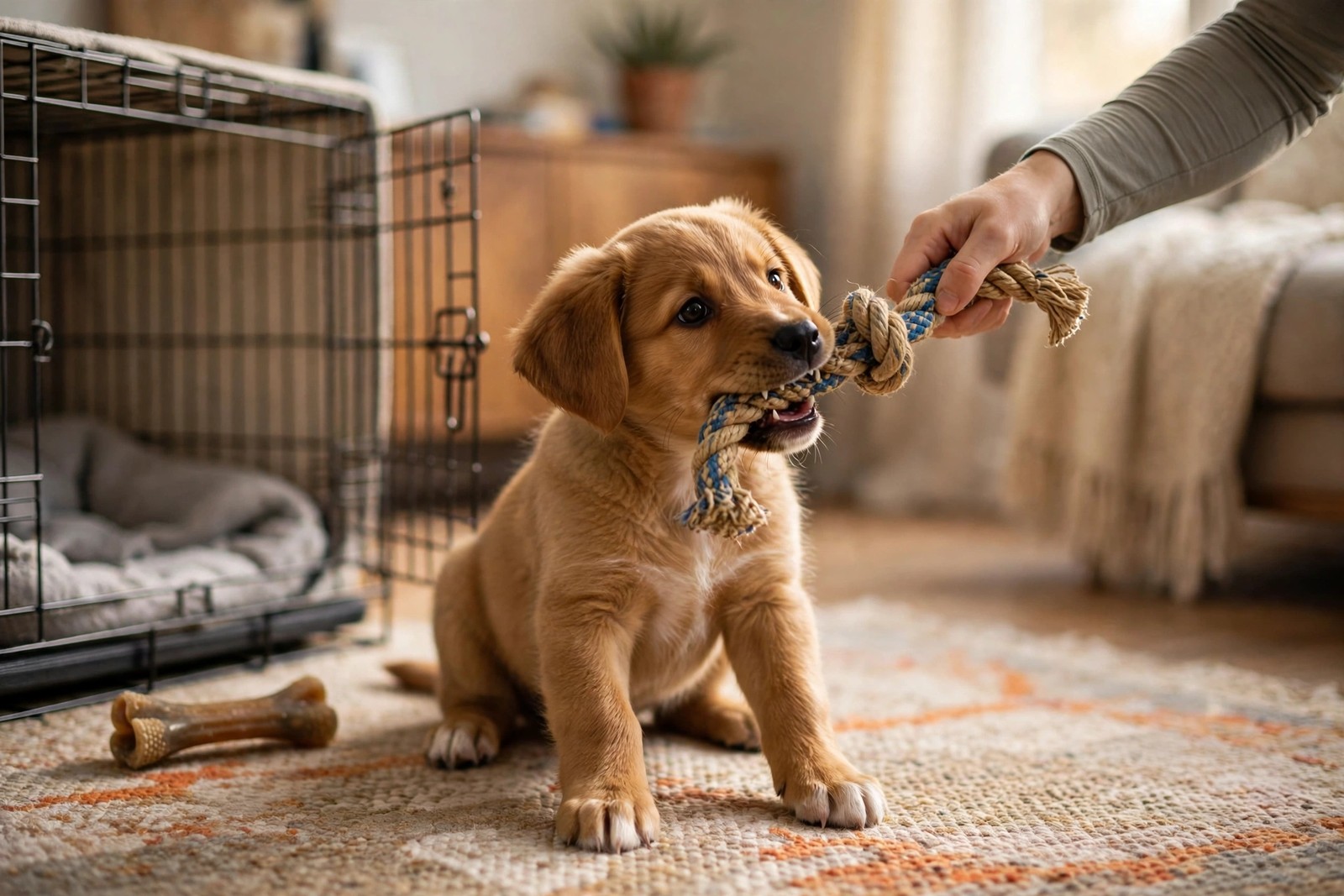
Both parts of this pattern are normal puppy, and both are teaching you something. Your puppy explores the world mouth-first, tests play on littermates and people alike, and has not yet learned how much pressure human skin can take. The enthusiastic biting is not defiance. It is unfinished bite inhibition, the gradual lesson that a fun game continues only while teeth stay gentle. The crying afterward is frustration that a wonderful game ended, not pain or guilt.
The Sequence That Teaches Softer Teeth
Use the same sequence every time, in the same calm order. Play with a toy between your hands and the puppy whenever you can, so teeth meet fabric first. The moment a bite lands too hard on skin or clothing, end the game briefly: say nothing dramatic, fold your arms, turn away, and become boring for a short pause. When the puppy settles, resume play and immediately offer the toy again, praising any bite that lands on the toy instead of you.
Repeat that cycle without anger and without pulling your hand away in a quick tug, which turns escape into a chase game. If mouthing ramps up again after two or three pauses, the session is over for now, not as a punishment but because arousal has outrun learning. Short games teach more than long ones. Build pauses into play before excitement peaks, ask for a brief sit or a sniff break on the floor, and restart at lower intensity so the puppy practices enjoying play while still able to listen.
Keep sleeves out of the lesson where you can. Loose, flapping fabric invites grabbing, so wear closer sleeves during play weeks, keep tug and fetch toys within arm's reach in every play room, and never wrestle with bare hands or wiggle fingers as bait.
Sleep Is the Hidden Half of Mouthing
Puppies typically need around 18 to 20 hours of sleep a day, spread across the night and frequent daytime naps, and a puppy kept awake through a busy household day often falls apart by evening. The overtired puppy mouths hardest, grabs sleeves, barks at small frustrations, and cannot take in the bite lesson at all. Watch for the glazed, frantic zoom that follows a long awake stretch. That puppy does not need more play. That puppy needs a quiet pen or crate, a safe chew, low light, and a real nap.
Protect naps the way you protect meals. Give the puppy a rest spot away from foot traffic, let sleeping puppies lie undisturbed even when guests want a cuddle, and plan active play for after a nap rather than stretching a tired puppy toward bedtime. Many families see mouthing drop within days once sleep is guarded, before any other change has time to work.
Answering the Crying Without Restarting the Game
When play stops and the crying starts, your puppy is protesting the end of the best part of the day. Do not restart at full intensity to quiet the noise, or crying becomes the button that relaunches the game. Offer a calm settle routine instead: a slow walk to the mat, a long-lasting safe chew or a food puzzle, quiet praise for lying down, and low, dull company while excitement drains away. If crying continues in a pen, wait for a brief quiet moment before returning, so release follows calm rather than noise.
Consistency across people decides how fast this works. In the household plan, Alex runs the bite-pause sequence during morning play, Jordan guards the midday nap and logs wake times, and everyone writes down the same settle routine for evenings instead of improvising. A puppy handled by four different rule sets learns none of them well.
That single routine holds together when KinsLe displays it for the whole home, since the Care Teams duties assign play sessions, nap cover, and evening settles to named helpers with completed tasks marked for all to see.