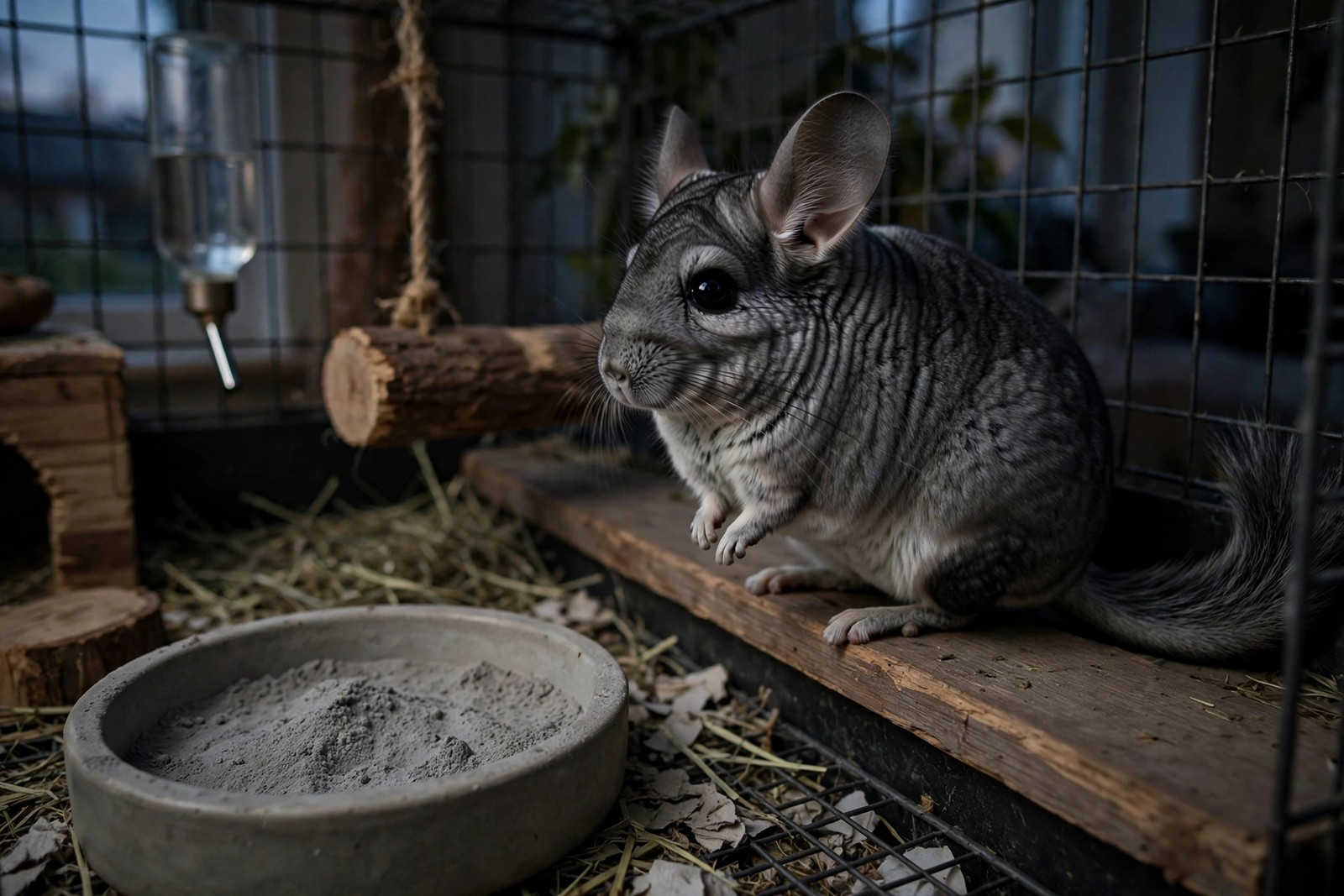
If your chinchilla sleeps like a stone all day and then ricochets around the cage at midnight, nothing has gone wrong. You are living with a crepuscular, largely nocturnal animal whose whole body is set to a dusk-to-dawn timetable. The mistake owners make is treating that timetable as a fault to be trained away. The better move is to build the room, the routine, and your expectations around the clock your chinchilla actually keeps.
A Clock Set by the Wild
Chinchillas come from high, rocky country where the day brings two dangers: heat, which their extremely dense fur handles badly, and predators hunting by sight. Their answer is to spend daylight hours asleep in cool crevices and emerge at dusk, staying active through the night and into the early morning, when the air is cold and the light is low. Their large eyes and ears, their bursts of speed, and their habit of freezing and listening all belong to that shift. In your home the pattern survives intact: a healthy chinchilla is typically dull and sleepy at midday, stirs in the evening, and does its eating, wheel running, wall-bouncing, and socialising while you are winding down or asleep. Breeders and experienced keepers judge a chinchilla's health by its nighttime self, not by how it seems at noon.
What Quiet Daytime Housing Actually Means
Because daytime is sleep time, cage placement matters more for a chinchilla than for a day-active pet. Put the cage in the quietest, dimmest room you reasonably can, away from a television, a busy hallway, and direct sun through a window — sunlight on the cage is a heat risk as well as a disturbance, and chinchillas overheat easily. Keep daytime noise and handling to a minimum: children and visitors should not haul a sleeping chinchilla out for a cuddle, because repeatedly broken sleep is a genuine stress for this species, and a startled chinchilla may bite or shed a patch of fur in a sudden release called a fur slip. A solid hide house inside the cage, where the animal can sleep in darkness even in a lit room, is not a luxury for a chinchilla; it is the bedroom.
Then move your care to the evening, when your chinchilla is awake for it. Offer the main hay top-up and pellets toward dusk, run supervised out-of-cage play in a chinchilla-proofed room in the evening, and give dust baths in the evening too, a few times a week, removing the bath afterwards so the dust is not lived in. Expect noise at night — a wheel, bouncing, and barking calls are normal chinchilla nightlife — and think about that before placing the cage in a light sleeper's bedroom.
When the Pattern Itself Is the Warning
Learn your chinchilla's normal night: the hours it runs, eats, and produces plenty of dry droppings. Two changes deserve action. A chinchilla who becomes restless and active through the day may be disturbed by something new — building noise, a changed room routine, heat — or may be uncomfortable, so check the room first and watch appetite closely. The more serious change is the opposite one: a chinchilla who goes quiet at night as well, sits hunched, stops eating hay, or produces few droppings may be seriously unwell, because this species hides illness and a stopped gut becomes dangerous quickly. That animal needs a veterinarian experienced with exotic pets the same day, not a few days of waiting to see.
Living well with a nocturnal pet is mostly a scheduling agreement, and agreements hold when everyone in the house knows them. KinsLe's Care Teams helps your household keep that agreement: the evening feed, the dust bath nights, and the supervised play session can be assigned to named people and marked complete with a timestamp, so your chinchilla's care lands in its active hours instead of whenever someone happens to remember at midday.