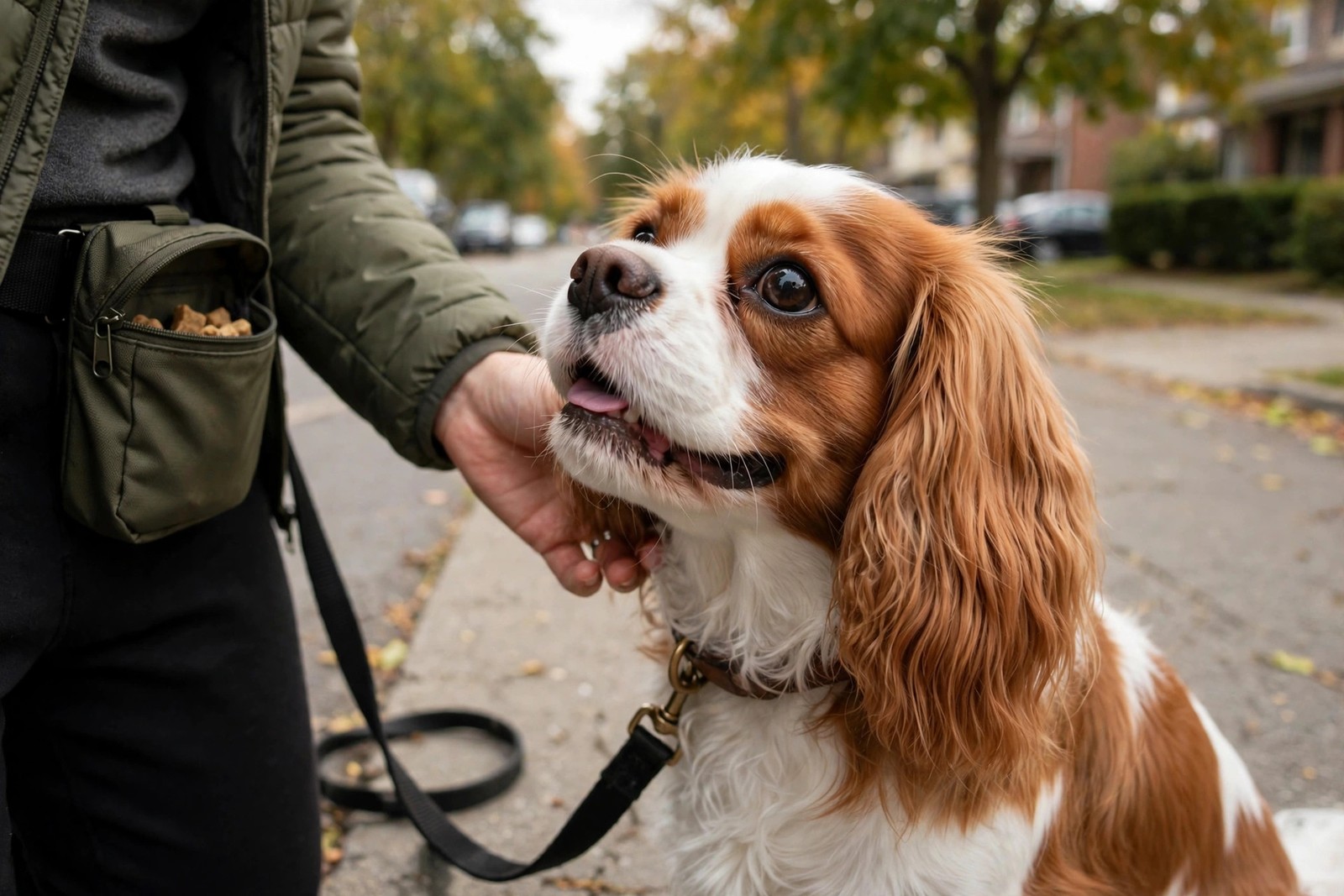
Yes — of the popular companion breeds, the Cavalier King Charles Spaniel is one of the easiest for a first-time owner to train. This is a dog bred for centuries to live closely with people, read their moods, and stay near them. That history shows up as a real desire to please, a soft and forgiving temperament, and very little of the independence or suspicion that makes some breeds a project for beginners.
What Trains Quickly
Most Cavaliers pick up the early lessons fast. Sit, down, a cheerful recall indoors, and polite greetings usually come together within a few weeks of short daily sessions, because the reward this breed values most — your delighted attention — is always available. Five minutes, three or four times a day, beats one long weekend session. Use tiny, soft treats and warm praise, mark the right behaviour the instant it happens, and end while your dog is still enjoying the game. Cavaliers also tend to walk kindly on a leash once they learn that pulling ends the fun, and their moderate energy means a trained behaviour is not constantly being undone by a dog who is bouncing off the walls.
Where First-Time Owners Get Stuck
House-training is the honest exception. Small companion breeds often take longer to become fully reliable, and Cavaliers are famously reluctant to go out in rain or cold, so accidents can reappear in bad weather long after you thought the job was done. Keep a strict schedule — out on waking, after meals, after play, and before bed — and reward outdoor success immediately rather than punishing indoor mistakes you find later.
The second trap is tone. Cavaliers are sensitive readers of facial expression and voice. A frustrated sigh or a sharp correction that another breed would shrug off can make a Cavalier anxious and less willing to try. If a session goes wrong, it is almost always the session that was too long, too difficult, or too distracting — make it easier, not louder.
Finally, plan for clinginess. A breed this people-focused can slide into separation distress if it is never taught to settle alone. Practise brief, boring departures from the first week, reward calm behaviour behind a baby gate, and build alone time gradually.
A Sensible First Month
Week one is about routine: meals, toilet trips, sleep, and two or three micro-sessions a day on name recognition and sit. Weeks two and three add recall games indoors, short leash walks, and calm handling of ears, paws, and teeth — important in a breed whose long ears need regular checking. By week four most owners can add a beginner group class, which suits Cavaliers well because they are generally sociable with other dogs and not easily overwhelmed. Throughout, everyone in the house should use identical cue words; a Cavalier taught 'come' by one person and 'here' by another is not stubborn, just confused.
KinsLe's Care Teams keeps that first month on track by letting the household assign who handles the morning toilet trip, the lunchtime session, and the evening walk — so a beginner's Cavalier gets the same cues, rewards, and routine from every person, every day.