
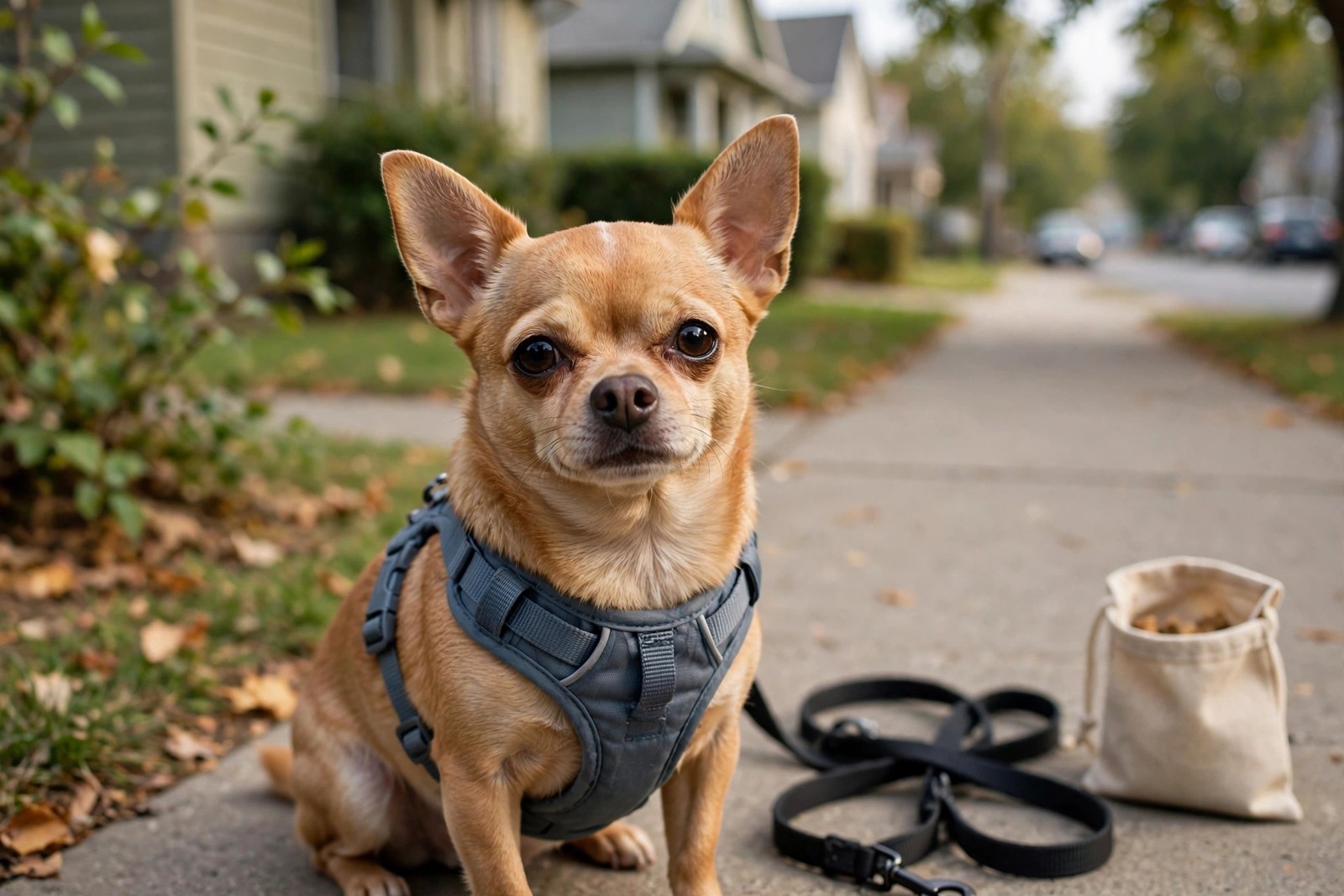
Honestly, Chihuahuas are one of the weaker breed matches for households with young children — not because they are spiteful, but because they are tiny, fragile, and quick to defend themselves when they feel trapped or hurt. Understanding that combination matters more than the hopeful idea that a small dog must automatically suit small people.
The Fragility Problem
An adult Chihuahua commonly weighs between three and six pounds. Their leg bones are slender, many have a soft spot on the skull that never fully closes, and their joints and trachea are easily damaged. Now picture ordinary toddler behaviour: being scooped up and dropped, hugged around the neck, fallen on during a stumble, or carried and squeezed. Injuries that a sturdier breed would walk away from — fractures, head trauma, a collapsed trachea — can be life-changing for a Chihuahua. This is why many breeders and rescues simply will not place Chihuahuas in homes with children under about eight to ten years old, and that policy reflects experience, not prejudice.
Why Snapping Enters the Picture
Chihuahuas bond intensely, often to one person, and they are alert, easily startled dogs. A child who rushes in, looms over the dog, grabs for it, or disturbs it while it is sleeping under a blanket triggers the same sequence: the dog freezes, growls, and — if the warnings are ignored or the dog cannot escape — snaps. Because the dog is small, adults often laugh off the early warnings instead of treating them as the clear communication they are, and the dog learns that only biting works. Add resource guarding of a favourite lap or person, which this breed is prone to, and a child reaching toward the owner's lap becomes a predictable flashpoint.
When It Can Work Well
With older, calm, dog-savvy children, the picture changes completely. A child of ten or twelve who sits on the floor and lets the dog approach, strokes the chest rather than reaching over the head, never picks the dog up without permission, and respects a retreat to a crate or bed can have a devoted, playful, long-lived companion. Chihuahuas are clever and enjoy trick training, gentle games, and being included — carried in arms is not the only way to be close, and floor-level play, short walks, and training sessions build the bond safely.
Non-negotiable household rules if you go ahead: no child carries the dog, ever; the dog is never woken by grabbing hands under blankets; food, chews, and the favourite person's lap are managed, not contested; and an adult is present for all interaction until the child has proved, over months, that the rules are habits. Choose an adult dog with a known, steady temperament over a puppy if children visit often, and socialise any Chihuahua early so visiting children are not a novel threat.
KinsLe's Care Teams lets parents make that supervision explicit, assigning which adult is on duty for dog-and-child time and which safe jobs older children own — so a fragile Chihuahua's rules survive busy days, babysitters, and visiting cousins.