
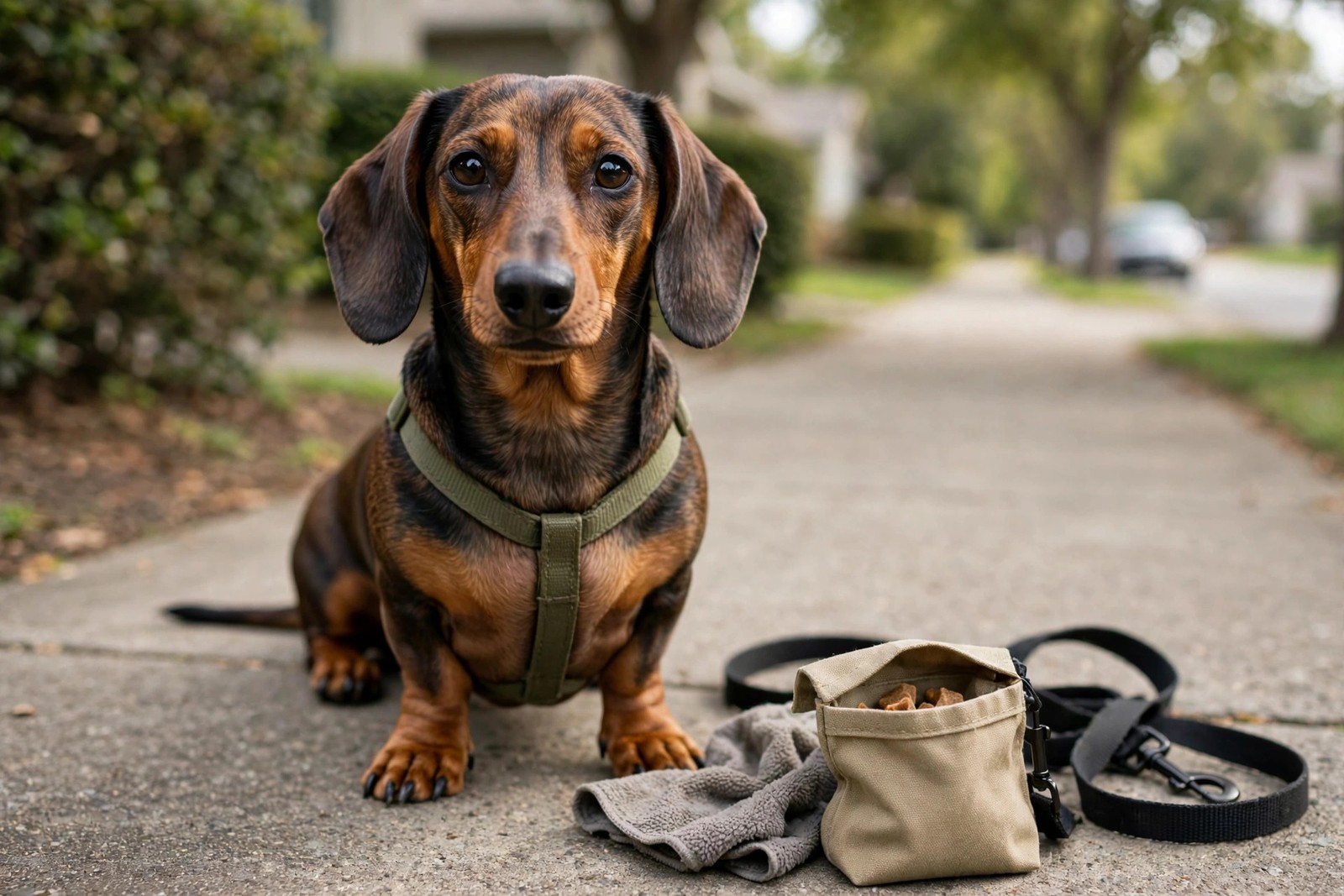
Dachshunds can be devoted, entertaining family dogs — for the right children. The deciding factors are unusual for a small breed: a genuinely vulnerable spine, and a bold hunting-dog temperament packed into a low, long body. Households that respect both usually do well. Households with toddlers usually struggle, and sometimes end with an injured dog or a bitten child.
The Spine Changes Everything
A Dachshund's long back is its defining weakness. Intervertebral disc disease is common in the breed, and everyday handling mistakes load exactly the wrong forces onto that spine: a child picking the dog up by the front legs or under the chest with the rear end dangling, a drop from a child's arms, jumping off a sofa or bed, or being wrestled and twisted in play. One bad drop may not paralyse a dog, but it can trigger a painful disc episode requiring strict crate rest or surgery. The handling rule is specific and non-negotiable: scoop with one hand under the chest and one supporting the rear, keep the back level, and put the dog down the same way. Children who cannot reliably do that — which means most under-sevens — should not lift the dog at all. Interaction happens on the floor, where the Dachshund is safest and happiest anyway. Ramps beside sofas and beds, and a household ban on stair-charging and furniture launches, protect the dog for life, not just in childhood.
Temperament: Bold, Loyal, and Not a Pushover
Dachshunds were bred to go underground after badgers, and it shows: they are brave, tenacious, vocal, and inclined to make their own decisions. With children they know, many are affectionate clowns who adore games and burrowing under blankets beside their favourite person. But they are less tolerant of being startled, grabbed, teased, or disturbed while asleep than softer breeds, and a Dachshund in back pain may snap with little warning. Food and toy guarding also appear often enough to plan around: children should trade, never snatch, and never corner the dog over a chew.
The Age Match, Honestly
Toddlers are the hard case — unpredictable movement, grabbing hands, falls onto the dog, and zero ability to follow the lifting rule. If your heart is set on a Dachshund with a baby or toddler at home, expect gates and supervision to carry the relationship for years. From about eight upward, children who are taught floor-level play, correct support when lifting is allowed, and respect for a sleeping dog's space usually thrive with this breed, and Dachshunds repay them with fierce loyalty and a real sense of humour. Whichever ages you have, supervise early interactions, socialise the puppy to child noises and movements gradually, and choose a breeder or rescue that has raised the dog around sensible children if possible.
KinsLe's Care Teams keeps those protections consistent by assigning which adult supervises dog-and-child time and recording the back-safe handling rules where sitters, grandparents, and older children will all see and follow them.