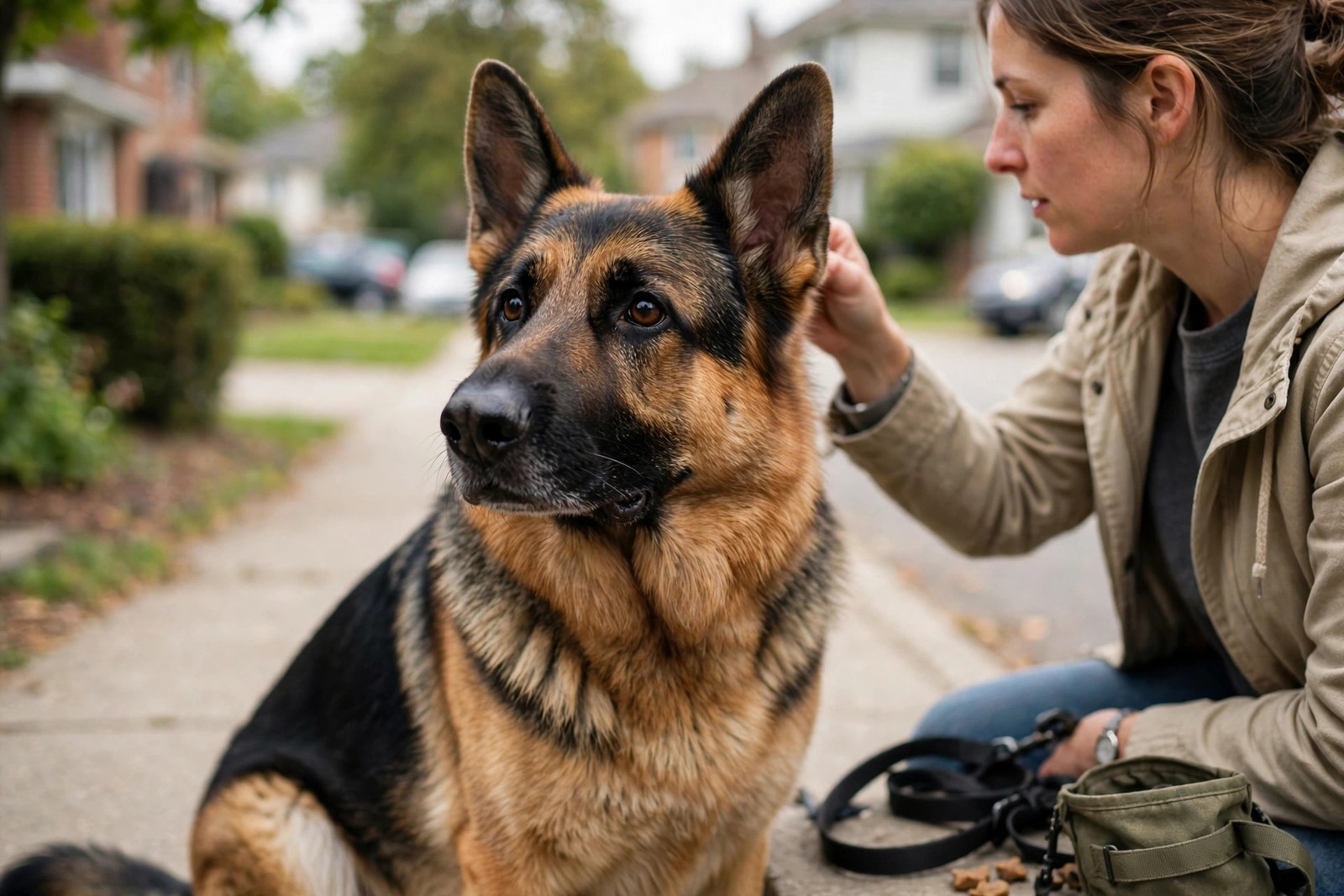
A German Shepherd raised well in a family is often the dog childhood memories are made of: loyal, watchful, playful, and deeply bonded to its children. But the breed earns that reputation only under conditions, and honest advice has to name them — because the same traits that make a Shepherd protective of your children can become liabilities around other people's.
The Case For
Shepherds bond intensely with their household and typically include children at the centre of that loyalty. They are playful for hours, clever enough for the games and trick-training older children love to teach, and steady enough — once mature and trained — to be a calm presence rather than a chaotic one. Many Shepherds seem to appoint themselves guardians of the youngest family members, positioning themselves nearby at the park, the gate, and the bedtime routine. For active families with school-age children, that partnership is a genuine joy.
Size, Strength, and Boisterous Play
A Shepherd stands tall and weighs as much as a small adult, with a adolescent phase — roughly six to eighteen months — that combines full size with minimal self-control. In that window, ordinary enthusiasm knocks toddlers over, a swinging tail clears faces at exactly toddler height, and mouthy, herding-style play — chasing running children, nipping at heels in excitement — frightens small children even when no harm is meant. Running, shrieking play and Shepherd puppies should be actively managed, not left to sort themselves out, and no child should be walking or restraining this breed on a leash until they are genuinely strong enough — which usually means the teenage years.
Guarding: The Point Most Families Miss
Shepherds were shaped to notice strangers and act on suspicion. In a family home that instinct has specific consequences: your children's friends are, to the dog, unfamiliar children arriving loudly, running, wrestling, and screaming in play — a scene a guarding breed can misread completely. A Shepherd that is wonderful with your own children may bark at, crowd, or attempt to intervene with visitors, and playdates are the highest-risk routine event in a Shepherd household. Manage it deliberately: the dog is settled behind a gate or in another room during boisterous visits, introductions to regular friends are calm and supervised, and children are taught never to run from or tease the dog.
The Socialisation Debt Must Be Paid Early
Everything above traces back to the first months. A Shepherd puppy needs extensive, positive exposure to children of different ages, sizes, and energy levels — hearing them, watching them play at a comfortable distance, meeting calm ones — well before adolescence, alongside ongoing obedience training and enough daily work that the dog is settled rather than simmering. Skip that investment and the breed's caution hardens into reactivity. Families unwilling to do this work should choose a naturally more forgiving breed; families who do it raise one of the finest family dogs there is.
KinsLe's Care Teams helps Shepherd households hold that standard, assigning who supervises playdates and dog-and-child time, who covers the daily exercise and training the dog needs to stay settled, and keeping the visitor rules where every adult can see them.