
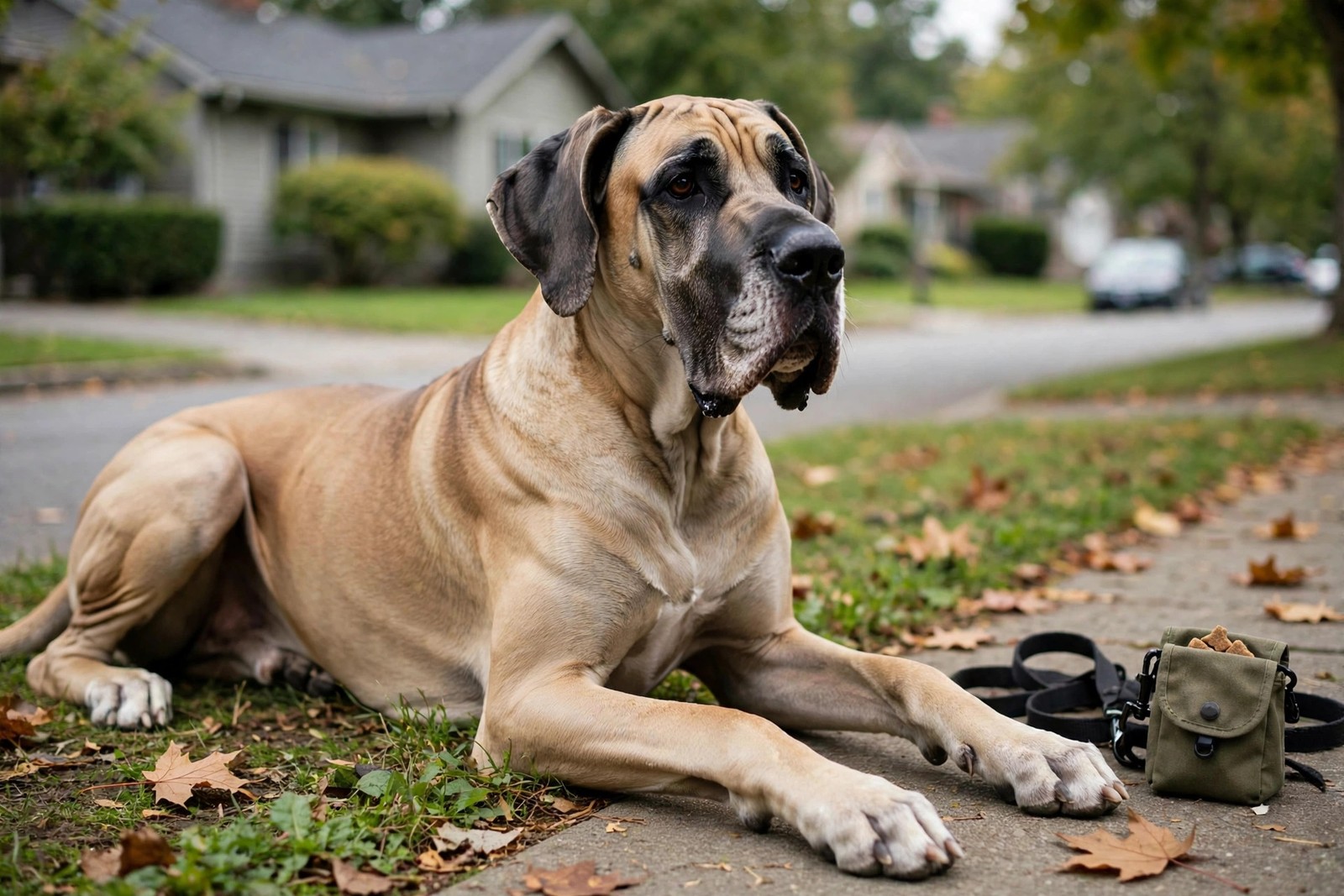
A Great Dane's mind is not the problem for a first-time owner — its body is. Danes are gentle, sensitive, eager-to-please dogs who learn basic cues willingly. But every training question in this breed is asked against a countdown: the sweet puppy you bring home may gain several pounds a week and stand taller than your kitchen table within the year. Whatever that dog has not learned while it is small, you will be trying to teach at well over a hundred pounds.
What the Training Itself Feels Like
Danes respond best to exactly what beginners are usually taught: short, positive, food-rewarded sessions with calm praise. They are not a breed that needs drilling, and they do not thrive on pressure — a Dane corrected harshly is liable to become anxious and shut down, which in a giant dog looks like a statue that will not move. Most learn sit, down, wait, and a household routine readily, enjoy learning, and want to be near their person while doing it. Attention spans are moderate rather than driven, so five good minutes twice a day accomplishes more than ambitious weekend projects, and that rhythm genuinely suits a novice.
The Non-Negotiable Early List
Priorities differ sharply from a small breed's, because the failure modes are physical. Loose-leash walking is lesson one, taught from the first week: a pulling Dane cannot be held by strength, only by habit, and the habit must exist before the muscle does. Calm greetings come second — a Dane that jumps up in welcome can injure a child or an elderly visitor without a trace of malice, so four-paws-down is rewarded from puppyhood and visitors are briefed. Third is settling and being handled: a dog this size must accept nail care, ear checks, vet restraint, and being moved off furniture it has claimed, all taught gently while it is still portable. Fourth is comfort alone in a crate or pen sized for a pony — because a bored adolescent Dane remodels a house at a scale smaller breeds cannot achieve.
Puppyhood Rules Unique to Giants
Growing Danes need training, but their bodies set limits. Avoid repetitive stairs, jumping from vehicles or furniture, and forced running while growth plates are open; keep sessions low-impact and let play be self-paced. Socialisation matters enormously and is logistically harder — a shy or reactive giant is a serious management problem, so the puppy needs many calm, positive outings to people, places, and other dogs while it is still small enough to manage easily when overwhelmed. Enrolling in a puppy class early, ideally with an instructor who has raised giants, is one of the best investments a first-time Dane owner can make.
The verdict: choose a Dane as a first dog only if you will start training on day one, keep it positive, and take the early list seriously. Do that, and the breed's famous gentle temperament is yours. Delay, and you own the delay at full size.
KinsLe's Pet Services Directory helps first-time Dane owners find local trainers and puppy classes with real giant-breed experience, putting expert eyes on leash manners and greetings during the brief window when the dog is still small.