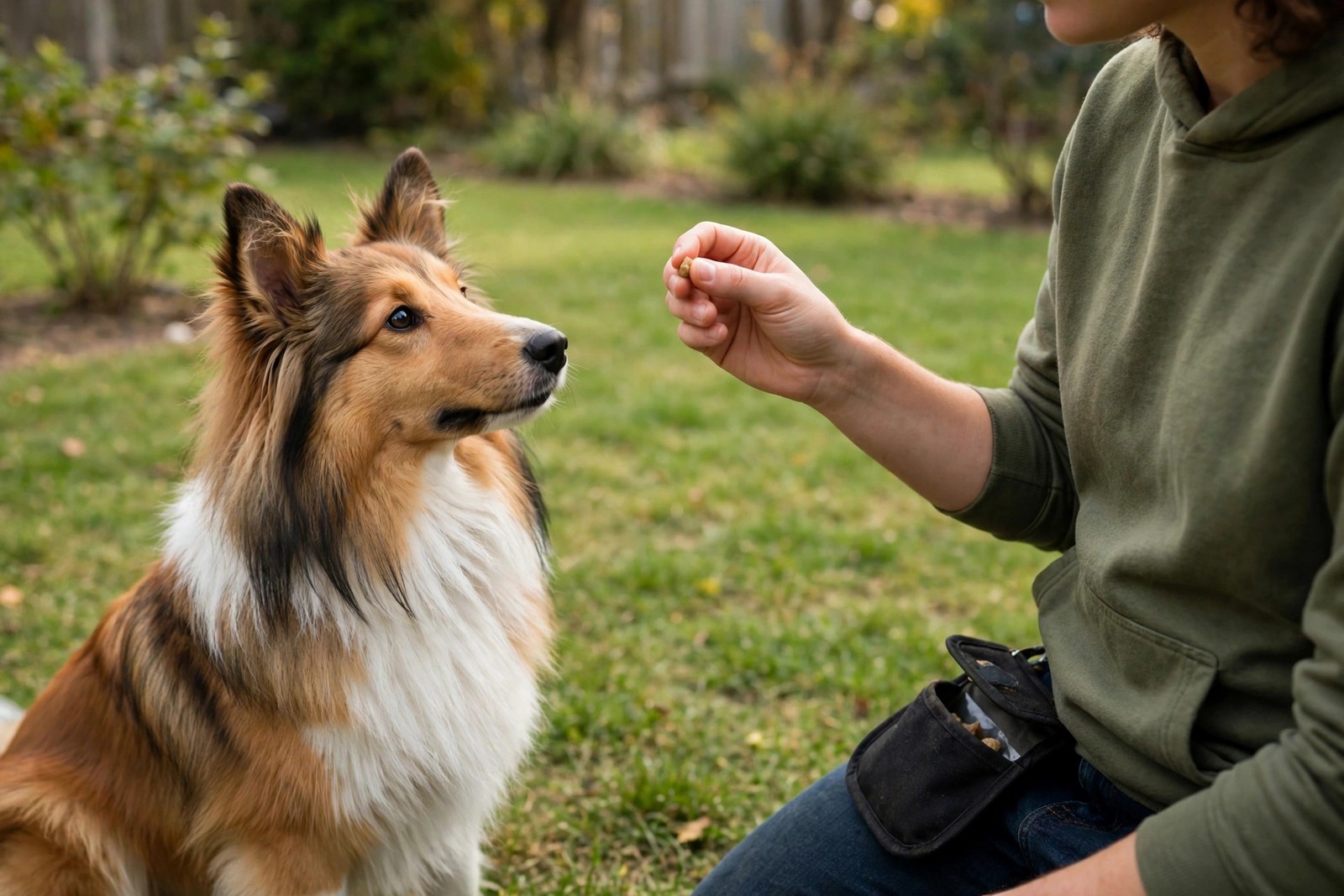
For a gentle, organised beginner, a Shetland Sheepdog can be a joy to train. Shelties are small herding dogs of real intelligence who notice patterns quickly, learn words and routines after few repetitions, and actively want to get things right for their person. Many first-time owners are delighted by how fast a Sheltie puppy offers behaviours and how neatly the breed fits structured games, trick training, and dog sports at a starter level.
Why Training Feels Easy
Motivation is built in. Most Shelties work happily for small food rewards, praise, and the simple pleasure of doing the task with you, so you rarely fight for attention indoors. Sessions can be short and frequent, and progress in house training, lead walking, and basic cues is often quick because the dog is tracking your routine as carefully as you are tracking theirs. That attentiveness also means a Sheltie learns your accidental lessons: laugh once at barking at the door and you have taught a hobby, so reward the behaviours you actually want from the first week.
Where First-Timers Struggle
Sensitivity is the first trap. Shelties read facial expression, tone, and household stress like weather, and a sharp voice or heavy-handed correction can make one freeze, avoid you, or stop offering behaviours altogether. Everything must be taught by reward, with difficulty raised in small steps. The second trap is socialisation. The breed leans reserved with strangers, and an under-socialised Sheltie becomes shy, sound-sensitive, and reactive on the lead, barking at people, dogs, bicycles, and doorbells. Puppyhood needs a deliberate programme of calm, positive exposure: friendly visitors, traffic, handling by different people, and watching the world from a distance the puppy finds comfortable. The third trap is that voice. Shelties bark, at excitement, at movement, at herding opportunities, and teaching a reliable quiet cue and a settle routine is core training, not an optional extra.
Exercise, Mind, and Coat
Plan on an hour to ninety minutes a day for an adult, split between walks, training, and play, because a bored Sheltie invents jobs, often involving chasing shadows, children, or passing cars from behind the fence. Herding instinct can appear as heel-nipping in excited puppies, which is redirected onto toys and never laughed through. The long double coat needs brushing a few times a week, including behind the ears and under the elbows where mats form first, and puppies should learn grooming as a calm, rewarded routine.
A first-time owner who is soft-voiced, consistent, and willing to socialise thoroughly usually finds a Sheltie remarkably rewarding. KinsLe's Care Teams keeps that programme on track by assigning socialisation trips, daily practice, and coat care to named helpers, each task marked done so the puppy's education does not depend on one person's diary.