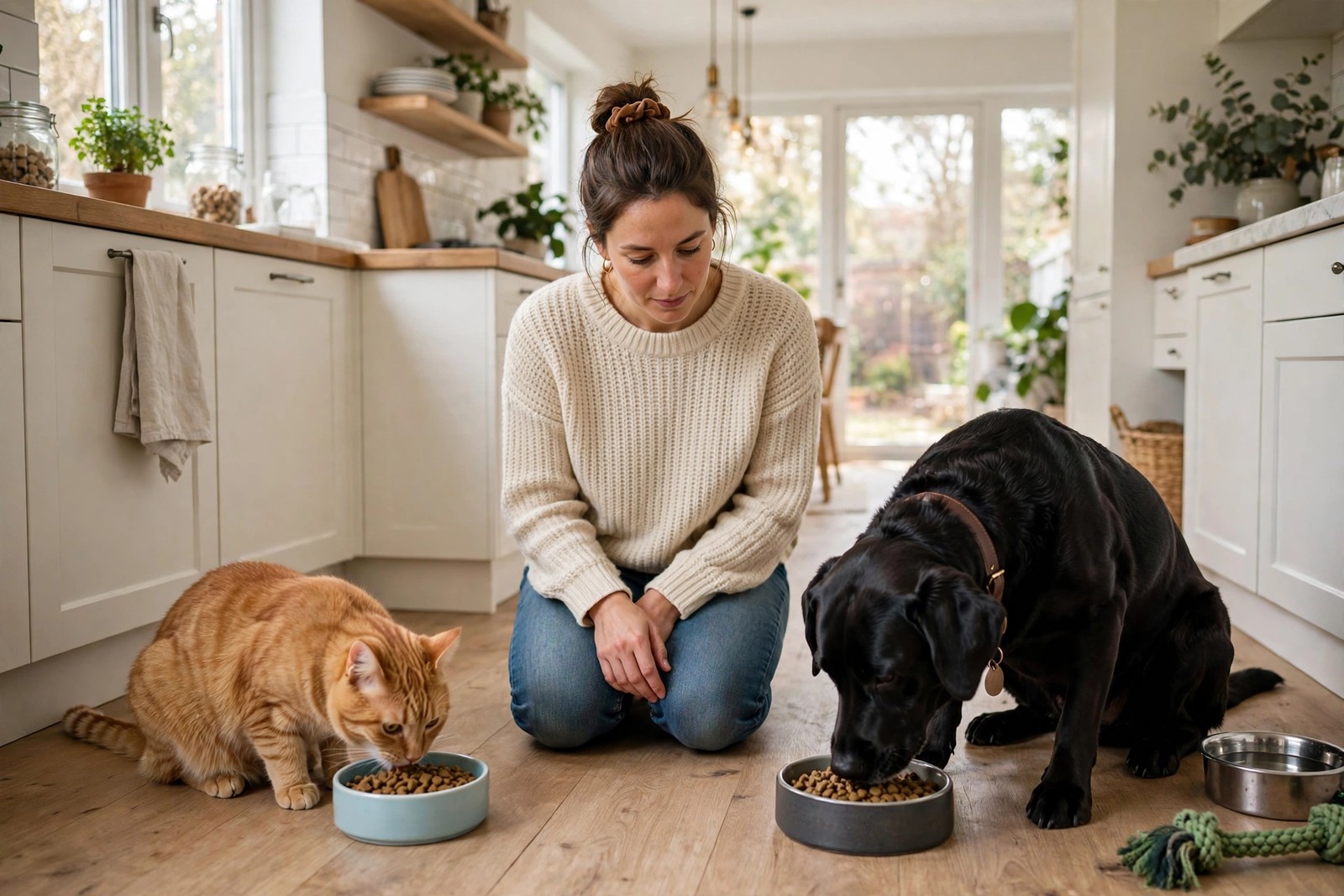
A cat who steals a few pieces of dog food is not in danger, but cats must never live on dog food. The difference between a stolen bite and a diet is the whole answer: dog food is complete for a dog, and a dog's body makes or stretches several nutrients that a cat's body simply cannot. Over weeks and months, those gaps are what make a cat ill.
The Nutrients Dog Food Does Not Supply for a Cat
Taurine is the best known. Dogs can make taurine from other building blocks; cats cannot make enough and must eat it ready-made. Cat food is therefore fortified with it, while dog food may contain far less, because dogs do not need it supplied the same way. Long-term shortage in cats is linked by veterinarians to serious heart and eye problems, which is why this is a diet issue, not a fussy detail.
The pattern repeats. Cats need arachidonic acid, a fat that dogs can manufacture from plant oils but cats must get from animal tissue. Cats need vitamin A already formed, as found in animal ingredients, because unlike dogs they cannot convert the plant precursor efficiently. They also need more niacin and a higher overall level of protein, because a cat's metabolism burns protein constantly and cannot throttle that burn down when protein is scarce, as a dog's can. Wet or dry makes no difference to this argument — both forms of dog food are built to a dog's specification.
Why Cats Raid the Dog Bowl Anyway
It is rarely because dog food is better for them. Kibble left down all day is simply available, smells meaty, and comes in a bowl nobody guards. Some cats prefer the larger crunch, some are food-motivated opportunists, and a cat on measured meals will naturally investigate the one bowl in the house that is always full. Treat raiding as a management problem: it tells you about access and feeding arrangements, not about what to buy.
Separating Two Species at Mealtimes
Feed the cat and dog in different rooms, or put the cat's bowl somewhere the dog cannot reach but the cat easily can, such as a raised surface a healthy cat uses confidently. Most importantly, end the standing buffet: serve the dog measured meals and lift what is uneaten after a short mealtime instead of leaving the bowl down for the cat to graze on all afternoon. If the dog grazes by habit, several smaller scheduled meals usually retrain the pattern within a week or two.
If finances or a house-sitter's mistake mean a cat has eaten dog food as the main diet for more than a few days, return to proper cat food straight away and mention the gap to your veterinarian, especially if the cat seems quieter, is losing weight or condition, or its eyes or breathing worry you. Do not try to patch dog food with home supplements — the gaps are multiple, and balanced cat food already solves them.
One Household, Two Different Rulebooks
Mixed-pet homes fail on routine, not knowledge: everyone knows the cat should not eat the dog's dinner, yet the bowl stays down. In KinsLe, Care Teams turns that into two separate feeding duties with their own times and timestamps — one for the dog, one for the cat — so whoever is home can see at a glance that both animals were fed the right food.