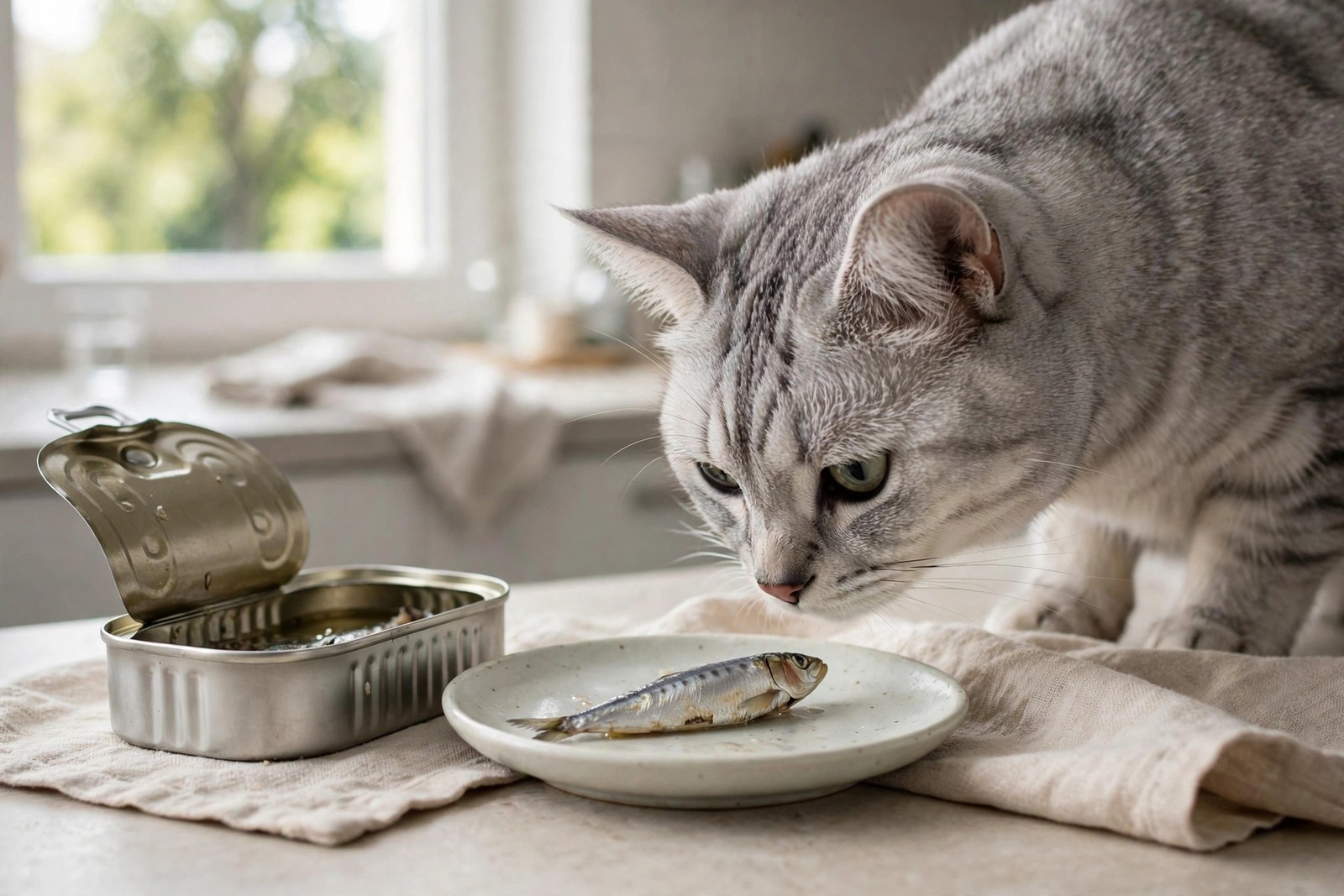
Yes, sardines suit cats as an occasional treat when they are plain, packed in water with no added salt, drained, and served as a small piece rather than a whole tin. Sardines tempt cats honestly: the smell is strong, the flesh is soft, and the fish is small enough that its bones behave very differently from the bones in a salmon fillet.
What Makes Sardines Different
Sardines are short-lived, small fish, so they generally build up less mercury than large predators that live for years and eat other fish. Their bones are fine and soft, especially in tinned fish, and cats can usually eat them safely as part of the flesh, which is one reason sardines work where many other fish need meticulous boning. They are also oily fish, bringing useful fats in a very concentrated package. That concentration is the catch. A whole tin is a feast sized for a person, not a cat, and the oil that makes sardines appealing also makes them easy to overfeed.
Reading the Tin Before You Open It
Choose sardines packed in plain water, with no added salt where that option exists, and drain them well. Leave behind anything packed in tomato sauce, mustard, chilli, garlic, or flavoured oils, and be cautious with fish packed in oil at all, since the extra fat turns a small treat into a heavy one and flavoured oil clings to every bite. Check the label for added salt even on a tin that looks plain, because sardines vary widely. Once opened, a tin belongs in the fridge in a covered container, used within a day or two, and served at fridge temperature only in a small portion, never left sitting in the bowl for hours where the oil can spoil the rest of the meal around it.
A Sensible Portion
For most cats, half a small sardine to one small sardine, once or twice a week at most, is a realistic treat, adjusted down for a small cat and skipped on days another rich extra has already been given. Mash or break the piece into the regular food if your cat tends to pick out the fish and leave the balanced meal behind, a habit that can grow quickly with something this fragrant. Some cats become fixated on fish and begin refusing their normal food, holding out for the tin they can hear opening. If yours starts turning away from complete meals, sardines are being offered too often, and a clean break of a few weeks usually restores perspective better than gradually bargaining with smaller pieces.
Cats Who Need Caution
Go slowly with a cat who has a sensitive stomach, because oily fish can produce loose stools, vomiting, or a day of obvious discomfort after what looked like a tiny portion. Cats managed for weight, pancreatitis, or kidney concerns deserve a word with their veterinarian before sardines become a routine, since fat, salt, and total diet all interact with those conditions. A cat on a strict trial diet should not get sardines at all until the trial ends. Watch for itchy skin, ear irritation, or repeated digestive upset after fish; those patterns can suggest this particular protein does not agree with your cat even though sardines agree with most.
Keeping the Tin Occasional
Store unopened treats out of sight rather than beside the daily food, and agree as a household which days count as fish days so a cat with persuasive timing does not collect a portion from two people. KinsLe's Care Teams supports that agreement in practice, letting the person who drained and served the sardine close the duty with a timestamp, so the next feeder can see the treat is already done for the day.