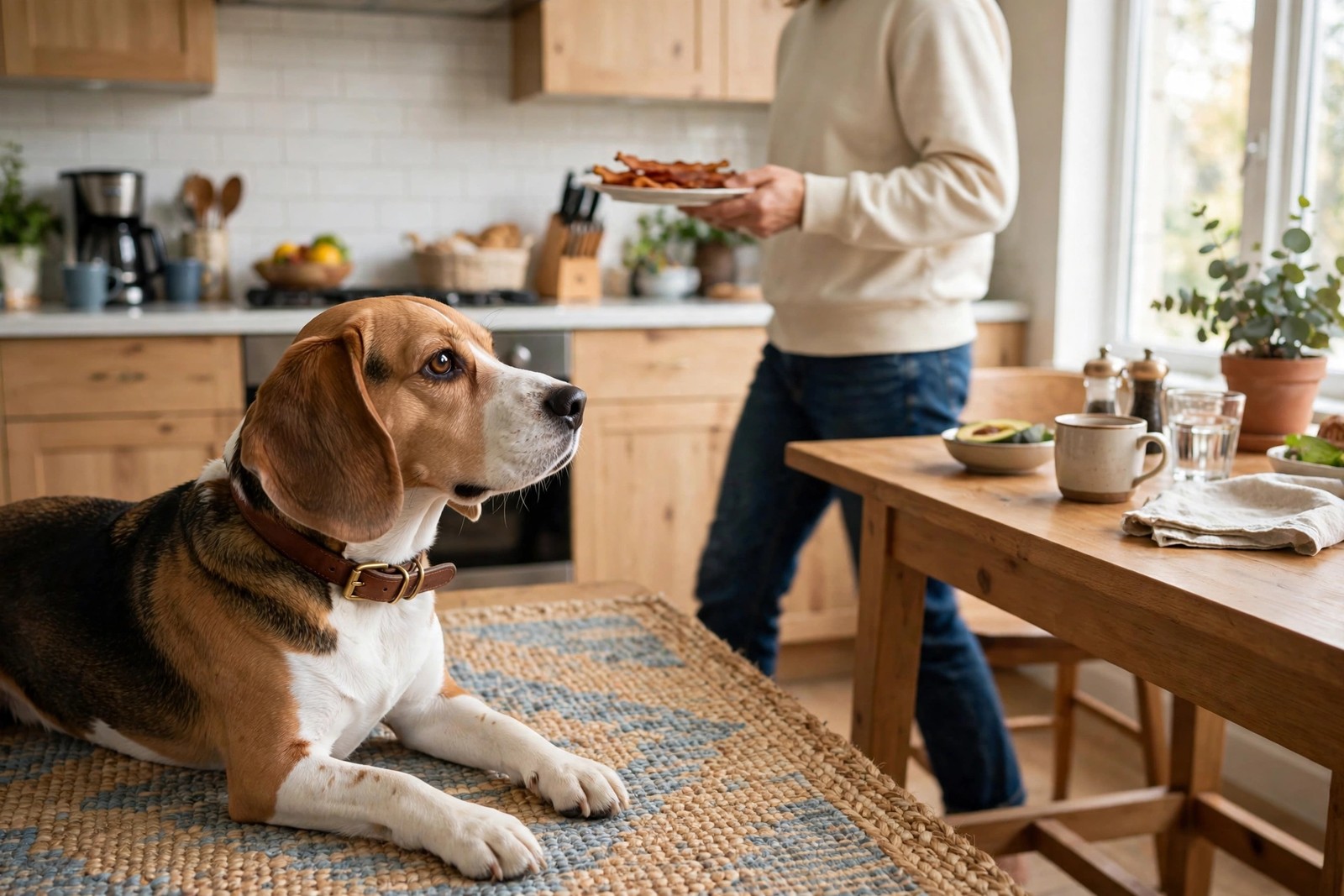
Bacon is not a food to offer a dog on purpose. It is very fatty and very salty, and that combination makes it one of the breakfast foods best kept entirely on the human side of the table. A healthy dog who snatches one small scrap will usually come to no serious harm, but there is no serving of bacon that does a dog any good, and the habit is far easier to prevent than to break. Treat bacon as better skipped, every time.
What bacon does to a dog's stomach
Fat and salt both challenge a dog's digestion. A fatty serving commonly produces stomach upset within hours: drooling, grass-eating, vomiting, loose stool, or a dog who skips the next meal and lies uncomfortably. Very rich fatty meals are also linked in veterinary practice to painful inflammation of the pancreas, a possibility your veterinarian would investigate in a dog who becomes repeatedly sick, hunched, or unwilling to eat after fatty food. Small dogs, seniors, and dogs with sensitive stomachs or a history of gut trouble have the least margin for error and should never be offered bacon at all.
The grease and scrap problem
Bacon reaches dogs through side doors more often than through deliberate treats. Cooking grease left in a pan on the stove, a plate set down during a phone call, scraps tipped into an open trash bag, and well-meaning guests slipping a piece under the table are the usual routes. Pour cooled grease into a sealed container for the trash rather than the sink or the dog bowl, keep plates pushed back from counter edges, and use a trash can with a lid a nose cannot lift. Tell guests the rule before the meal, kindly and early, so nobody has to be corrected mid-bite.
Signs that mean a veterinarian today
Most single small tastes end with nothing worse than a loose stool, but some signs after fatty food should not wait. Call a veterinarian promptly for repeated vomiting, a swollen or painful belly, hunching or praying-posture stretching, refusal of food lasting beyond a day, marked tiredness, or diarrhea that continues or contains blood. Puppies and tiny dogs dehydrate faster and deserve a lower threshold for that call. Note what was eaten and roughly how much; that detail genuinely helps the veterinarian judge urgency.
Breakfast-table training that actually works
Give the dog a job during human breakfasts instead of a series of refusals. A mat or bed stationed away from the table, rewarded for staying on it with pieces of the dog's own food, turns begging time into training time and pays better than hovering ever did. Practice the station first outside mealtimes so the skill exists before bacon smells test it. Children need the clearest version of the rule: food on plates is never shared, dropped food gets picked up quickly by an adult, and the dog's rewards come only from its own treat supply, at the mat, on an adult's say-so.
Treats that hold the household line
Dogs beg for bacon because it smells wonderful and because begging has worked before. Replace the moment, not just the food: offer a small piece of the dog's regular food, a lean dog treat, or a quick training game when plates come out, and reward everyone in the household for holding the same rule. Written rules beat remembered ones when several people feed the dog. Through KinsLe, Care Teams writes bacon onto a do-not-feed list kept with the feeding instructions, so rich scraps stay out of the bowl even when guests visit.