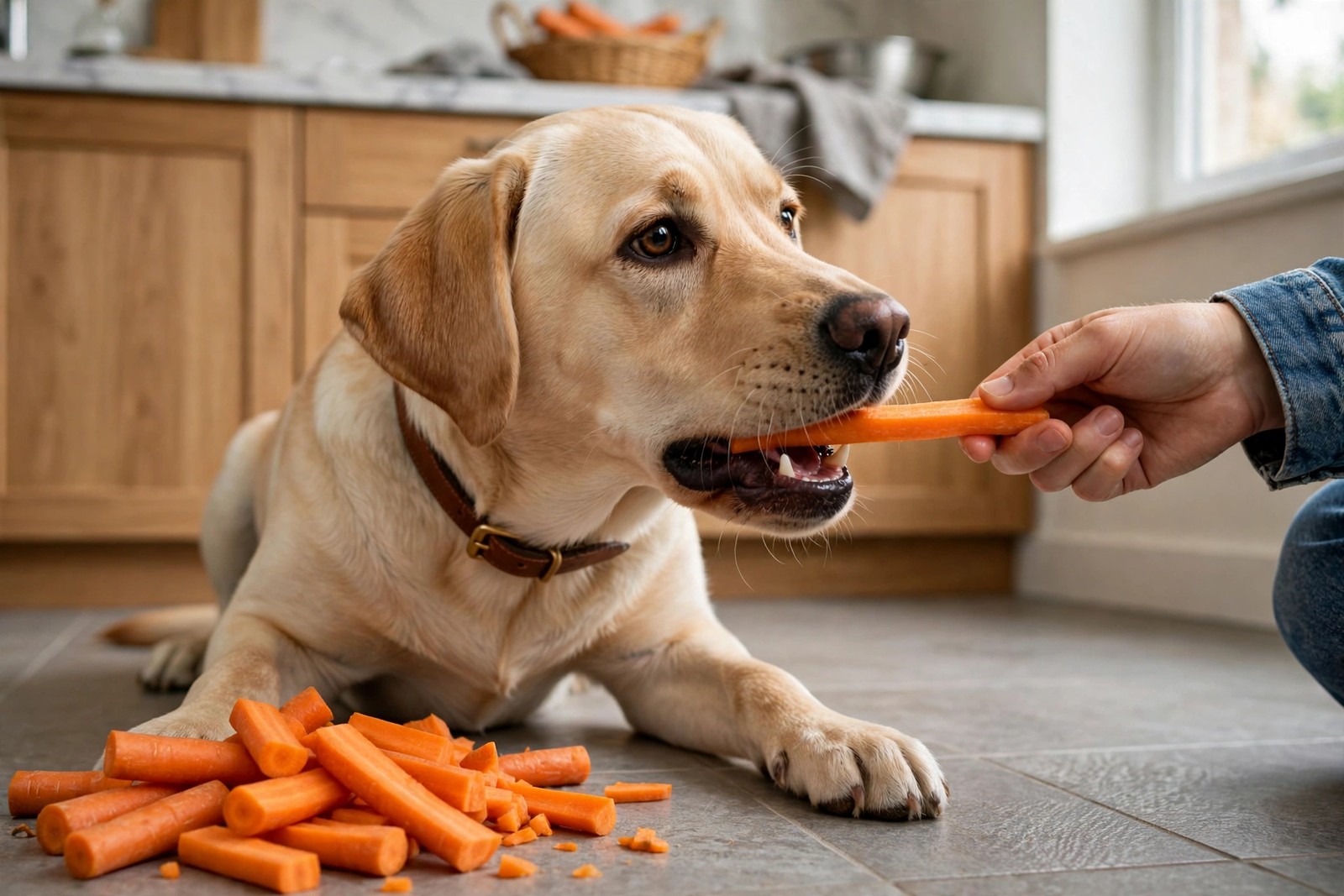
Yes, dogs can eat carrots, and they are among the most useful treats in the whole produce drawer: crunchy, sweet, low in calories, and sturdy enough to feel like a real event to a dog. The single genuine risk is shape, so how you cut a carrot matters more than whether you cook it.
Cut for the Mouth You Are Feeding
A carrot coin cut thick can be exactly the wrong size: round, hard, and just large enough to lodge if a dog bites off and swallows a disc whole. Long thin sticks or batons are safer for most dogs because they get chewed along their length, and thin coins suit small dogs better than thick ones. Large, deliberate chewers can manage a whole washed carrot under supervision, but gulpers, puppies, and dogs missing teeth should get sticks, grated carrot, or cooked pieces instead. Wash or peel carrots first to remove grit and surface residue, and trim both ends. Cooked carrot should be plain, steamed or boiled until soft, with no butter, glaze, honey, or seasoning.
Puppies, Teeth, and the Frozen Trick
A chilled or briefly frozen carrot stick is a classic teething aid: cold, firm, and satisfying to gnaw while sore gums settle. Supervise every session, take the stick away once it is chewed down to a swallowable stub, and expect orange mess on light floors. For adult dogs, the crunch provides mild mechanical contact against the teeth as they chew, which is a pleasant bonus but not dental care; carrot does not replace tooth brushing or veterinary dental checks. Senior dogs and dogs with sore mouths do better with cooked carrot, which gives the flavor without demanding force, and any dog that suddenly struggles to chew hard food should have its mouth checked rather than simply being switched to soft treats.
Sugar, Portions, and Orange Stools
Carrots contain natural sugars, more than green vegetables, so they sit in the treat budget rather than the free category. A medium carrot's worth across a day is a reasonable ceiling for a large dog, a few sticks for a small one, and diabetic or overweight dogs should get carrot counted within their allowance. Owners new to carrots are often startled by orange-tinged stool or visible carrot pieces after a generous serving; that simply means the amount outran digestion and the next portion should be smaller. Introduce carrot over a couple of days if your dog rarely eats vegetables, and keep carrot tops and peelings out of the treat bowl, since the point is the root itself, washed and cut properly.
Carrot as a Working Treat
Because carrot is low in calories, it is one of the few treats you can use at training volume without wrecking the day's feeding: tiny baton pieces work as rewards for calm behavior around visitors, and a stuffed handful of carrot sticks in a food puzzle occupies a dog far longer than the calories justify. That value disappears if the whole household also hands out carrot freely, which is why writing the cut, the amount, and the puppy supervision rule into KinsLe through Care Teams is worthwhile: the sitter, the children, and the grandparents all serve carrot the same safe way, sized for your dog rather than for the carrot.