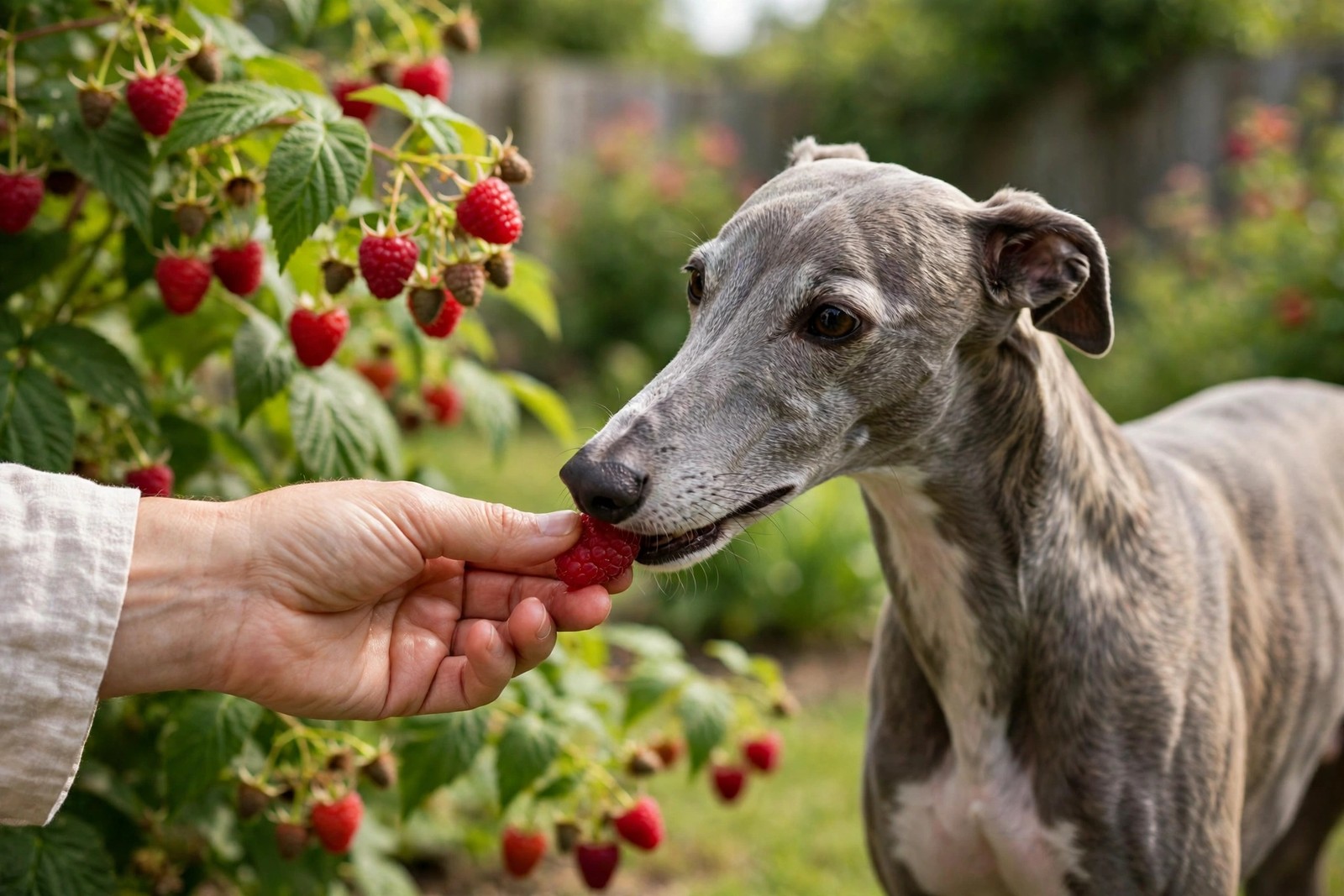
Yes, dogs can eat raspberries in small amounts, and they punch above their size as a treat: soft enough for older dogs, strongly scented for training, and full of fibre and antioxidants. The limit on this berry is built into the fruit itself. Raspberries contain natural sugars, and they also contain naturally occurring trace amounts of xylitol. At the scale of a few berries that trace is harmless, but it is a genuine reason this fruit should never be fed by the bowlful the way a dog might eat them straight from the cane.
Serving Berries the Sensible Way
Wash raspberries gently and check them over, discarding any that are mouldy, mushy or fermented, since soft fruit spoils quickly and dogs are enthusiastic about exactly the fallen, overripe berries owners should bin. Serve berries whole to a dog who chews calmly, and halve them for small dogs, puppies and fast eaters so a soft berry does not go down in one gulp. Frozen raspberries make a cooling summer reward, but let them thaw slightly so they are not hard enough to challenge teeth.
Keep raspberry products off the menu. Jam, syrup, coulis, sweetened yoghurt and raspberry desserts concentrate sugar and sometimes add sweeteners, and dried raspberries pack the sugar of many fresh berries into each small piece. The fresh berry, plain, is the version this answer is about.
Portions by Size
Two or three berries suit a small dog, four to six a medium dog, and a small handful, around eight to ten, a large dog, offered a few times a week rather than daily. Because a single berry is a complete, self-contained reward, raspberries work beautifully in training: one berry per recall keeps the total modest even across a good session. Count garden grazing too. A dog with access to raspberry canes can quietly eat far more than the treat allowance, along with leaves and unripe fruit, so supervise or fence the fruit patch during the season if your dog is a forager.
When Berries Cause Trouble
Too many raspberries usually mean loose, sometimes vividly coloured stool and extra gas for a day. Cut back, keep meals normal, and the problem normally resolves without help. Repeated vomiting, blood in the stool, a swollen or painful belly, or a dog who has eaten a very large quantity of berries from the garden is worth a same-day call to your veterinarian. Dogs with diabetes should have raspberries kept rare and tiny, since even natural fruit sugar is still sugar in their plan.
Berries disappear fast when children are handing them out one by one. KinsLe Care Teams lets you set 'ten berries max today' as a shared feeding note with each treat ticked off, so the day's total is visible to everyone topping up the bowl.