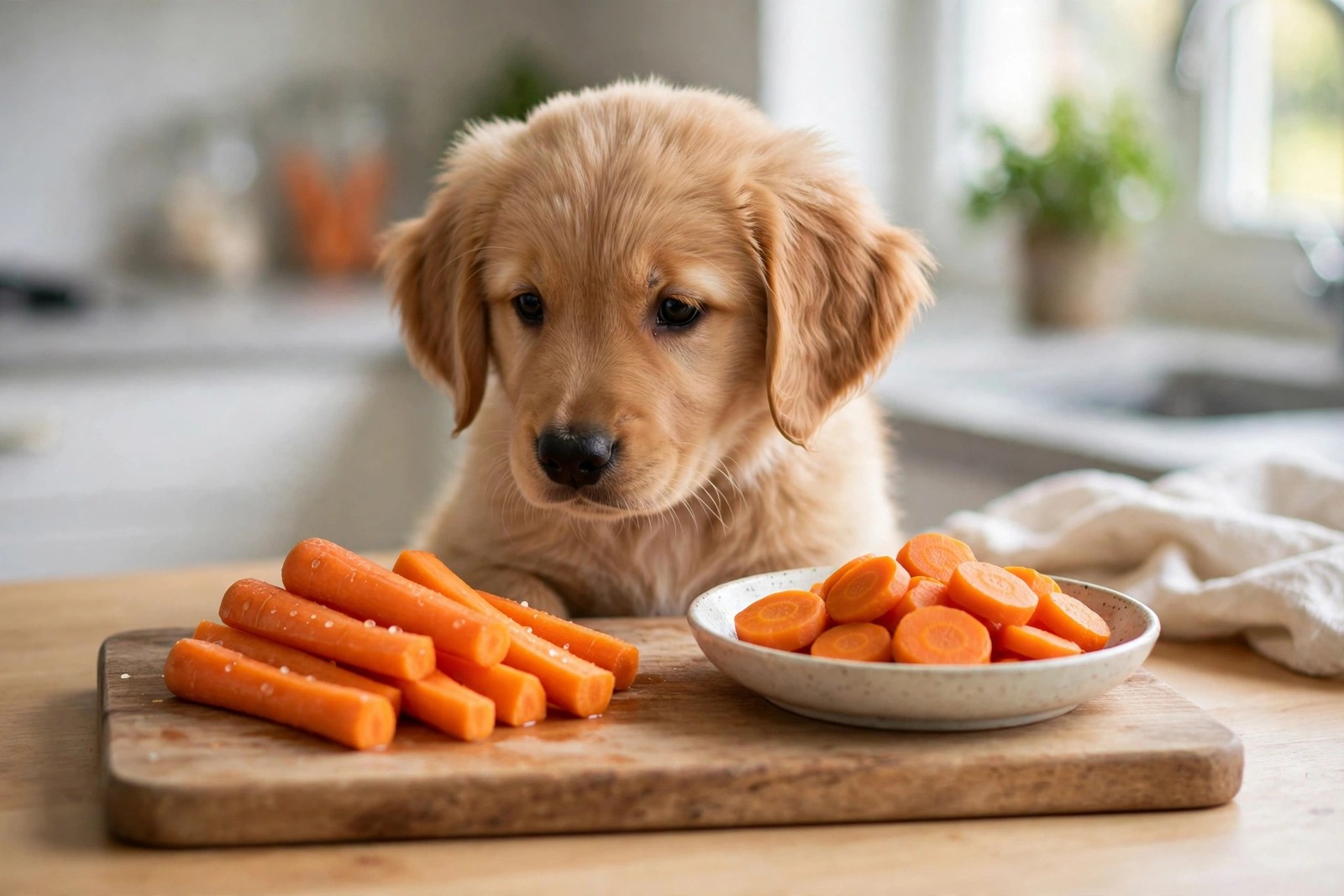
Both raw and cooked carrots are safe for dogs, and the choice follows the dog in front of you. Raw carrot is crunchy, low in calories and satisfying to chew, while cooked carrot is softer, gentler on the stomach and slightly easier to digest. Serve 2 to 3 sticks or coins at a time. Gentle cooking breaks down the tough cell walls, which helps the dog take in more of the carrot's beta-carotene, although cooking also softens the crisp texture and reduces a little of the vitamin C the raw carrot holds. Those two directions stay consistent. Cooked is easier to digest, and raw keeps more of its original crunch and vitamin C.
When Raw Carrot Wins
Choose raw carrot for a healthy adult dog that chews properly and enjoys working for a snack. The crunch gives the dog something to do, the low calorie count suits weight control and raw sticks travel well in a pocket or treat pouch. Raw carrot also suits teething puppies under supervision, because a cold stick gives sore gums something firm to press against. Wash every carrot well or peel it, then cut sticks or coins thick enough to resist snapping into shards yet small enough that the dog must chew. Whole baby carrots are a classic choking shape for eager dogs, because the smooth round form slides down before the dog chews. Cut baby carrots lengthways at minimum, and cut full carrots into coins for small dogs.
When Cooked Carrot Wins
Choose cooked carrot for puppies with delicate stomachs, senior dogs with worn or missing teeth and any dog recovering its appetite after a mild stomach upset. Steam or boil the pieces plainly until tender, with no butter, salt, honey or glaze, and let them cool before serving. Cooked carrot mashes easily into a normal meal, which helps a fussy eater accept the vegetable without noticing a separate treat. Dogs that gulp raw sticks and then pass undigested pieces usually handle the cooked version far better, because the softened texture asks less of the stomach. Avoid roasted family leftovers unless they were cooked entirely plain, since roasting pans usually carry oil and seasoning. Raw carrot that passes through visibly in the stool is a sign to try the cooked version rather than a sign to serve more.
Carrot for Teeth, Weight and Training
Carrot is often praised as a tooth-cleaning snack, and the claim needs honest limits. Crunching raw sticks does scrape the teeth lightly and keeps a dog occupied, but carrot is no substitute for brushing or for dental care from your veterinarian. Its real strengths are simpler. Carrot fills a treat moment for very few calories, it travels without mess and most dogs accept it as payment during training when the pieces are small and frequent. For training, cooked coins can work better than raw sticks for a dog that spits out hard pieces mid-session, while raw sticks suit the dog that needs a slower, crunchier reward at home. Match the form to the job and the comparison stops being abstract.
Portions, Storage and Making the Choice Stick
Keep fresh carrots in the fridge and use them within 2 weeks, washing each one as you prepare it. Cooked plain carrot keeps in a sealed container in the fridge for up to 3 days and freezes well in small portions. Start a new dog on one version only, watch the stool and comfort for a day, then test the other version later in the week if you want the comparison. Comparing both on the same day tells you nothing when the stomach complains. Whichever version wins, keep the 2 to 3 sticks or coins scale and count carrot within the day's extras rather than treating it as free food. Note the winning version, raw or cooked, and the cut that suits this dog in a KinsLe Care Pass, so anyone feeding in your absence repeats the choice that already worked.