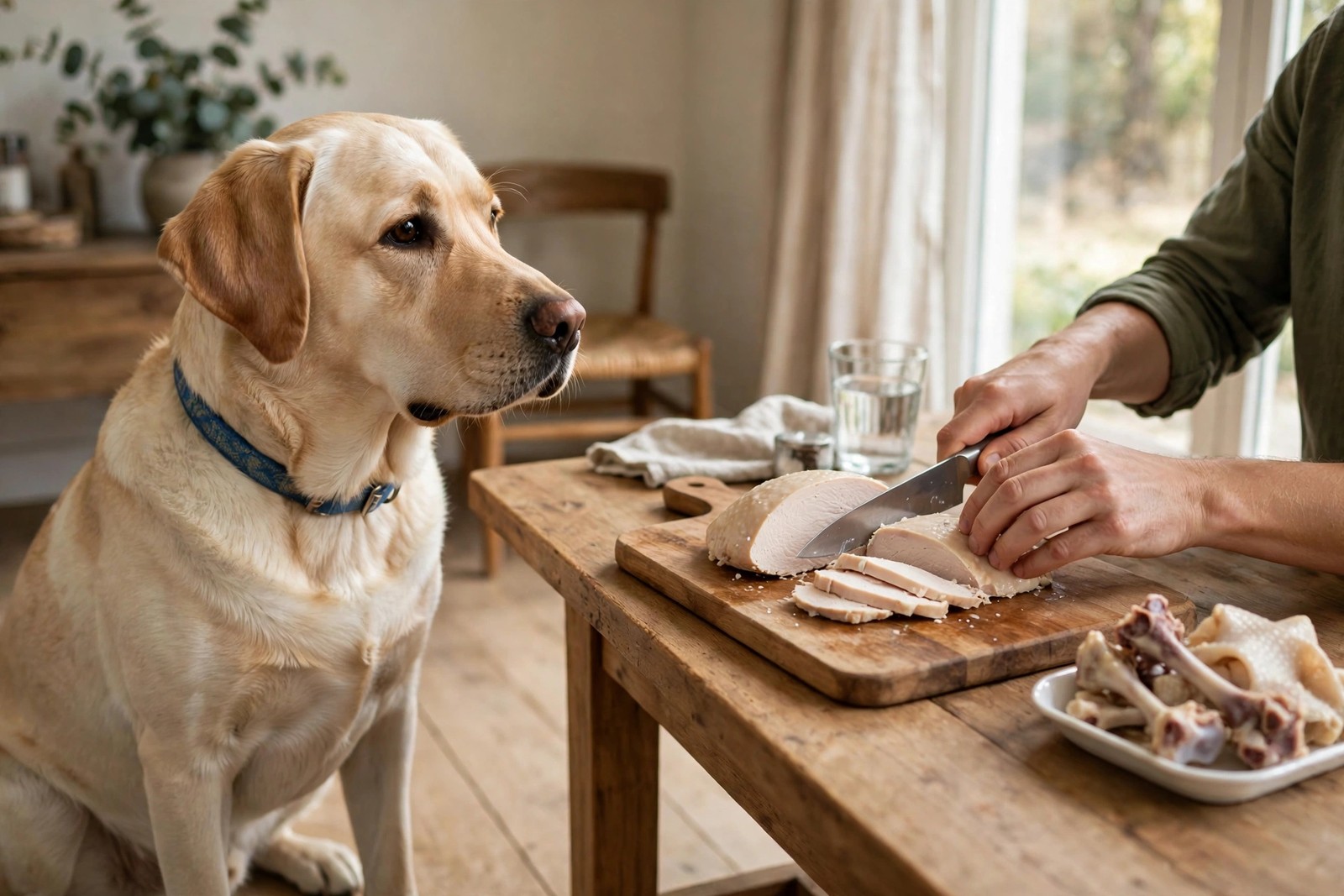
Yes. Plain cooked turkey is one of the better people foods to share with a dog: lean, digestible, and familiar, since turkey already appears in many dog foods. What decides safety is everything around the meat. A slice of plain breast and a plate of holiday trimmings are two very different offerings, and dogs get into trouble with the second one every festive season.
What to serve, and what to keep back
Serve cooked turkey meat only, white or dark, cut into bite-sized pieces with all skin, visible fat, and bone removed. Check each piece with your fingers as you cut; small rib and carcass bones hide easily in shredded meat. Cooked poultry bones are brittle and splinter into sharp points that can tear the mouth, throat, or gut, so no cooked bones, ever, including the wishbone and wing tips. Raw bones carry their own risks and are a separate conversation to have with your vet, not an experiment for a holiday afternoon.
Keep these firmly on the people side of the table:
- Skin, which holds most of the fat and any seasoning rubbed onto the bird
- Gravy, rich, salty, and often made with onion
- Stuffing, which commonly contains onion, garlic, herbs, and sometimes raisins, all unsuitable for dogs
- Brined or heavily seasoned meat, and any deli turkey slices, which are salty and processed
- The string, foil, and dripping-soaked packaging, which smell wonderful to a dog and are genuinely dangerous if swallowed
How much is sensible
A few bites is a treat; a bowlful is a sudden diet change. Offer a tablespoon or two of shredded meat for a small dog, a small handful for a medium dog, and up to a modest portion mixed through the normal meal for a large dog. Rich leftovers in quantity are a classic trigger for stomach upsets and for pancreatitis, a painful inflammation that can need hospital care. Spread a turkey windfall over several days in small amounts, or freeze plain meat in small portions and use it gradually.
Signs worth a prompt vet call after a turkey raid include repeated vomiting, diarrhoea that does not settle, a hunched or painful belly, drooling, and refusing food. Tell the vet what was actually eaten, since skin and gravy point one way and missing bones point to a more urgent one.
Plain turkey's quiet uses
Because it is gentle, plain boiled or baked turkey is often the protein vets suggest, paired with plain rice, for a dog recovering from a mild stomach upset, used briefly and under guidance. It also suits dogs who react to chicken but tolerate turkey, though a true food reaction should be worked through with your vet rather than by swapping proteins at random. For training, a pea-sized piece of plain turkey is a high-value reward worth real focus from most dogs, so reserve it for the hard jobs like recall practice.
Set the rule before guests arrive: nobody feeds the dog from the table, and scraps go into a lidded bin, not a bowl by the back door. In KinsLe, Care Teams lets you assign one person to carve and sort the dog-safe portion and timestamp that duty when done, so your dog gets the good part of the celebration and none of the risky parts.