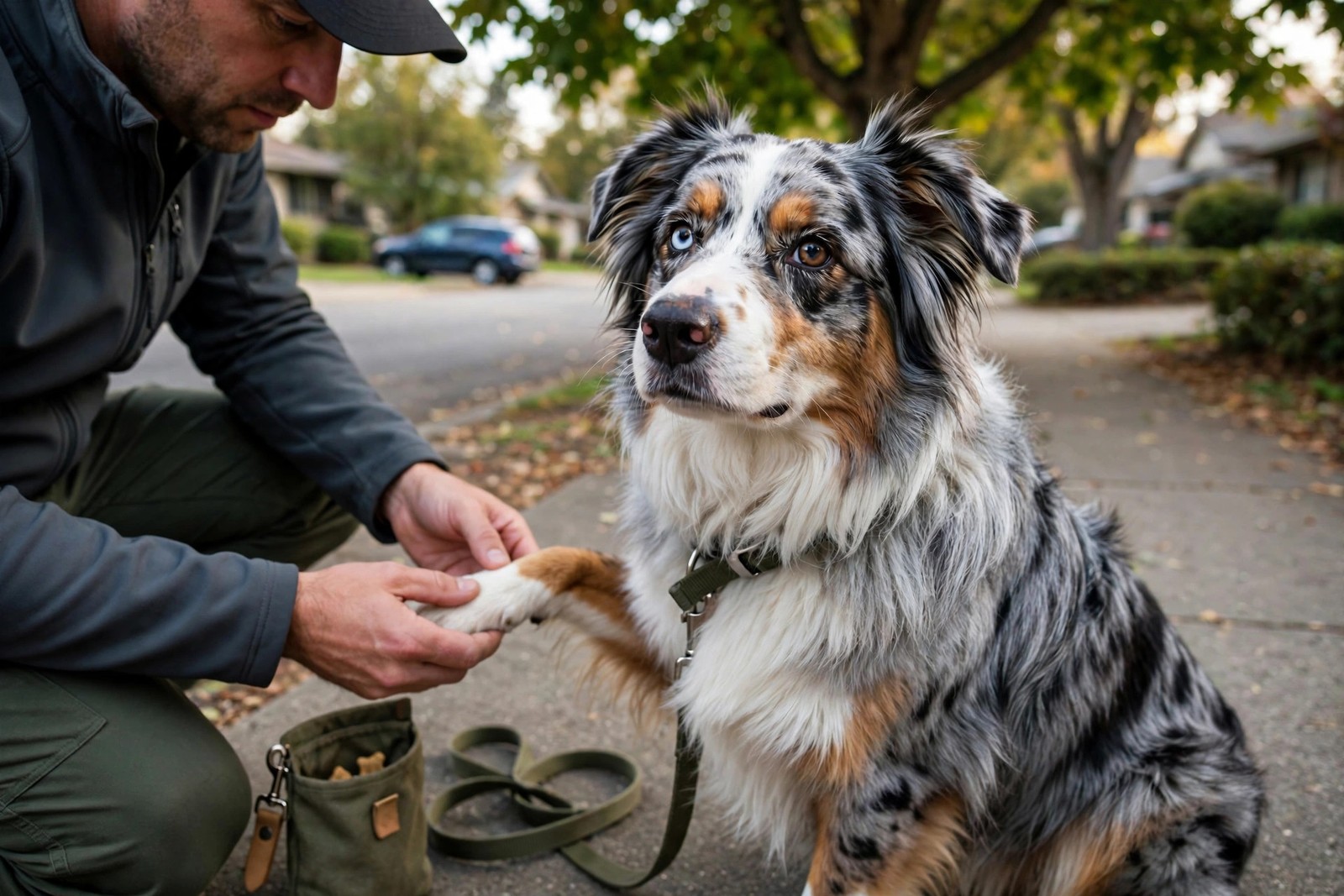
Yes, a lot — and in two distinct modes. An Australian Shepherd wears a working double coat: a medium-length, slightly wavy, weather-resistant topcoat over a soft, dense undercoat whose thickness changes with the season and climate. That coat sheds a background level of hair every week of the year, then releases the undercoat in bulk twice a year. Owners who picture a tidy, low-maintenance coat are the ones who struggle with this breed.
The seasonal blow is the main event
In spring, and again in autumn, most Aussies 'blow' their undercoat over two to four weeks. Hair comes away in soft tufts when you stroke the hindquarters, tumbleweeds gather in corners daily, and a brushing session can fill a small bag. Indoor dogs living under artificial light and central heating may shed more evenly and heavily year-round, with less dramatic peaks — the total is similar, the calendar is just blurrier. Spayed females sometimes shed noticeably around hormonal changes as well.
Brushing that actually controls it
Brush two to three times a week in normal weeks, working through the coat in layers with a slicker brush and an undercoat rake, paying attention to the dense feathering behind the ears, on the chest, britches, and tail, where mats form first. During a blow, short daily sessions remove far more loose undercoat than one marathon weekend groom, and they are kinder to the dog. Bathe only as needed and brush thoroughly before and after, because loose undercoat felts into mats when it gets wet and dries packed down.
Never shave an Aussie to 'stop' shedding. The double coat insulates against heat as well as cold, protects skin from sun, and often grows back patchy and coarser; you will still get shed hair, now shorter and sharper, plus a dog who regulates temperature worse.
Living with the hair
Budget reality into the home, not just the grooming kit: washable covers on favourite chairs, a vacuum that handles pet hair several times a week in blow season, a lint roller by the door, and dark work clothes that will never be hair-free again. People with dog allergies should spend real time with the breed before committing — Aussies are not a low-allergen dog, and dander travels with all that coat.
See your vet if shedding changes character rather than volume: bald patches, itching and redness, a dull coat with weight gain, or hair that stops regrowing can point to skin, thyroid, or dietary problems rather than normal coat turnover.
A double coat stays healthy when brushing never depends on one person's memory in a busy week, and KinsLe's Care Teams let you schedule the Aussie's brush-outs, ear-feather checks, and bath days across the household with timestamped completions, so the spring blow is worked through daily instead of discovered as mats in June.