
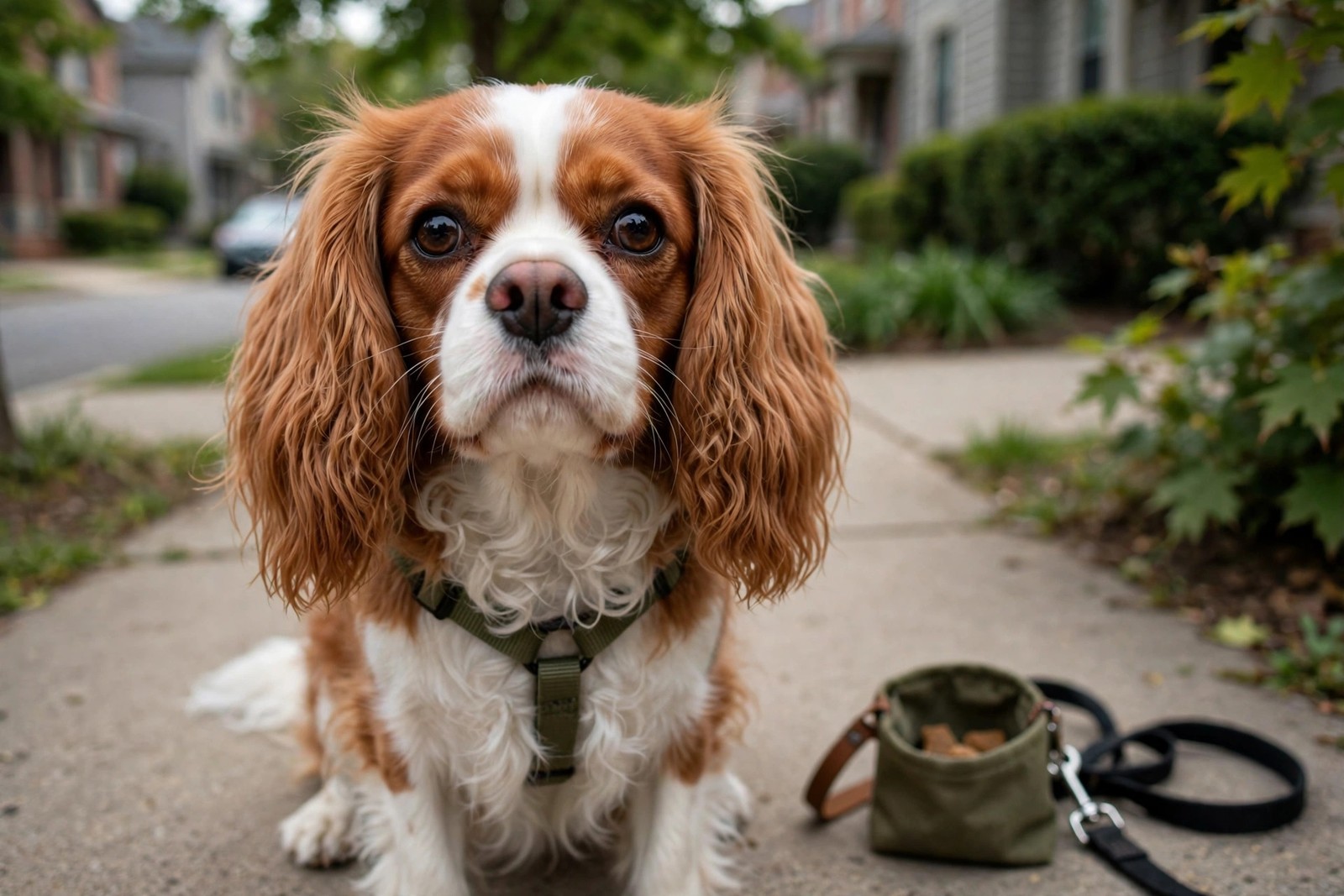
Yes — moderately, and steadily. A Cavalier King Charles Spaniel is not a heavy double-coated shedder like a Labrador, but this is not a low-shedding breed either. Expect fine, silky hairs on dark clothing, cushions, and car seats in every month of the year, and noticeably more during the spring and autumn coat changes. Anyone choosing a Cavalier for a supposedly tidy, hair-free home is choosing the wrong breed.
The Coat Behind the Shedding
The Cavalier wears a single, silky coat of medium length, longest in the feathering on the ears, chest, backs of the legs, feet, and tail. Because there is no dense undercoat, the total volume of hair is lower than a Golden Retriever's, but the hairs that do fall are long, soft, and conspicuous, especially the pale feathering from Blenheim and tricolour dogs. The coat is meant to lie flat and glossy, never trimmed into a short clip, and shaving it does not stop shedding. It only ruins the texture, makes regrowth look cottony, and leaves the shorter stubble to fall instead.
Puppies look deceptively easy. The puppy coat is short and sparse, and many owners are surprised at around a year old when the adult feathering grows in and the shedding becomes obvious. Females may also shed more heavily after a season or a litter, when hormone changes loosen the coat at once rather than gradually.
How Much Brushing Actually Controls It
Ten calm minutes with a brush, three or four times a week, removes most loose hair before it reaches your clothes. Work in this order:
- Start with the feathering, where tangles form first: behind the ears, in the armpits, and at the backs of the front legs.
- Use a pin brush or slicker gently through the body coat, then follow with a fine comb. If the comb will not pass, a mat is forming, however tidy the surface looks.
- Check the long ear feathering daily in wet or muddy weather, because it picks up debris and mats quickly.
- Bathe roughly monthly, or when muddy, and brush before the bath rather than after. Wet tangles tighten.
During the spring and autumn peaks, step up to a quick brush every other day for two or three weeks. You will fill the brush each time. That is loose coat coming out on schedule, not a problem in itself.
When Shedding Stops Being Normal
Book a vet visit if shedding changes character rather than just amount. Bald patches, flaky or greasy skin, a sour smell from the ears or coat, constant scratching, or hair that comes away in clumps leaving thin areas all point away from ordinary coat change and towards skin, ear, thyroid, or allergy problems, which a vet needs to examine in person. A Cavalier who suddenly sheds heavily alongside weight gain or lower energy deserves the same prompt check rather than a new shampoo.
For allergy-sensitive households, be realistic: Cavaliers are not hypoallergenic. Their dander and saliva proteins, not just visible hair, are what most allergic people react to, and no brushing routine removes those completely.
Living With Cavalier Hair
Lint rollers by the door, washable throws on favourite chairs, and choosing mid-tone upholstery that hides both dark and pale hairs make daily life easier than constant deep cleaning. Vacuum soft furnishings once or twice a week in normal months and more often during a coat blow. Most Cavalier owners describe the trade plainly: a manageable amount of hair, every week of the year, in exchange for the breed's famously gentle company. Keeping that routine shared helps it stay manageable, and KinsLe Care Teams does that sharing well by assigning the brushing, ear checks, and bath days for your Cavalier to named family members, each marked complete with a timestamp.