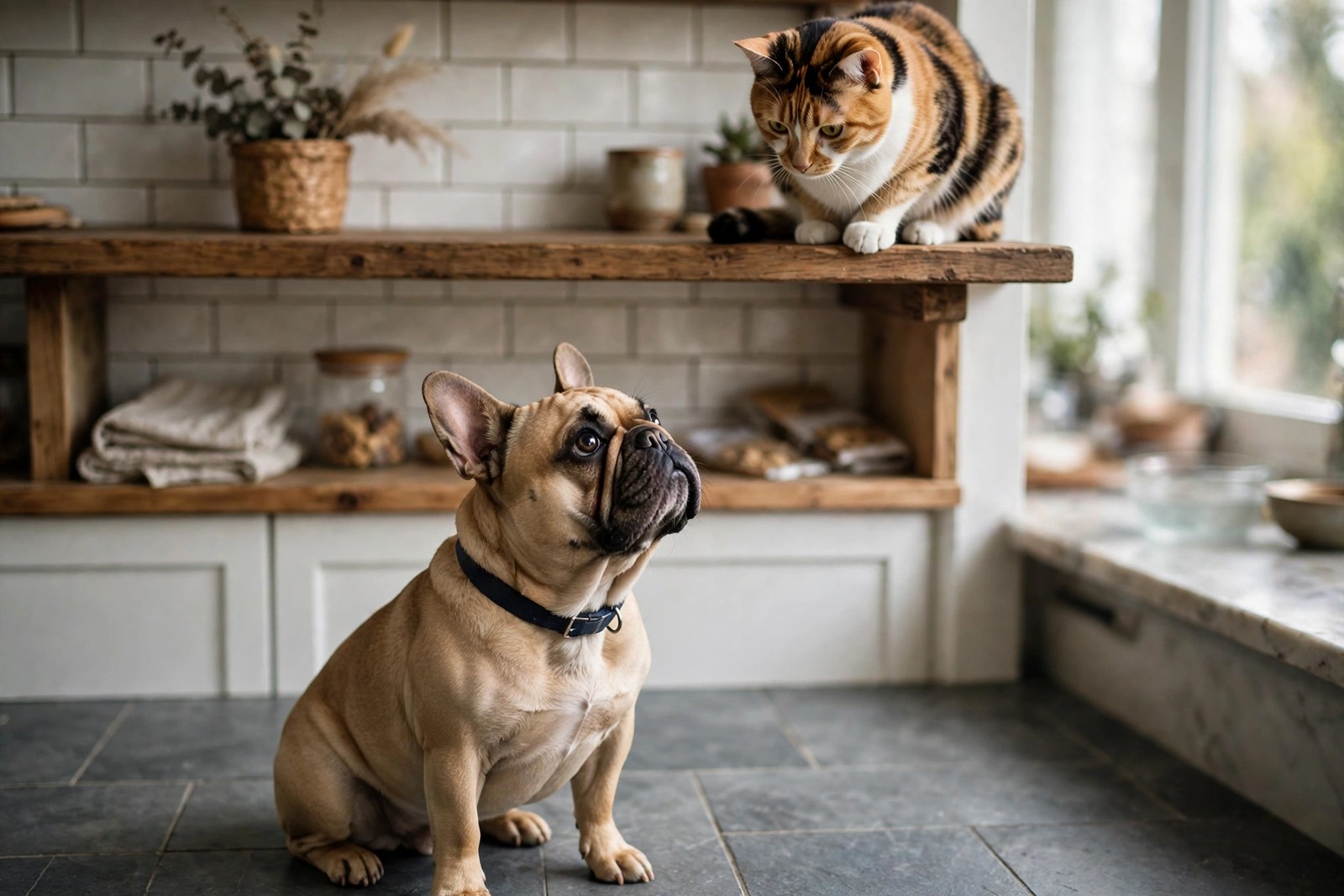
French Bulldogs and cats are usually a comfortable match. The Frenchie was bred in the lap-dog tradition, selected for companionship rather than for hunting, herding or guarding, and they generally carry little interest in chasing small animals. Introductions in this pairing are less about defusing instinct and more about teaching an exuberant, stubborn little dog some boundaries, while keeping sessions within what his breathing can handle.
Pestering, Not Predation
The typical problem is persistence. A young Frenchie greets a cat with play bows, hops, paw taps and delighted snorting, and when the cat walks away he follows and tries again, and again. A confident cat sets terms quickly, with a hiss, a swat or a jump to high ground, and the dog learns. A timid cat may simply start hiding, and a cat who hides all day, stops eating in the open or stops using her tray is telling you the dog's company is too much, however friendly it is. The dog's prominent eyes are the other real vulnerability: they sit forward on a flat face, at exactly swatting height, and a scratched eye is painful and needs a vet the same day. Teaching your dog not to push his face into the cat's, and giving the cat exits she can take before she feels forced to swat, protects both of them.
Frenchies can also be stubborn: a dog who has decided the cat's cushion is his favourite seat in the house will return to it cheerfully after every reminder, so rules need food rewards and repetition rather than scolding.
Introductions That Suit a Short-Faced Dog
Begin with scent swapping for a few days, then meet through a gate with the dog on a loose leash. Keep every session short and the room cool, and end while the dog is still relaxed: a Frenchie cannot shed heat or excitement efficiently, and a dog who is panting, drooling or frantic has stopped learning. Gentle activity beforehand is right for this breed; a short stroll, not a run, because an already hot and tired French Bulldog is in no state to learn manners.
Reward the behaviours you want repeated around the cat: looking and turning back to you, lying down, choosing a toy. In the same room, keep a light house line on the dog at first and build in pauses, calling him away for a treat every minute or so, then letting him drift back if the cat is still comfortable. Let the cat approach the dog rather than the other way round, and never hold the cat in place for a meeting.
Sharing the Home
Feed the two apart and keep the cat's food raised or behind a barrier, because a French Bulldog is a devoted eater who will finish a cat's dinner in moments and may guard his own bowl against a wandering cat. Keep the litter tray dog-free too. Give the cat permanent height, shelves, a tall tree and at least one dog-free room, because vertical escape is instant and complete in this pairing: a Frenchie cannot climb or jump after her, and a cat who knows she can always go up relaxes at floor level the rest of the time.
Separate the pair when nobody is home until the calm pattern is well established. Judge success by the cat's ordinary behaviour: eating in the open, resting in shared rooms and crossing the floor at walking pace. If, after several weeks of gradual work, your Frenchie still cannot leave the cat alone, fixates through the gate or pesters a hiding cat daily, get help from a qualified behaviour professional, and see your vet promptly if tolerance changes suddenly, since skin irritation and breathing trouble both shorten this breed's patience.
Consistency is what turns a stubborn charmer's house rules into habit, and that takes everyone applying the same boundaries. KinsLe's Care Teams lets you assign the short supervised sessions, the separate feeding and the settling practice to whoever is home, with every completed task marked complete with a timestamp.