
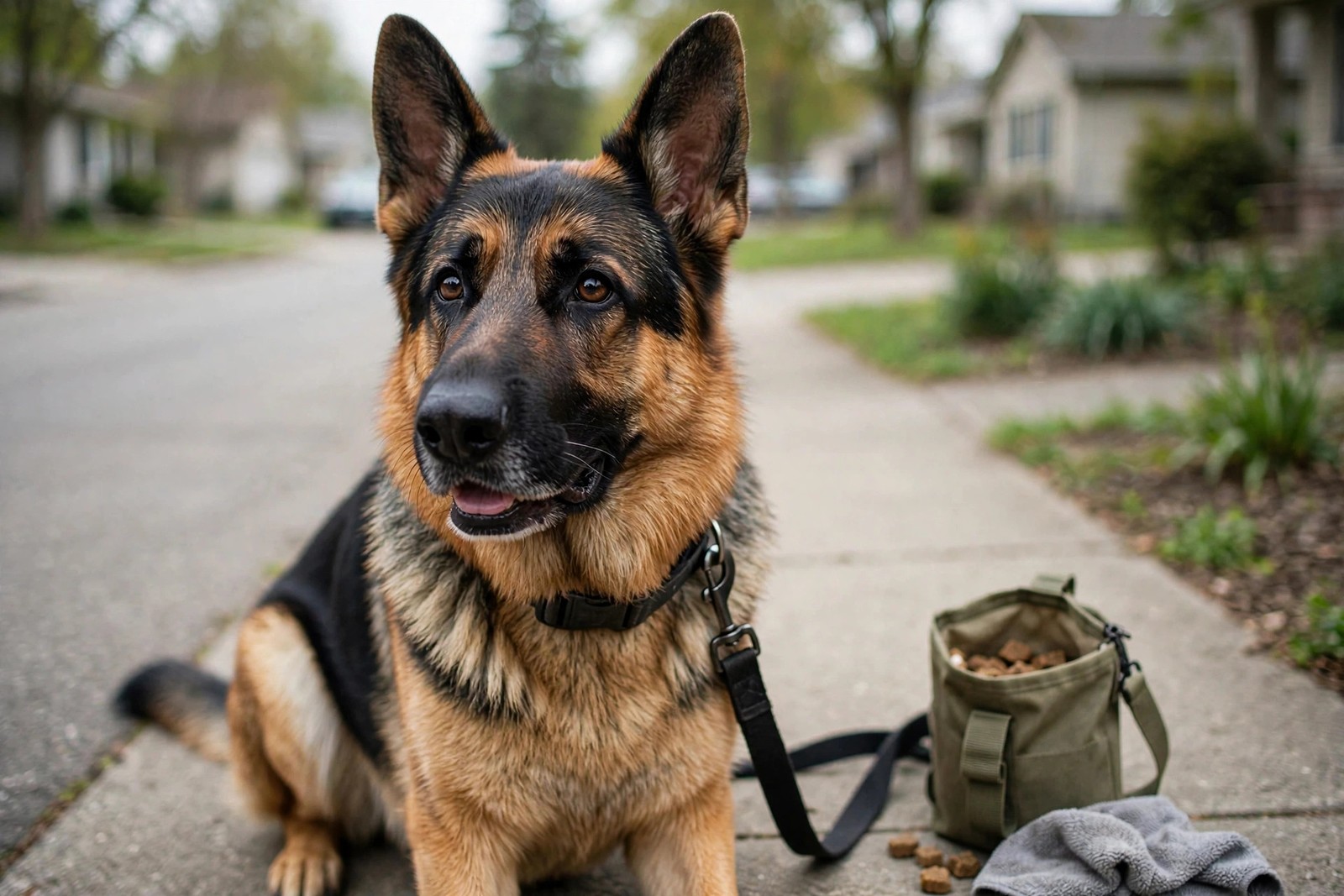
A German Shepherd's barking is best understood as a report from a dog doing security work it was never told to stop doing. The breed was built for herding flocks by day, which included patrolling boundaries and challenging anything unfamiliar, and modern Shepherds bring that same territorial seriousness to the front door. Typically the sequence is announce, assess, decide: a few deep barks at the approaching stranger, a hard look while you respond, and then, in a well-socialised dog, a stand-down. Owners who expect silence from this breed are fighting the job description; owners who build a reliable off switch usually find the barking entirely livable.
How Alert Barking Tips Into a Problem
The slide starts when announcements never get resolved. A Shepherd left in a yard to bark at the same dog walkers, cyclists, and school traffic every day rehearses territorial barking until it becomes the default response to any movement near the fence, and each passer-by who walks away confirms, in the dog's mind, that barking works. Under-exercise pours fuel on it, because a Shepherd is an athletic working dog with a large daily budget for movement and problem-solving. Lead frustration is another common driver: a dog who barks and lunges at other dogs on walks is often desperate to investigate or play rather than truly aggressive, though only an in-person assessment can separate the two safely.
Socialisation Shapes the Volume
A Shepherd puppy who calmly meets many kinds of people, dogs, vehicles, and household sounds in its first months grows into an adult who can tell ordinary life from a genuine concern, and that discrimination is what keeps barking proportionate. The under-socialised Shepherd treats every novelty as a possible threat, and a big dog barking at everything quickly becomes frightening to neighbours even when its intent is only uncertainty. Keep greetings boring, reward calm observation at a distance the dog can handle, and never encourage barking at the door for amusement, because this breed does not need help taking the job seriously.
Building the Thank-You and Settle
Train the ending, not just the start. When your Shepherd alerts at the door, let it have its few barks, then use a calm acknowledgement cue, call the dog to a mat or behind you, and reward the turn away generously; over weeks, most Shepherds learn that reporting to you completes the task. Pair that with daily obedience work, tracking or scent games, and proper physical outlets, and give fence-line rehearsal no chance to form by bringing the dog in when you cannot supervise. Barking paired with pacing, drooling, or destruction when you leave points toward separation anxiety, and sudden new barking in an older dog warrants a vet check for pain before any training plan.
Consistency across handlers is what turns these skills from party tricks into habits, especially in a breed that tests whether each person really means the same rules. With KinsLe Care Teams, the structured walks, the mat practice, and the scent work can each belong to a named handler and be stamped when finished, so your Shepherd's training programme holds together whoever is home.