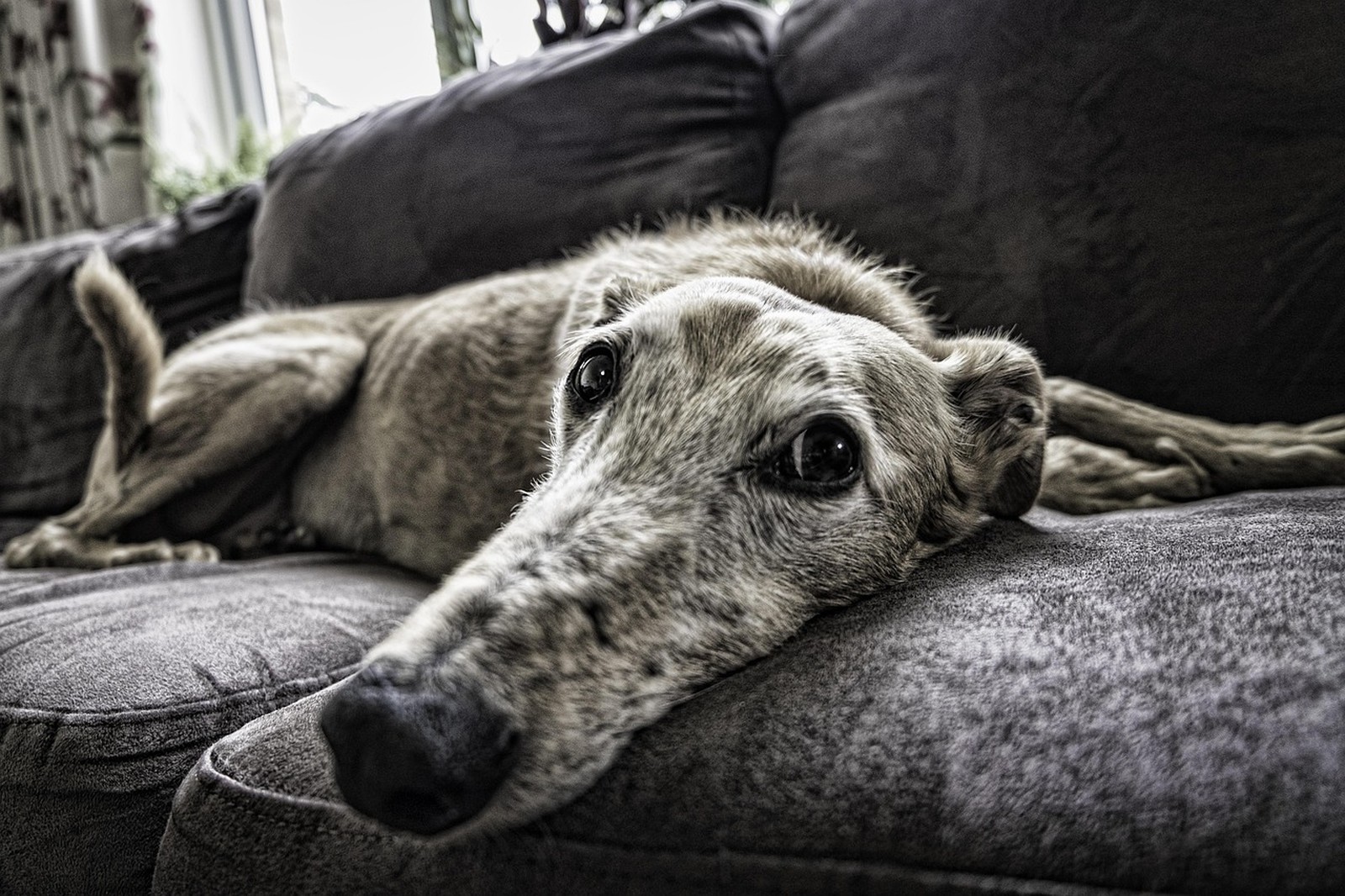
Few sounds make an owner pause like a groan as a dog lowers himself to the floor. For a dog settling after a busy day, it is usually a happy noise, the soundtrack of an animal settling into rest. But the same vocalisation can be one of the earliest whispers of joint pain, and the skill lies in telling the two apart.
The Settling Groan
A contented dog groans the way a person sighs into a favourite chair. As he circles, flops, and rolls partly onto his side or back, his ribcage empties in a long, loose exhale, and the groan rides on that breath. Everything around the sound is soft: his body drops in one unguarded motion, his face and ears are relaxed, he may stretch, yawn, or knead his bedding, and within moments he is drowsing. This groan shows up in puppies and young adults as readily as in grey-muzzled seniors, often grows more theatrical with age and habit, and is a sign the dog feels entirely safe, because an animal in pain does not abandon itself to a flop like that. If your dog has groaned this way, at this moment in the routine, for as long as you have known him, you are hearing personality, not pathology.
The Groan That Asks for Help
A pain-related groan is part of a whole movement that has become work. The dog lowers himself in stages, front end first, then easing the hindquarters down, or circles repeatedly before committing, and the sound comes at the effortful point of the manoeuvre rather than on the relaxed exhale afterwards. Timing is the loudest clue: groaning mainly after long or vigorous exercise, or in the first movements after a long rest, fits stiff, sore joints warming up or protesting. Company matters too, and a groan that travels with slower rising, reluctance on stairs, lagging behind on walks, licking at a joint, irritability when a hip or shoulder is touched, or loss of muscle over the hindquarters deserves a veterinary appointment even if the dog still eats, plays, and greets you happily, because dogs routinely hide substantial discomfort behind a good attitude. Joint conditions such as arthritis are among the causes a vet may check for, alongside soft-tissue injury and other sources of pain, and only an examination can separate them.
Reading the Pattern Over Two Weeks
One groan tells you almost nothing; a fortnight of groans tells you a great deal. For the next two weeks, note when each groan happens, what the dog did in the hours before it, and whether rising looked harder than lying down. Film a few episodes on your phone if you can, because owners describe sounds badly and a ten-second clip shows a vet the posture, the staging, and the body tension. Weigh your dog during the same fortnight, since extra weight loads sore joints and weight control is one of the few levers fully in an owner's hands. A stable, lifelong, flop-and-sigh pattern can be left alone with a clear conscience. A new pattern, a worsening pattern, or one tied to exercise and cold mornings goes to the vet with your notes.
Comfort Measures and the Vet Visit
While you observe, make lying down mechanically easier: a thick, supportive bed on a non-slip surface, raised just enough that the dog steps rather than drops onto it, ramps or steps for the car and any essential furniture, and floors covered where he scrambles for grip. Keep exercise steady and moderate rather than heroic at weekends, because consistent gentle movement keeps stiff joints working better than rest broken by exertion. Do not give human painkillers or leftover medication from another pet, because several common household painkillers are dangerous for dogs, and pain relief belongs in a vet's hands after an examination. For a question that comes up while you watch, put a follow-up question to KinsLe's Kimmy; she answers using the KinsLe Answers library.