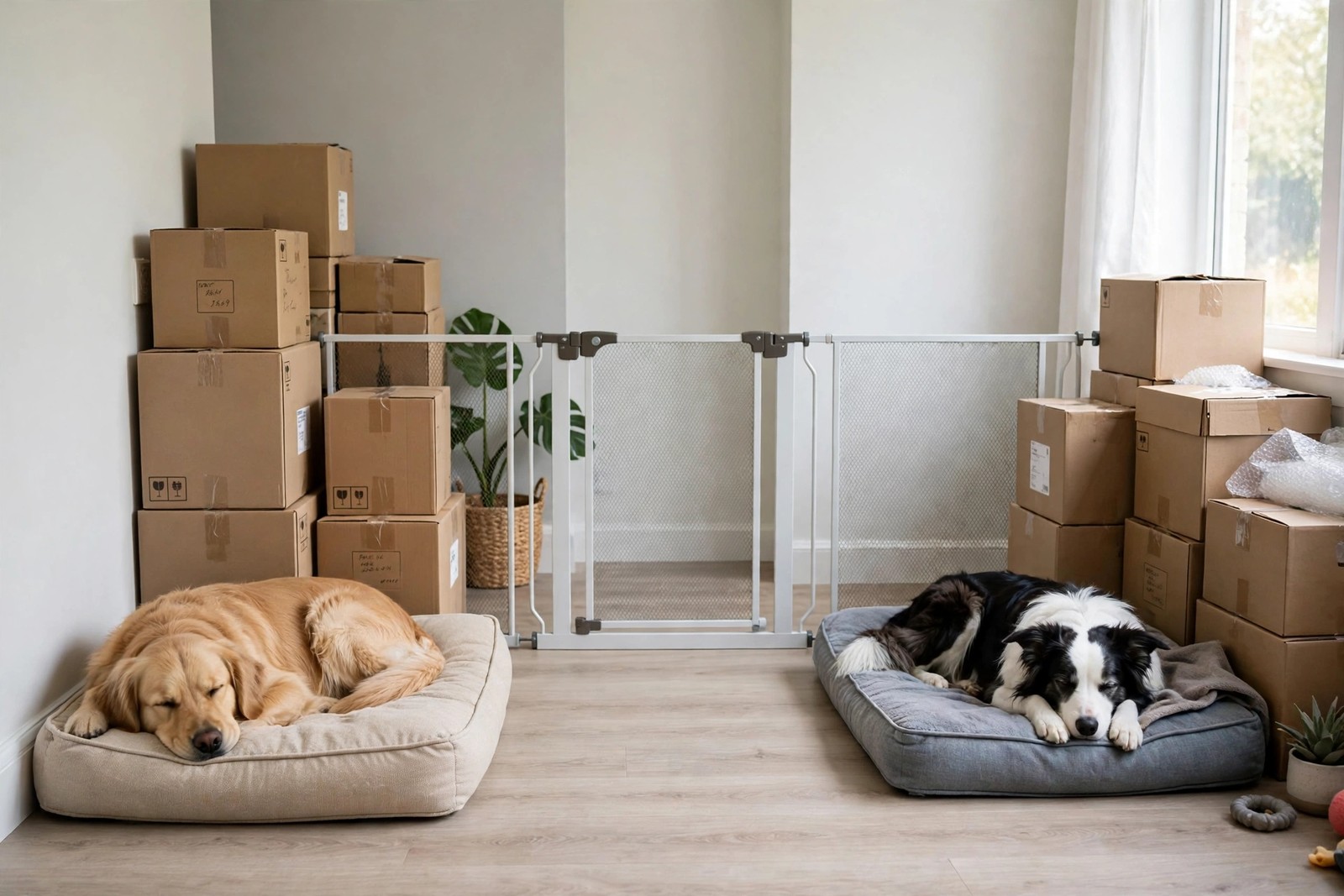
Dogs who lived peacefully for years have not suddenly turned on each other. In the old house they had a worked-out map: known resting spots, predictable walks, full nights of sleep, and enough of your attention that neither needed to compete for it. The move erased the map, and the baby changed the household's sounds, smells, visitors, and sleep — including the dogs' sleep. Behaviourists call this trigger stacking: each stress alone is manageable, but stacked together they push a dog over a threshold it once stayed well under, and the other dog becomes the nearest target.
Make the House Safe Today
Until a professional has assessed the pair, manage as if another fight is likely. Separate the dogs with closed doors or sturdy gates whenever you are not actively watching them, and always while you sleep, shower, or feed the baby. Feed in different rooms, pick up bowls afterwards, and give chews, toys, and resting places separately. Remove the specific items recent fights started over — a particular bed, a doorway both dogs squeeze through, the spot beside the sofa where you sit with the baby.
Protect the baby with a rule that never bends: the dogs are never loose on the floor with the baby, and a dog is never left in a room with the baby unsupervised, even one who seems devoted. Excitement and startle responses around a moving, squealing infant are exactly what a stressed dog handles worst, so gates and closed doors do this job, not good intentions.
Rule Out Pain Before Behaviour Work
Book a vet appointment for both dogs and describe the fights plainly. Arthritis, dental pain, ear infections, and other health problems can all lower tolerance, and a dog in a new house may also have strained something on unfamiliar stairs or slippery floors. The older of the pair, or the one who starts the fights, deserves particular attention — a previously patient dog who now snaps often has a physical reason layered under the stress. Only once pain is checked does a behaviour plan rest on solid ground.
Rebuild Boring Routine in the New House
Dogs settle when life becomes predictable again, so reinstall the old order of the day as closely as the new rooms allow: walks at the old times, meals in the same sequence, a defined sleeping place for each dog that stays theirs. Give each dog a rest zone the other is not allowed to enter — a crate with the door open, a bed behind a gate — and enforce it kindly but completely. Sleep is a powerful form of repair: adult dogs need many more hours of it than a household with a newborn usually provides, and tired dogs fight.
Reintroduce Shared Time in Small Doses
Once the house has been quiet for a good stretch, allow brief shared time in the lowest-pressure setting — usually the garden or the largest room — with nothing present worth guarding: no food, no toys, no baby on the floor, no visitors. Keep it dull. Let the dogs potter, sniff, and ignore each other, then separate them again while things are still easy. Lengthen these sessions slowly, and end any session at the first freeze, hard stare, or stiff approach rather than waiting to see what happens.
Get Professional Help Early, Not After an Injury
Fighting that has begun tends to rehearse itself: each scuffle is faster to start and harder to stop than the last. Contact a qualified behaviourist now, while the history is short, and be honest about bite history, the baby, and what you can realistically manage. If fights happen without warning signs or you cannot separate the dogs safely, say so at the first call. Getting help early keeps more options open for keeping both dogs safely in the home.
Through the settling weeks, KinsLe Care Teams lets you split the rebuilt routine between adults in the house — one person's solo walk, another's evening rest break for each dog — with completed tasks timestamped, so care stays even when the baby's schedule is not.