
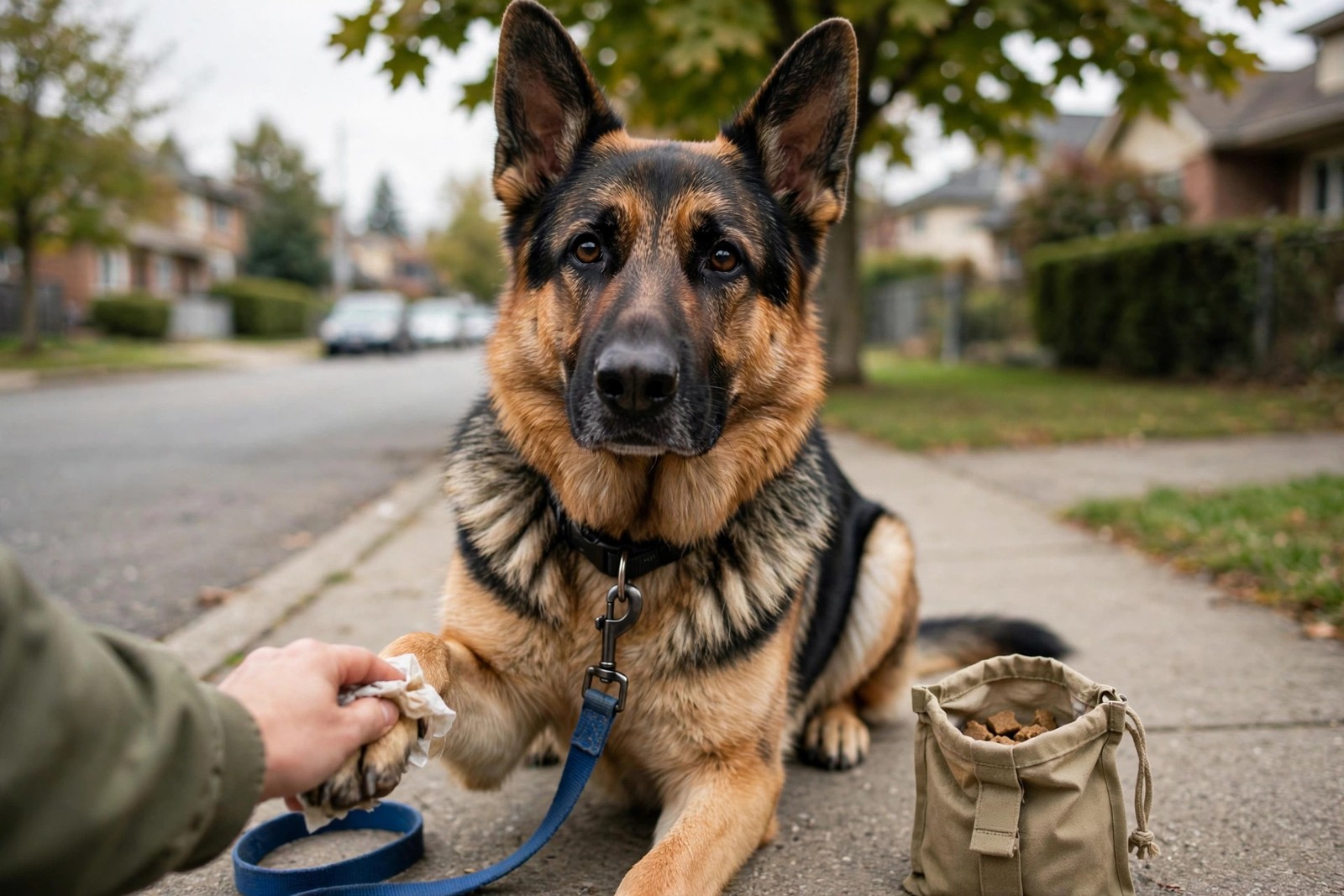
Yes. No softening is useful here: the German Shepherd is one of the heaviest-shedding popular breeds, and owners who are not prepared for the volume genuinely struggle. There is steady shedding in every week of the year, and on top of it, two seasonal events — spring and autumn — when the coat 'blows' and loose undercoat comes away in soft tufts that gather in corners, stick to everything, and refill the brush within a few strokes. The nickname owners give the breed, the German Shedder, is affectionate and entirely earned.
The Double Coat Doing Its Job
A German Shepherd wears two coats at once. The outer coat is straight, coarse, and weather-resistant; beneath it sits a thick, soft undercoat that insulates against cold winters and, less obviously, against summer heat. That undercoat is the shedding story. It renews seasonally, and when daylight and temperature shift in spring, the winter undercoat is pushed out wholesale to make room for a lighter one. The same process, in reverse, happens in autumn. Each blow typically runs for several weeks.
Coat length changes the look, not the verdict. The common stock coat sheds exactly as described. The rarer long coat has less undercoat and sometimes sheds slightly less in volume, but its longer hairs are more visible and it still sheds heavily by any ordinary standard. Neither version is remotely suitable for someone who needs a low-hair home, and Shepherds are not hypoallergenic.
Brushing Through Ordinary Weeks and Coat Blows
Outside coat-blow season, brush thoroughly two or three times a week. During a blow, brush daily — outdoors if you can — and accept that for a fortnight the house still needs vacuuming every day or two. Technique matters more than effort:
- Use an undercoat rake or shedding tool first, working in sections down to the skin, because loose undercoat trapped under the topcoat mats into felt if it is only skimmed.
- Follow with a slicker or pin brush to clear what the rake loosened, paying attention to the dense trousers on the hind legs, the tail, and behind the ears.
- Brush before a bath, not after. Loose undercoat plus water makes mats that dry like cement. A bath during a blow, once the worst is brushed out, does help release the rest.
- Never shave a German Shepherd to stop shedding. The double coat regulates temperature and protects the skin, shaving disrupts regrowth for months or longer, and the dog simply sheds shorter hairs instead.
Ten to fifteen minutes is a realistic session. A Shepherd who learns as a puppy that brushing is calm and rewarding will stand for it happily; one first tackled as an adult in mid-blow may need shorter sessions and patience.
Shedding That Signals Something Else
Even in this breed, some hair loss is not seasonal. Bald or thinning patches, especially symmetrical loss, red or scaly skin, a musty smell, hot spots the dog chews raw, or shedding paired with scratching that keeps the household awake all warrant a vet visit. Shepherds are prone to skin allergies and infections that hide under the dense coat, which is one more reason to brush down to the skin: your hands find the sore spot, lump, or tick that your eyes would miss under all that hair.
A coat that turns dull and thin in an older Shepherd, alongside weight gain or slowing down, should also be mentioned to the vet rather than written off as age.
The Honest Owner's Setup
Successful Shepherd homes run a system: hard floors or short-pile rugs in the dog's main areas, a vacuum that handles hair daily without complaint, car covers, dark or patterned bedding that hides hair between washes, and clothes that are never the dog's to lie on. None of it is difficult — it is the volume and constancy that catch people out. Share the load so the routine survives busy weeks: KinsLe Care Teams lets you assign your German Shepherd's brushing sessions, bath days, and coat-blow vacuuming rota to specific family members, with each completed duty timestamped for the whole household.