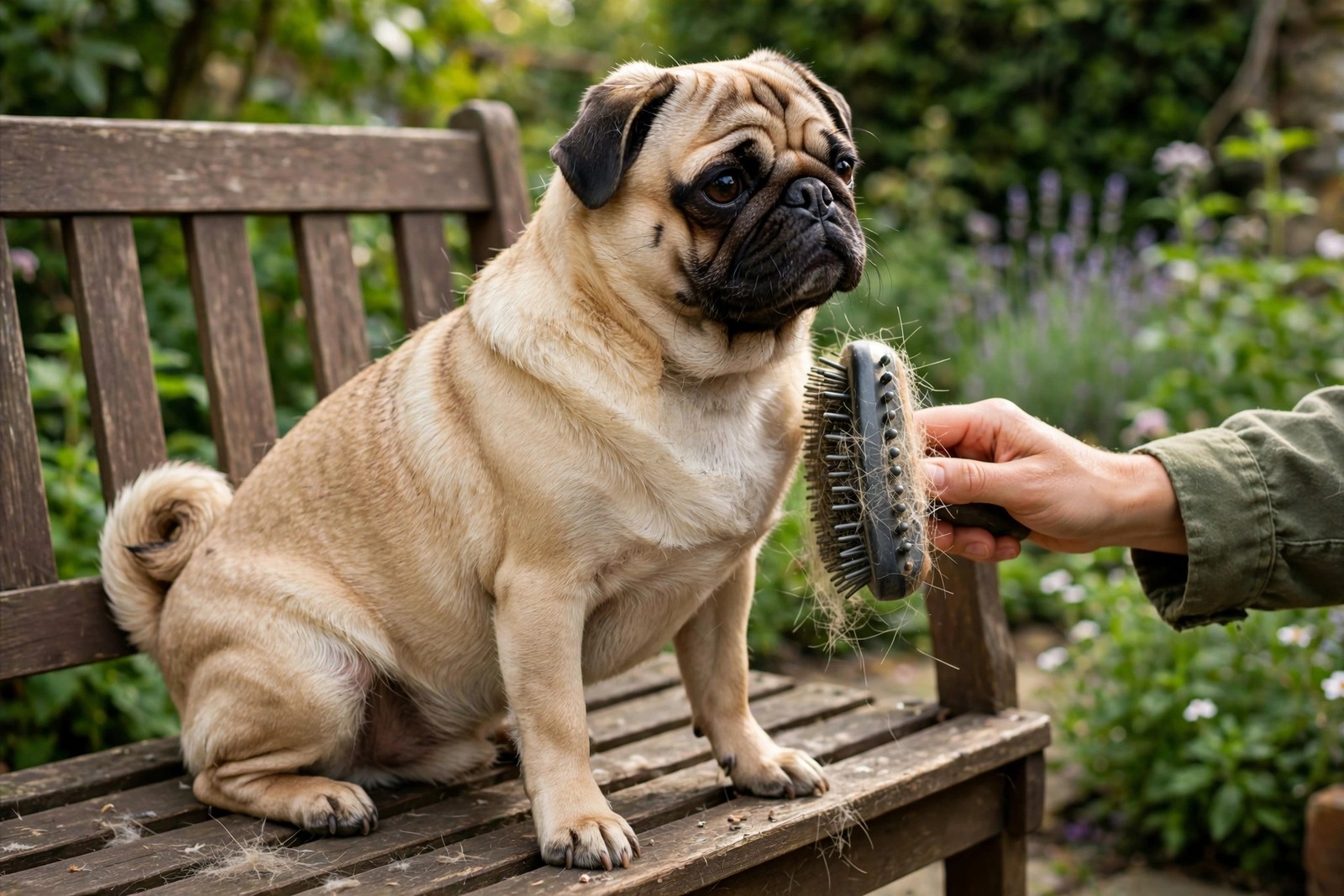
Pugs shed a lot, and almost nobody expects it. The breed's smooth, short, easy-care appearance suggests a dog you wipe down occasionally and otherwise ignore, but the reality is a steady, year-round fall of short hairs that turns up on clothes, bedding, car seats and every dark item of furniture the Pug has ever leaned against. The explanation sits under the surface: many Pugs, fawn Pugs especially, carry a genuine double coat — a soft, dense undercoat beneath the short topcoat — and double coats shed. Black Pugs are often single-coated and tend to shed somewhat less, which is why owners' reports about the breed vary so much. Shedding also typically picks up in spring and autumn, even in a breed that never really stops.
The Weekly Brush-Through: Small Job, Large Effect
Because the coat is short, Pug grooming is measured in minutes rather than hours, but it has to happen: a weekly brush-through with a rubber grooming brush or mitt, worked over the whole body in the direction of growth and then against it, lifts out the dead undercoat in satisfying quantities and spreads skin oils so the coat stays glossy. Finish with a wipe from a damp cloth to gather what the brush loosened. Loose hair removed on your schedule is hair that never reaches the sofa.
Folds First: The Daily Job That Outranks Hair
Ask experienced Pug owners what the breed's real daily chore is and they rarely say shedding — they say folds. The deep facial wrinkles, especially the fold over the nose, trap moisture, food and debris against warm skin, and a fold left uncleaned becomes sore, yeasty-smelling and uncomfortable. Wipe the folds clean every day with a soft damp cloth or a vet-approved wipe, then dry them thoroughly, because a fold cleaned and left damp is barely better than a fold left dirty. Fold care outranks brushing in the daily order: hair on your jumper is an inconvenience, but a sore, infected fold is a welfare problem, and any fold that looks red, raw or persistently smelly despite daily cleaning deserves a vet visit.
Living With Short Hair That Weaves Into Everything
Pug hair has one property that makes it punch above its weight indoors: it is short and stiff, so instead of lying on fabric where a vacuum lifts it away, it spears into upholstery weaves, knitted throws and car seats and stays there. Plan for texture, not volume:
- Put washable covers or throws on the exact spots the Pug sleeps and leans, and wash them weekly with the dog bedding.
- Vacuum soft furnishings with an upholstery attachment rather than relying on the floor head, which skims over woven-in hairs.
- Bathing every few weeks, when the coat needs it, loosens dead hair in one place — the bath — but over-bathing dries the skin and can increase flaking, so more is not better.
Coat, Skin and Weight: The Pug Triangle
On a Pug, coat condition, skin health and body weight feed into each other constantly. A dull, flaky coat with heavier-than-usual shedding, bald patches or persistent itching is a reason to see the vet, because skin problems are common in the breed and show early in a coat this short. Extra weight makes a flat-faced dog's breathing harder and its skin folds deeper, which makes fold care harder, which makes skin problems likelier — the weekly brush-through is a good moment to catch the drift early, while a portion adjustment is still a small fix. Senior Pugs shed much as they always did but tolerate handling less patiently, so keep sessions short, warm and unhurried, and groom on a non-slip surface. Households where one named person owns the weekly brush-through and someone is clearly responsible for the daily fold wipe keep both jobs alive through busy weeks, and KinsLe Care Teams helps by letting you assign those two recurring duties for your Pug to specific people, with each completed task marked complete with a timestamp.