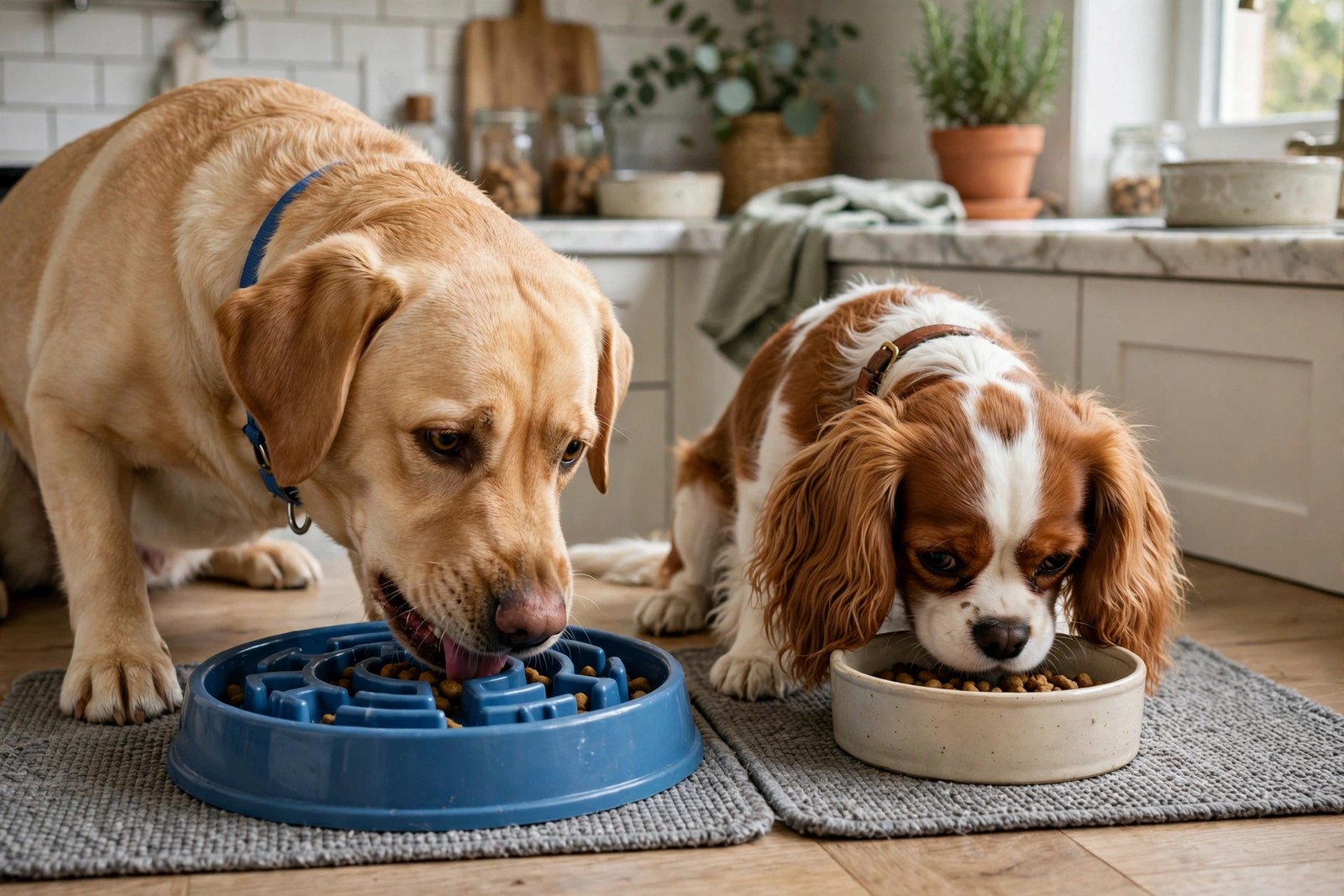
A greedy dog and a grazer cannot share one feeding system, since the system that suits a grazer, food available across the day, hands the greedy dog a second and third dinner. The workable arrangement treats the pair as two systems under one roof: measured meals at set times, separate feeding spaces, a time limit for the grazer, and slowing tools for the greedy dog. Neither dog needs punishment or competition, and the structure does the work that willpower cannot.
Separate Spaces and Set Meal Times
Feed the dogs apart at every meal, behind a closed door, across a stair gate or with one dog settled in a crate that the dog already enjoys with a chew. Separation removes guarding pressure, lets the grazer eat without an audience, and lets you see exactly what each dog ate. Serve measured portions at set times, in the morning and the evening for an adult pair, and weigh the food for each dog rather than scooping a shared amount. Keep bowls down only for the meal window, wash the bowls afterwards, and avoid feeding either dog from the table or the kitchen counter during the transition, since side snacks blur the new rhythm and usually flow toward the bolder dog. Puppies, senior dogs and dogs with medical feeding plans may need a different meal frequency, and a veterinarian should set the schedule for those dogs, while the separation and measuring principles still apply.
The Grazer's Twenty Minutes, and the Next Meal
Place the grazer's measured meal down and lift whatever remains after about twenty minutes, calmly and without commentary or coaxing. The uneaten portion goes into a sealed container, and the dog waits for the next set meal rather than receiving topped-up bowls across the day. A healthy grazer needs several days to learn the new rhythm, and mild pickiness during those days usually reflects habit rather than hunger, while a dog who stops eating entirely, loses weight or seems unwell needs a veterinarian rather than a firmer routine. Resist hand-feeding the leftovers later as treats, since that pattern teaches the grazer that meals arrive through persistence and teaches the greedy dog that hovering pays. Hunger at a set meal is the teacher here, and the lesson lands when every person in the household holds the same boundary, including visitors who find the grazer's story persuasive. Record what the grazer actually ate at each meal for the first week, because an honest record separates a dog who eats lightly from a dog whose intake is falling.
Slowing the Greedy Dog, and Watching Both Weights
Give the greedy dog time with food rather than more food. Scatter the measured portion across grass or a mat for foraging, use a slow-feeder bowl that stretches the meal across minutes, or place part of the portion inside a food toy that releases pieces gradually. A longer meal leaves a greedy dog more satisfied on the same calories, and the slower pace reduces gulping and the coughing that gulped air and kibble can cause. Never leave any food down unattended in this household, not even the grazer's bowl during a phone call, since a greedy dog needs seconds to finish an unattended meal and undo a day of structure. Weigh both dogs monthly and feel ribs under a thin cover of fat on each dog, adjusting portions in small steps when a trend appears, and keep treats for both dogs inside each dog's daily total. Feed any training rewards from the greedy dog's measured portion where you can, and the day stays balanced even on an active training day. In KinsLe, each dog's Care Teams duties stay separate, with the greedy dog's slowing method and the grazer's twenty-minute lift written into the matching duty, and a helper can follow both systems correctly on a first visit.