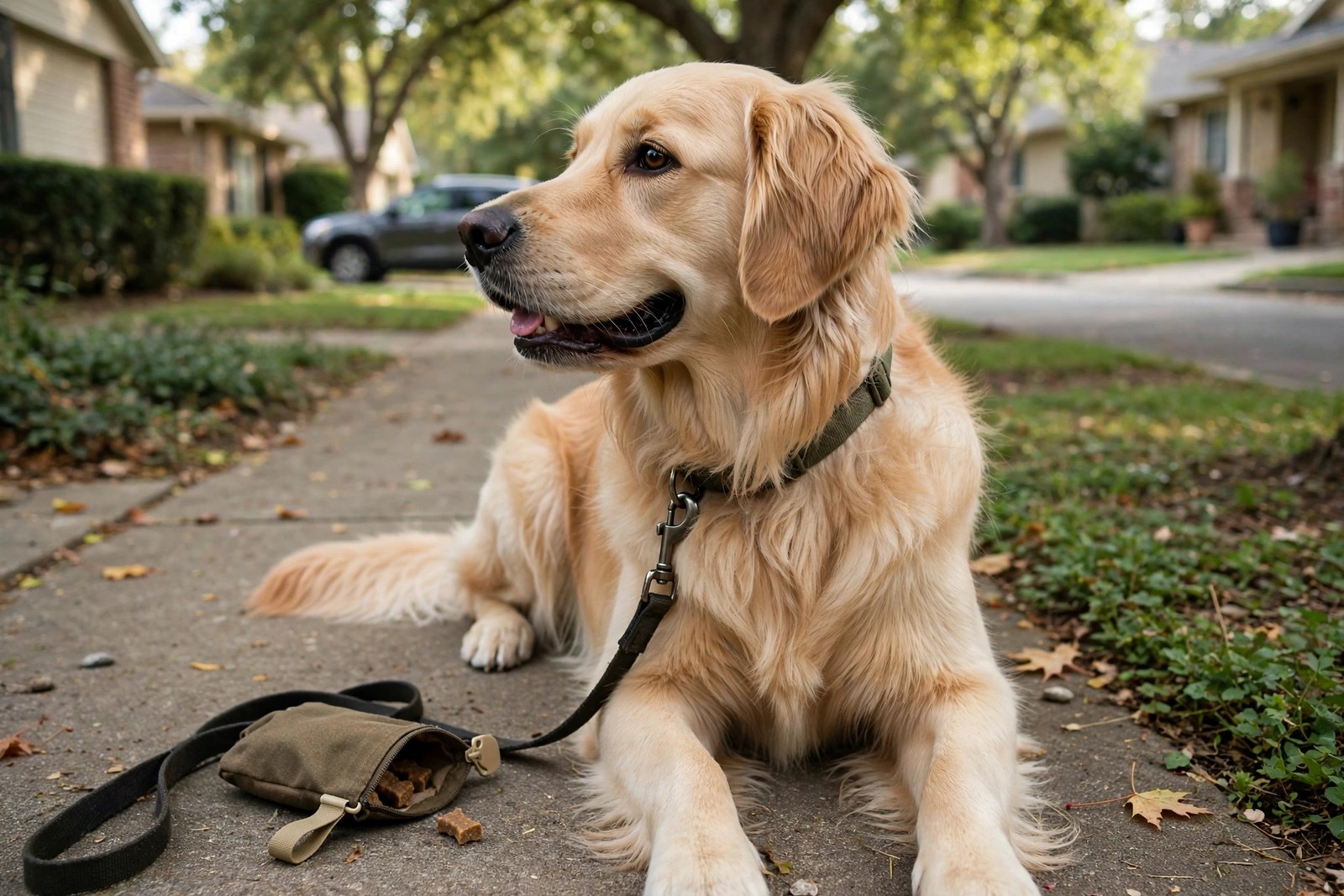
An adult Golden Retriever typically weighs 25 to 34 kg (55 to 75 lb). Females usually fall at 25 to 29 kg (55 to 64 lb), and males usually fall at 29 to 34 kg (64 to 75 lb). A fit Golden looks balanced and athletic under the glamour, with a level back, a defined waist and easy, tireless movement. The breed also gains weight with famous ease, and a Golden who feels soft over the ribs at 30 kg (66 lb) needs help while a hard-muscled dog at 33 kg (73 lb) may need none. Position in the range informs, and condition decides.
Hands Before Eyes With a Golden Coat
Golden feathering on the chest, belly and thighs builds a flowing outline that flatters a fat dog and worries the owner of a lean one. Ignore the outline for condition checks and go by touch. Slide both hands along the ribcage with fingers spread and expect ribs under a thin fat cover, found with light pressure and counted as you move backward. A smooth, padded feel with ribs hiding under firm pressure means surplus, whatever the scale says.
Wet Goldens tell the truth that dry Goldens hide. After a swim or bath, look from above for the waist and from the side for the tuck, and photograph that honest moment for your records. Many owners discover the real shape of their dog in the post-swim shake, and a monthly swim doubles as exercise this water-loving breed actually wants.
Appetite, Honesty and Portion Craft
A Golden appetite rarely regulates itself, and pleading eyes at the fridge are a breed feature rather than hunger data. Weigh food daily, set a treat budget inside the ration rather than on top of it, and brief everyone who visits about the no-extras rule. Carrots, apple slices without pips and a portion of the normal kibble held back for training all satisfy the ritual without growing the dog.
Exercise protects condition and mood together. Daily walks, retrieving games on soft ground and swimming in safe water suit the breed, and a bored Golden often begs from idleness rather than appetite. If weight creeps despite honest portions and real exercise, ask your vet to review the picture, and a vet can investigate thyroid function and other possible causes before you cut food further.
Slow Drifts and Vet Visits
Golden weight gain usually arrives slowly, and slow gain escapes notice until a harness tightens or a jump into the car looks effortful. Monthly weighing on the same scale catches the drift at one kilogram rather than five. Rapid loss, a dull coat change or new lethargy alongside weight change all merit a prompt vet appointment, and those signs outrank any home feeding experiment.
Senior Goldens need the same hands-on honesty with a different expectation, since muscle fades along the back and thighs with age even when total weight holds steady. A senior who weighs the same at ten as at six may carry more fat and less muscle, and the rib feel plus a palm over the hips exposes that swap. Gentle, frequent exercise preserves muscle better than rare long outings, and protein quality matters during those years, so discuss senior feeding openly with your vet. Neutering also changes the picture for many Goldens, and a small portion review in the months afterward prevents the slow gain that owners often blame on age alone.
Families share Goldens, and Goldens exploit shared care with extra meals from kind people. KinsLe Care Teams closes that gap when feeding sits with one named person per meal and the timestamped completion shows the whole household that dinner already happened.