
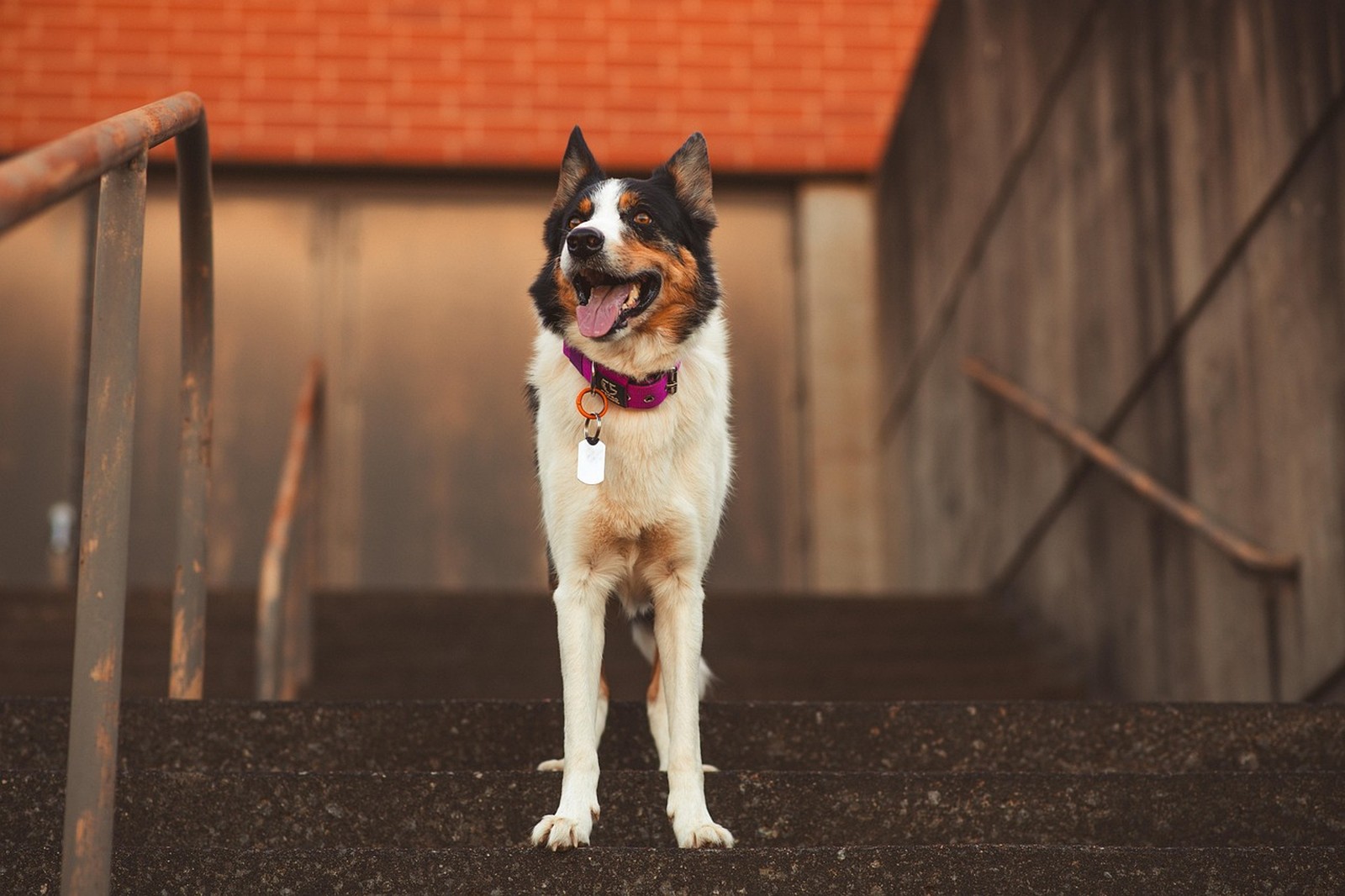
Chasing delivery drivers at the gate is one of the few behaviour problems where safety outranks training theory from the very first day. A dog who charges a gate as a stranger approaches is rehearsing territorial behaviour at full intensity, the driver cannot know whether your dog is bluffing, and a gate that bounces, a lead that slips, or a driver who opens it can turn rehearsal into a bite. So the retraining plan starts by making the chase impossible, then builds a different response far away from real deliveries until that response is strong enough to trust.
Why gate chasing escalates so reliably
From your dog's point of view, the routine works perfectly every time. A stranger approaches his boundary, he charges, barks, and throws himself at the gate, and the stranger leaves. The departure is the reward, whether the driver was retreating or simply continuing a round, and daily repetition makes the opening seconds, engine noise, van door, footsteps, trigger the full performance earlier and faster. Some dogs are genuinely fearful and want distance from the stranger; others find the chase itself exhilarating. Either way, each completed rep makes the next one more automatic and harder to interrupt.
Remove rehearsal while you train
Until retraining is well advanced, your dog does not get gate access during delivery windows. Keep him indoors, in a back room, or behind a second internal gate or fence line, and put a clear sign asking drivers to leave parcels at a box or porch point that does not require opening your gate. If your dog must be in the garden, supervise with a long line attached to a harness so you can prevent a full-speed charge without a collar jerk at speed. This management is not a failure of nerve; it is what stops the old behaviour strengthening while the new one is still fragile.
Train the alternative away from live deliveries
Build two skills separately, in low-pressure settings first. The first is a recall that pays exceptionally well, practised in the garden with no visitors, using top-tier treats or a favourite toy so coming away from interesting things becomes his most profitable habit. The second is a station behaviour: go to a mat or bed, settle, and stay while mild distractions happen. Then combine them in staged scenes with a helper playing the driver: engine sound at a distance, a walk up the path, a parcel set down, while your dog practises recall to you or holding his station, heavily rewarded. Only when he handles staged scenes calmly do you repeat them at greater realism, and real deliveries stay managed until his staged work is boringly reliable.
Protect drivers and be honest about risk
Tell regular drivers and your postal service that a dog is in training and where to leave items, and never ask a driver to help with training by approaching the gate. If your dog has ever made contact, snapped at a hand through the gate, or redirected onto a person or dog in the frenzy, or if you cannot physically prevent access to the gate, involve a qualified behaviourist promptly and consider a vet check for pain or anxiety that lowers his threshold. This is also a legal and neighbour-relations issue in many places, not just a manners one, so treat any escalation as a reason to get in-person help fast.
Delivery windows and practice sessions fall apart when each person in the house improvises, which is why KinsLe organises the plan through Care Teams, letting you assign who keeps the dog in at peak times and who runs each staged rehearsal, with completed sessions timestamped.