
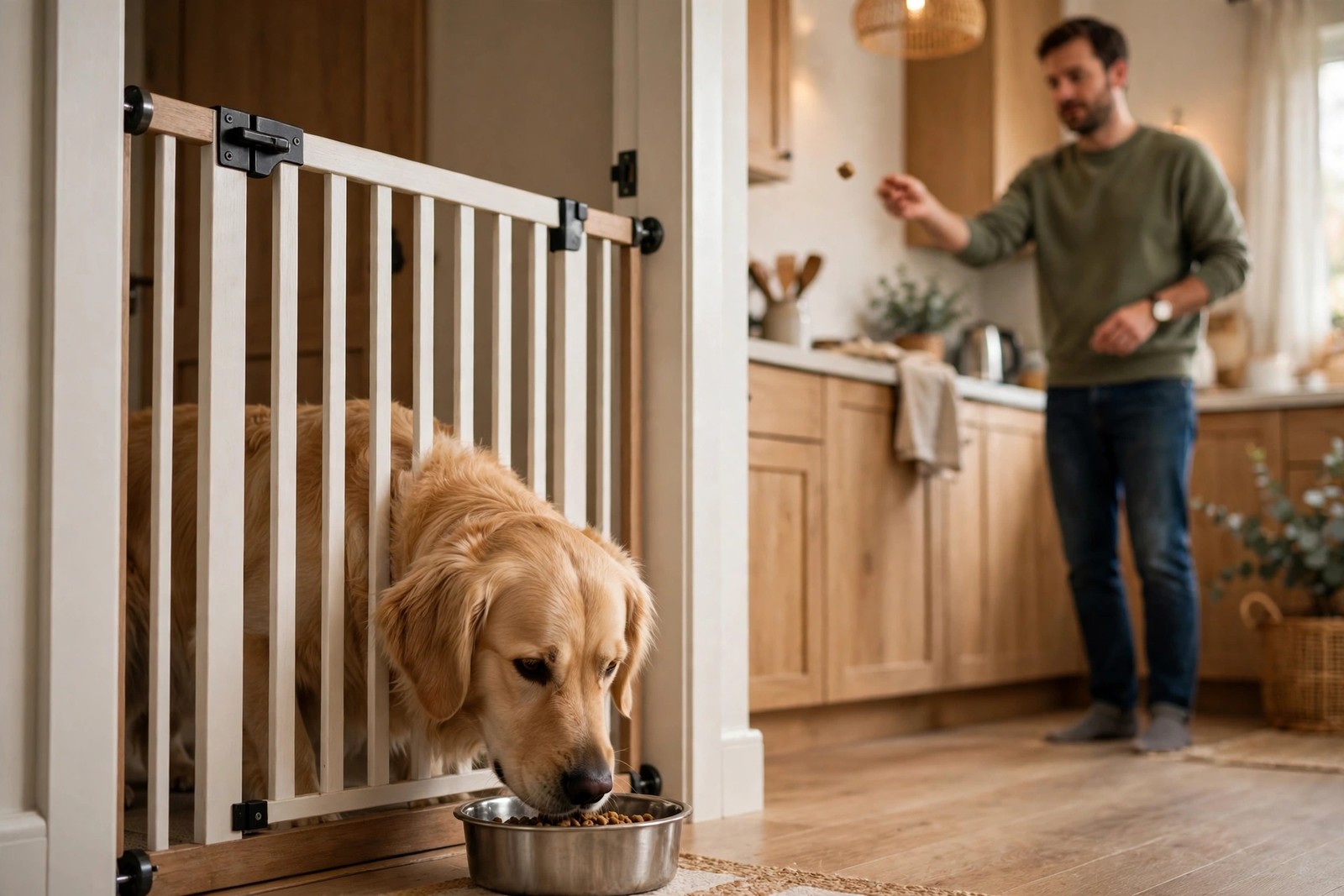
A dog who freezes over her bowl, hovers over a chew, or growls when someone approaches her toy is guarding a resource she believes she could lose. Guarding sits on a normal spectrum of dog behaviour, but it escalates predictably when it is punished or tested: taking the bowl away "to show her who is boss," scolding the growl, or prising toys from her mouth all confirm her fear that people near her things are a threat. The growl itself is valuable information and an honest warning — a dog whose growl is punished may skip the warning next time.
Safety and Management Come First
Before any training, remove the situations where a bite could happen. Feed her in a quiet, low-traffic spot — a separate room or behind a baby gate — and let her finish entirely undisturbed. Pick up leftover high-value chews rather than leaving them lying around for a child to wander into. Keep children away from her while she has food or prized toys, full stop: no cuddling at the bowl, no reaching games, no exceptions because she "seems fine today." Manage visitors the same way, and if she guards stolen items, manage the environment so socks, wrappers, and tissues are out of reach rather than setting up daily confrontations.
Trade-Ups and the Happy Pass-By
Training teaches one idea: people near my things make my life better, never worse. Start at a distance where she is relaxed, which might be across the room:
- As she eats or chews, walk past at that comfortable distance and toss something clearly better — a piece of chicken or cheese — near her bowl, then walk away. You are not reaching in; you are delivering a bonus and leaving.
- Over sessions spread across days, close the distance slightly only if her body stays loose: eating at normal speed, no freezing, no hard stare, no covering the item with her body.
- For toys, practise true trade-ups: offer a high-value treat or a second exciting toy, let her choose to leave the first item, reward her, and then give the original item back most of the time. Returning it proves trades are not theft.
- If she ever stiffens, speeds up her eating, or growls, you moved too fast — go back to the last easy distance next session instead of pushing through.
What Never to Do
Never snatch food or toys away to prove a point, never reach into her mouth for anything that is not an emergency, and never punish growling, hovering, or showing teeth. Do not let visiting children test her, and do not hand-feed confrontations or repeatedly put your hand in her bowl — old advice that often makes guarding worse, because it teaches her that hands at the bowl mean interference, not generosity.
When This Needs a Professional
Contact your veterinarian and a qualified behaviour professional promptly if she has snapped or bitten, if the guarding is spreading to new items, places, or people, if she guards from children in the home, or if the behaviour appeared suddenly, since pain and illness can lower a dog's tolerance sharply. Guarding with this intensity is not a do-it-yourself project, and a professional plan protects both her future and everyone in the house.
Household-wide consistency is what makes guarding work safe, and KinsLe Care Teams lets you assign the feeding spot, the no-disturb rule, and each staged trade-up step to every family member, so no one improvises a risky shortcut.