
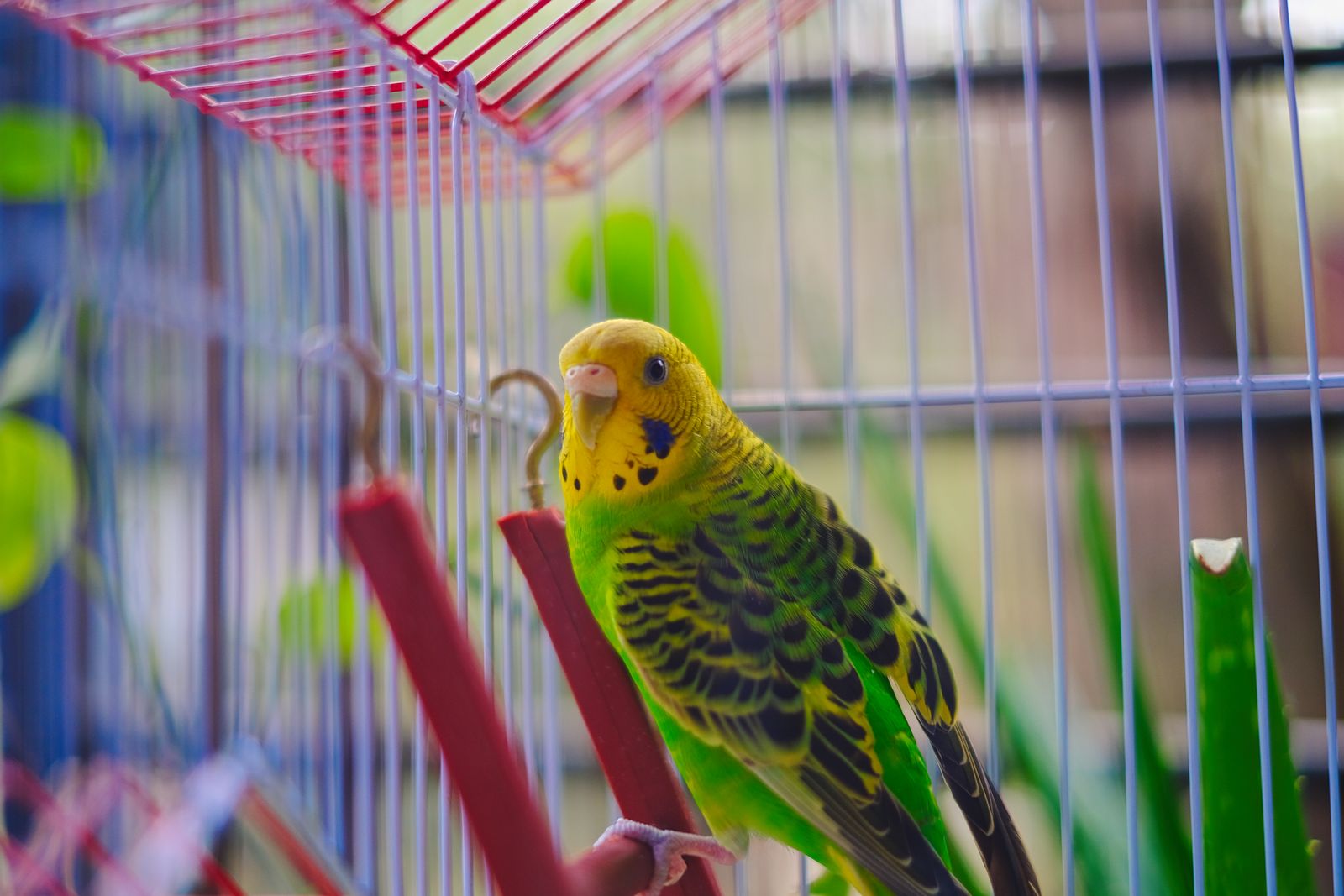
Yes — a budgie that flutters away from your hand can usually be tamed, but only at the bird's pace: sit nearby, talk softly, rest your hand near the cage rather than in it, and let millet do the persuading. Chasing or grabbing for a shortcut resets trust in seconds, while five calm minutes a day quietly builds it.
Why Your Hand Looks Like a Predator
To a small prey bird, a hand descending from above looks a lot like a hawk. Budgies are flock animals who read movement constantly, and a new home, a new cage, and a giant reaching in are a lot to process at once. A scared budgie isn't stubborn or untrainable — it's doing exactly what keeps wild budgies alive. Expect the early signs to be subtle: sidling to the far perch, going very still and sleek, or breathing fast with an open beak. Those are requests for space, and honoring them is the first lesson your bird learns about you: you listen.
Week One: Be Boring and Nearby
Start outside the cage entirely. Pull a chair up beside it and read, work, or scroll for 15–20 minutes a couple of times a day, talking or softly whistling now and then so your voice becomes part of the scenery. Don't stare directly — soft, sideways glances feel safer to birds.
Millet Diplomacy: The Hand Becomes the Treat Dispenser
Once your budgie eats and chirps normally with you nearby, rest your hand flat on the outside of the cage for a few minutes — still, relaxed, no tapping. After a few days of that, open the door slowly and rest your hand just inside, low and motionless, holding a sprig of spray millet so the bird must lean toward your fingers to eat, without having to step on you. Let the budgie choose to approach, nibble, and retreat. Most birds need several of these sessions before the hand stops being furniture-with-a-threat and becomes the millet machine. Only when eating near your hand is relaxed should you try offering millet from an open palm, and later, gently press a finger against the lower belly to invite a step-up — never scoop from above.
A Simple Daily Routine That Works
- Keep sessions short — five to ten minutes, two or three times a day — and always end before your bird gets anxious. - Work at the same times daily; budgies relax into predictable rhythms. - Move slowly, announce yourself with a soft hello, and avoid sudden hand movements or grabbing from above. - Never chase a budgie around the cage or pull it off a perch; towel-grabbing is for genuine emergencies only. - Reward bravery instantly: a nibble of millet, a cheerful word, then space to enjoy the win.
Safety and Patience Checks
Wash your hands first, and keep sessions away from ceiling fans, open windows, and other pets. If your budgie stops eating, sits fluffed and sleepy for long stretches, or shows discharge around the cere or eyes, that's not a taming problem — pause training and check in with an avian veterinarian, because illness makes any bird more fearful. Also skip hand-taming during a heavy molt if your bird is clearly itchy and irritable; a few gentle days won't undo your progress.
When a Step Stalls, Ask a Follow-Up
The real secret with shy budgies is showing up briefly, calmly, and every single day — and noticing which step your bird has accepted before you move to the next one. If millet through the bars is working but an open palm still sends your bird fluttering to the far perch, stay at the bars for more sessions rather than pushing on; trust built slowly is the trust that holds. If a particular step keeps stalling, KinsLe's Kimmy draws her answers to follow-up questions from this Answers library in KinsLe.