
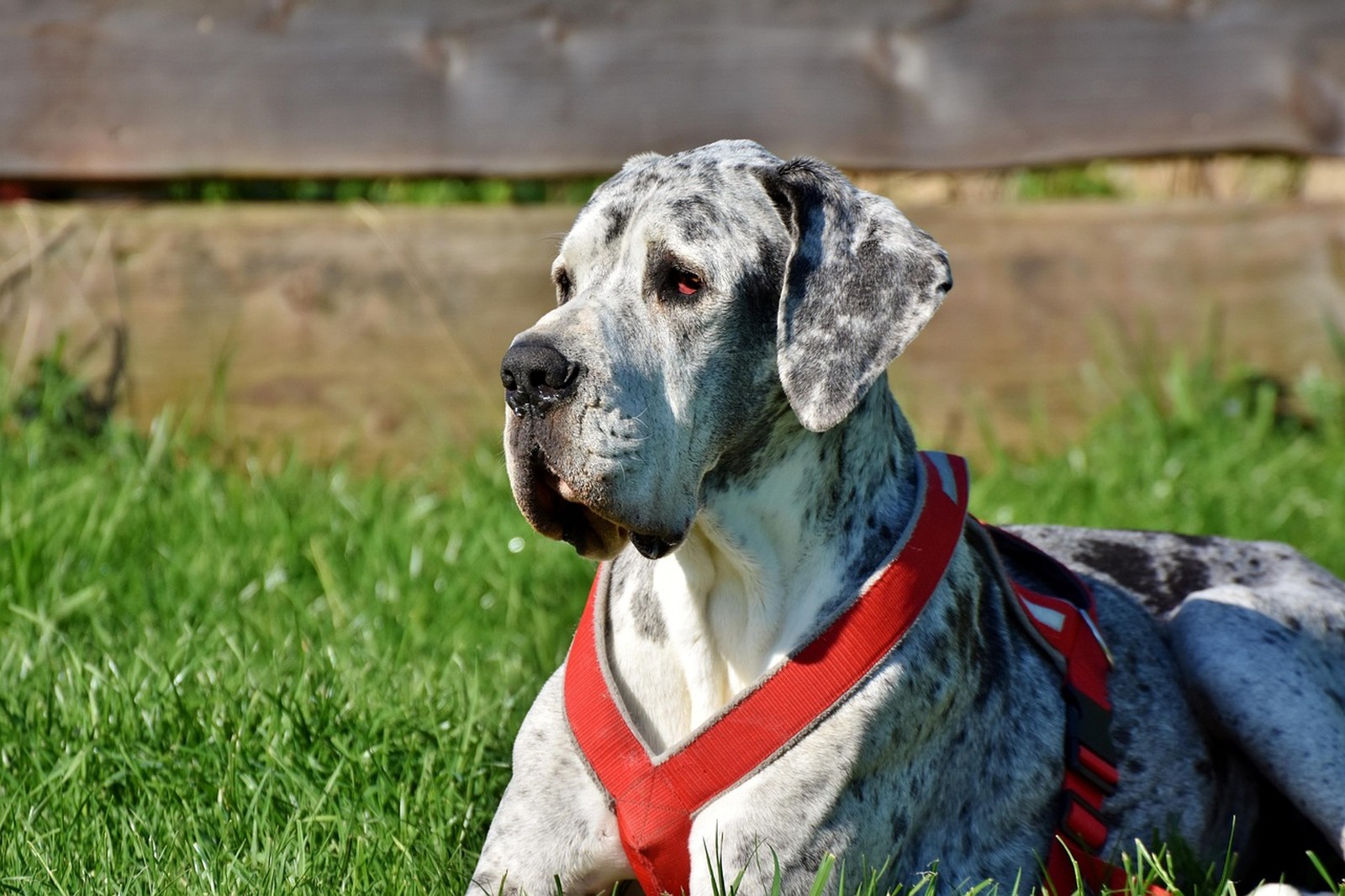
Why a Great Dane month costs more
There is no small version of a Great Dane bill. This is a giant breed, and monthly keeping costs sit at the top of the range for ordinary pet dogs because food, equipment, transport and veterinary care all scale with sheer body mass. A prospective owner should budget for a dog who eats like several smaller dogs combined, sleeps on furniture built for people-sized occupants, and cannot be squeezed into standard crates, cars or boarding kennels. The Dane temperament is famously gentle and undemanding indoors, which saves on activity costs, but it does nothing to shrink the fundamentals that arrive every single month.
Food: the biggest recurring line
Feeding a Dane is the dominant monthly expense, and it stays dominant for life. A growing young Dane eats heavily, and even a settled adult needs a large daily ration of quality food suited to a giant frame, often split into smaller meals through the day, a routine many owners follow on veterinary advice for this deep-chested breed. Treats, chews and supplements are likewise consumed at giant scale and giant prices. Owners can soften the blow by buying food in the largest practical formats and keeping a consistent diet rather than rotating through bags that get wasted, but there is no honest way to make Dane feeding cheap, and under-budgeting here is the commonest first-year mistake.
Oversized gear, space and transport
Everything a Dane uses is the largest size sold, and largest usually means dearest and shortest-lived under that weight. Beds need thick support for heavy joints and still flatten quickly, collars and harnesses must be genuinely strong, and a crate or car guard for a Dane is a serious purchase. Transport quietly adds cost too: a dog this size can rule out smaller cars, some taxis and plenty of holiday accommodation, and boarding options narrow to places with genuinely big kennels and staff confident handling a dog who may outweigh them. Even professional walking costs more when a service charges by size or sends two handlers.
Veterinary care at giant scale
Routine care for a Dane — check-ups, vaccinations, parasite prevention and dental work — is priced at the top weight band almost everywhere, because preventives, anaesthesia and most treatments are calculated by body weight. Danes are also a breed where owners should hold a real emergency buffer: stomach emergencies in deep-chested giants are a recognised risk, heart and joint problems are part of breed conversations with vets, and any surgery on a dog this size is a major event financially as well as medically. Their lifespan is shorter than smaller breeds, which concentrates senior care costs into fewer years rather than removing them.
Making a Dane budget workable
A realistic Dane budget plans food in bulk, replaces core gear on a cycle instead of in a panic, keeps the veterinary buffer topped up monthly, and lines up size-appropriate help before it is needed rather than paying premium rates in a scramble. That preparation is where KinsLe's Pet Services Directory earns its place, connecting Dane owners with local boarders, walkers and groomers who can genuinely accommodate a giant dog.