
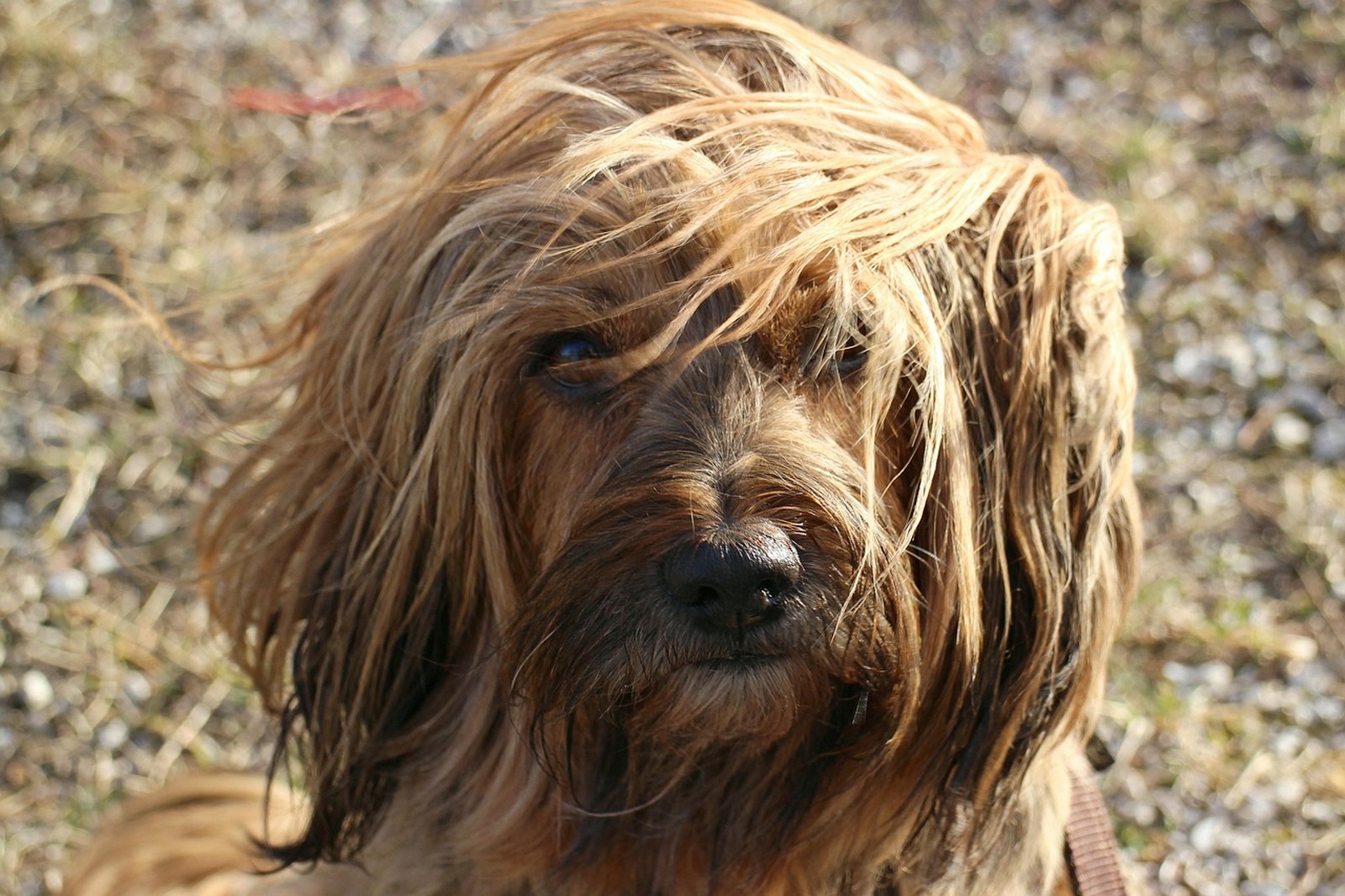
The standard schedule for a Tibetan Terrier
One routine checkup a year is right for a healthy adult Tibetan Terrier. Puppyhood calls for several visits spaced through the first months, and once the dog is a senior, twice a year is the safer rhythm. Despite the name, this is not a true terrier but an old companion breed from Tibet, sturdy and medium-sized, and its checkup needs are driven less by size than by what hides beneath that famous double coat.
What the coat conceals, the checkup reveals
A Tibetan Terrier's hair falls over the eyes, fills the ears, and covers the skin in a dense layer. Owners see a cheerful outline; the vet needs to see the dog underneath it. At a routine visit the coat is parted along the back and belly to check for matted areas pulling on skin, hot spots, or parasites, the ears are looked into because hair and moisture gather there, and the paws are checked between the toes where mats and grit collect on those flat, snowshoe-like feet.
Eyes deserve deliberate attention in this breed. The vet will look for cloudiness, discharge, or irritation caused by hair rubbing the surface, and may discuss inherited eye concerns that screening can pick up before vision changes are obvious at home. If your dog rubs a face along the carpet, squints in bright light, or starts misjudging steps, that is a reason to be seen promptly rather than at the next annual visit.
Teeth, joints, and the middle years
Tibetan Terriers can pack dental problems into a moderate mouth, so the annual exam includes lifting those flews and looking for tartar, red gums, or a tooth that has quietly gone bad under the gumline. Bad breath in this breed is rarely just bad breath.
Hips are the joint of interest. The vet will feel the hindquarters, watch the dog move, and ask about bunny-hopping, stiffness after rest, or reluctance with stairs. Keeping a Tibetan Terrier lean is joint medicine in itself, and the checkup is where an honest body-condition score replaces guesswork, especially when a full coat makes a dog look heavier — or hides a ribcage that has actually become too easy to feel.
Puppy visits and the senior shift
Puppy appointments check growth, the bite, retained baby teeth, and whether both eyes are developing normally under that fringe, and they build the handling habit early: a Tibetan Terrier groomed for hours in adult life must learn young that being touched all over is safe. Ask at these visits how to lift the hair and check ears and eyes at home between appointments.
Senior Tibetan Terriers benefit from twice-yearly exams with screening blood and urine work when the vet suggests it, watching kidney and liver values, weight drift in either direction, and lumps that a thick coat conceals. Hearing and vision changes creep in too, and a vet who knows the dog's baseline spots them earlier. New drinking habits, night-time restlessness, or a coat that suddenly comes out in handfuls are all book-now signals, not wait-and-see ones.
Before and after each visit
Arrive with specifics: when the paw licking happens, which eye waters, what changed in appetite or energy. Photographs of a skin patch or a cloudy eye taken at home can help, because coat and mood both look different in a clinic. Afterwards, file what was checked and what needs watching, so next year's exam builds on this year's instead of starting from memory.
That continuity is exactly what KinsLe's Pet Passport is for with a Tibetan Terrier, gathering eye findings, dental notes, and screening results into one record that any vet can read in moments.