
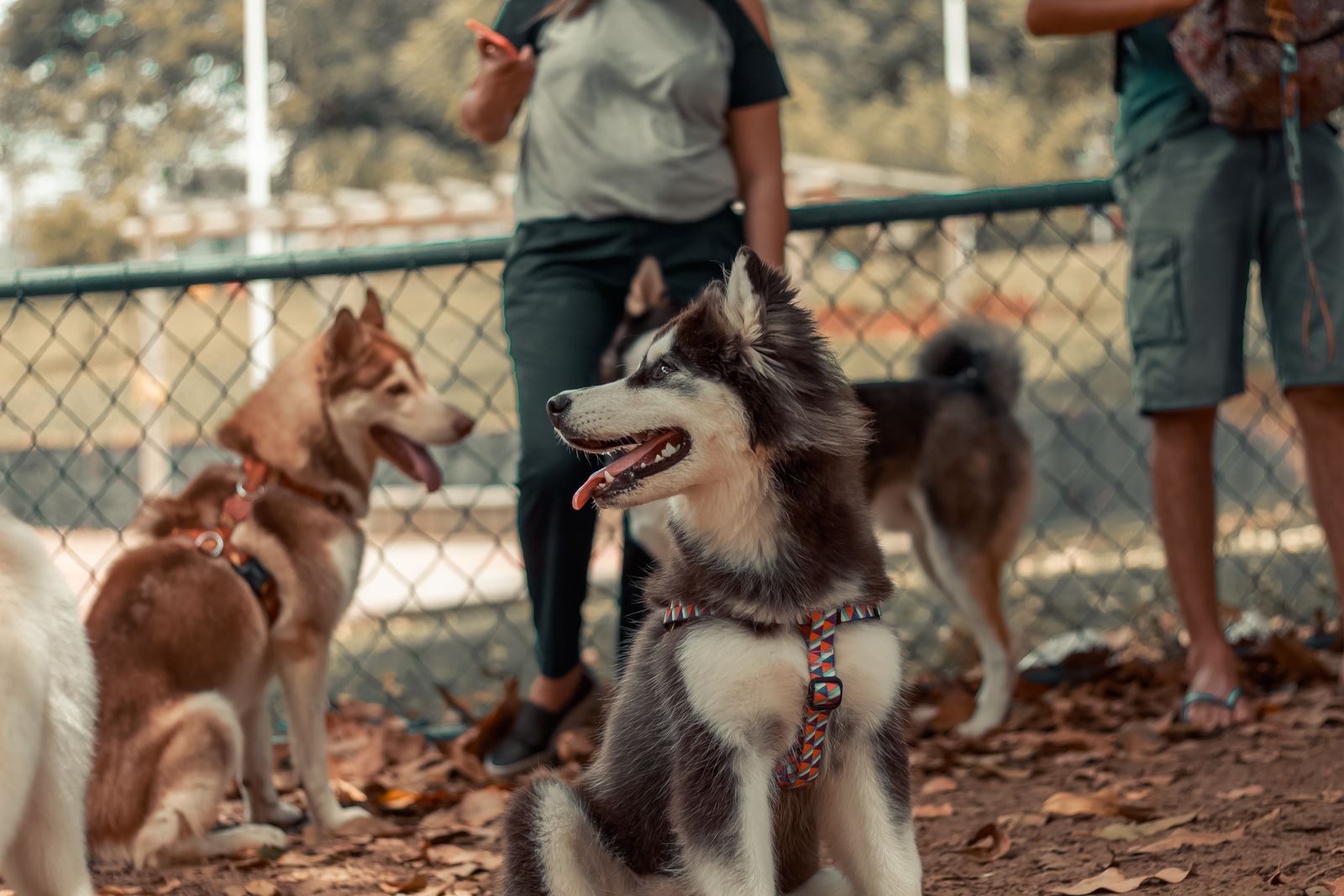
Start polite greetings by not greeting at all — work at a distance where your dog notices other dogs but can still take treats, look back at you, and think. That lunging and barking is often frustration at wanting to say hello, or discomfort at being trapped on a leash, and either way, flooding him with close encounters makes it worse. Reward calm looking, close the distance gradually over many sessions, and skip nose-to-nose greetings on tight leashes entirely.
Frustration, fear, or a bit of both
Leash reactivity has two common engines. The frustrated greeter adores other dogs and erupts because the leash blocks the social payoff — whining, pulling, and a meltdown that ends if he gets to say hello. The uncomfortable dog wants space: stiff body, hard stare, barking that intensifies on approach, and relief when distance grows. Many dogs are a blend, and early training looks similar, but frustrated greeters often graduate to parallel walks and greetings, while fearful dogs may always prefer distance — a perfectly acceptable outcome.
Find the threshold and work under it
Threshold is the distance where he notices another dog but can still eat, respond to his name, and move with you — across a park for some dogs, across the street for others. Work there: when a dog appears, mark the moment yours looks — "yes!" — and feed something excellent. Over sessions, shrink the distance in small steps only when the current one looks easy. Refusing treats, a locked stare, or unrecoverable barking means you moved too fast; calmly increase distance and end on an easier repetition. Progress is measured in weeks.
What to stop doing right away
- Stop letting other owners drag their dog up for a leash greeting because "he's friendly." Tight leashes, face-to-face approaches, and tangled lines turn normal body language tense.
- Stop walking head-on toward dogs on narrow sidewalks. Cross early, step into a driveway, or turn down a side street.
- Stop rehearsing failure on the same dog-dense route at peak hours. Choose quiet times and wide spaces while you train.
Parallel walking is your bridge activity: walk the same direction as a calm dog at a comfortable distance, gradually narrowing the gap over outings. Movement together, without face-to-face pressure, teaches polite social skills far better than sidewalk confrontations.
Safety for dogs and people
Use a well-fitted harness or collar your dog cannot slip, a standard leash rather than a retractable one, and keep a secure grip without wrapping the leash around your hand. If your dog redirects frustration onto the leash or your leg, has a bite history, or you feel outmatched by his size and intensity, bring in professional help promptly rather than practicing alone. Children should not hold the leash of a reactive dog.
Finding a coach through KinsLe
Technique matters here, and a second pair of eyes speeds everything up. KinsLe's Pet Services Directory connects you with local groomers, vets, sitters, and trainers, so you can find a qualified trainer to coach your first practice setups, assess whether your dog is frustrated or fearful, and build a plan at the right pace. Your first pet profile is free, and having your dog's details ready helps any trainer you contact. Find a trainer who works with leash reactivity through the Pet Services Directory on KinsLe, then let that coach set your first parallel-walk distance and watch your timing in person.