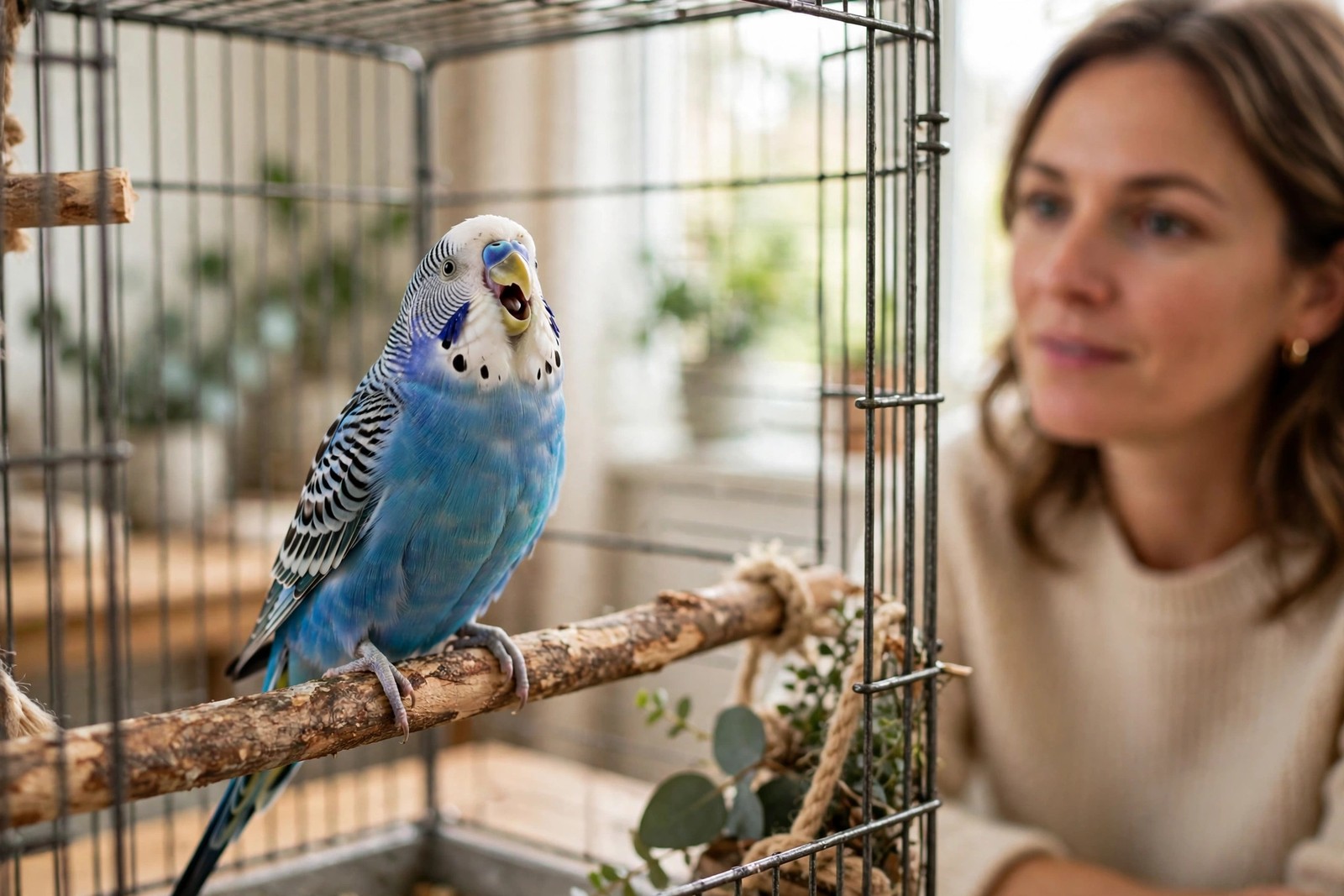
A chirping budgie is, most of the time, a budgie announcing that life is good. Budgerigars are flock birds who maintain near-constant vocal contact with their companions, and a pet budgie counts you and your household as the flock. Silence from a normally chatty bird is far more concerning than noise — so the first job is learning which chirping means what, by listening to its shape and watching the body that goes with it.
The happy chatter most owners hear
Contented chirping is varied, musical, and rambling: a stream of warbles, clicks, soft chatter, and fragments of learned sounds, delivered with sleek or slightly loose feathers, bright eyes, and pauses for beak grinding, stretching, or a head bob. It often swells when the room gets busier, when music or the television is on, when water runs, or when you talk back — budgies are joiners, and background noise invites a contribution. Many males in particular sing long, elaborate sessions to a favourite toy, a mirror image, or a preferred person, which is courtship-flavoured contentment and entirely normal for a healthy bird.
Flock calls and excitement have their own sounds
A flock call is different in intent: louder, sharper, and repetitive, fired off when you leave the room, when another bird answers from elsewhere in the house, or when your budgie simply wants to confirm where everyone is. Answering it once, calmly, often settles it — the bird got the contact it was asking for. Excitement chirping sits between the two: fast, bright bursts at dawn, at the sight of a millet spray or a bath, during a flight around the room, or when a favourite person walks in. Young budgies and new arrivals may also chirp more as they test the acoustics and the audience of a new home, settling as routines become familiar.
When chirping is asking for something
Persistent, escalating calling can be a request rather than a mood. Check the basics the way the bird experiences them: has the cage been quiet and uncovered too long, is the bird short on sleep after late, bright evenings, is a companion bird out of sight, or has out-of-cage time and stimulation shrunk in a busy week? Bored budgies call for occupation — rotate toys, offer foraging in a tray of safe greens or crumpled paper, and keep daily time out of the cage predictable. A lone budgie in a silent house all day is a bird with a genuine social deficit, and more contact, sound, and routine will usually soften the calling more than any attempt to hush it.
Sounds and signs that are not just chirping
Learn the edges of normal. Harsh, relentless squawking paired with fluffed feathers, a hunched posture, tail bobbing with each breath, half-closed eyes, or a bird who stops eating is not chatter — those are signs to contact an avian vet promptly, because birds hide illness and vocal change may be the first clue you get. A sudden lasting drop into silence from a noisy bird matters for the same reason. Screaming only at one trigger, such as a hand entering the cage, points to fear of that trigger rather than illness, and is handled with patience and distance, not punishment, which budgies do not understand. Logging what time the chirping peaks, what was happening, and how your budgie looked turns a vague feeling that he chirps all the time into a clear picture of a contented flock bird keeping in touch. And when the log still leaves a pattern unexplained, send KinsLe's Kinny your follow-up; his replies come from the library behind KinsLe Answers, helping you read the chatter against what your budgie was doing at the time.