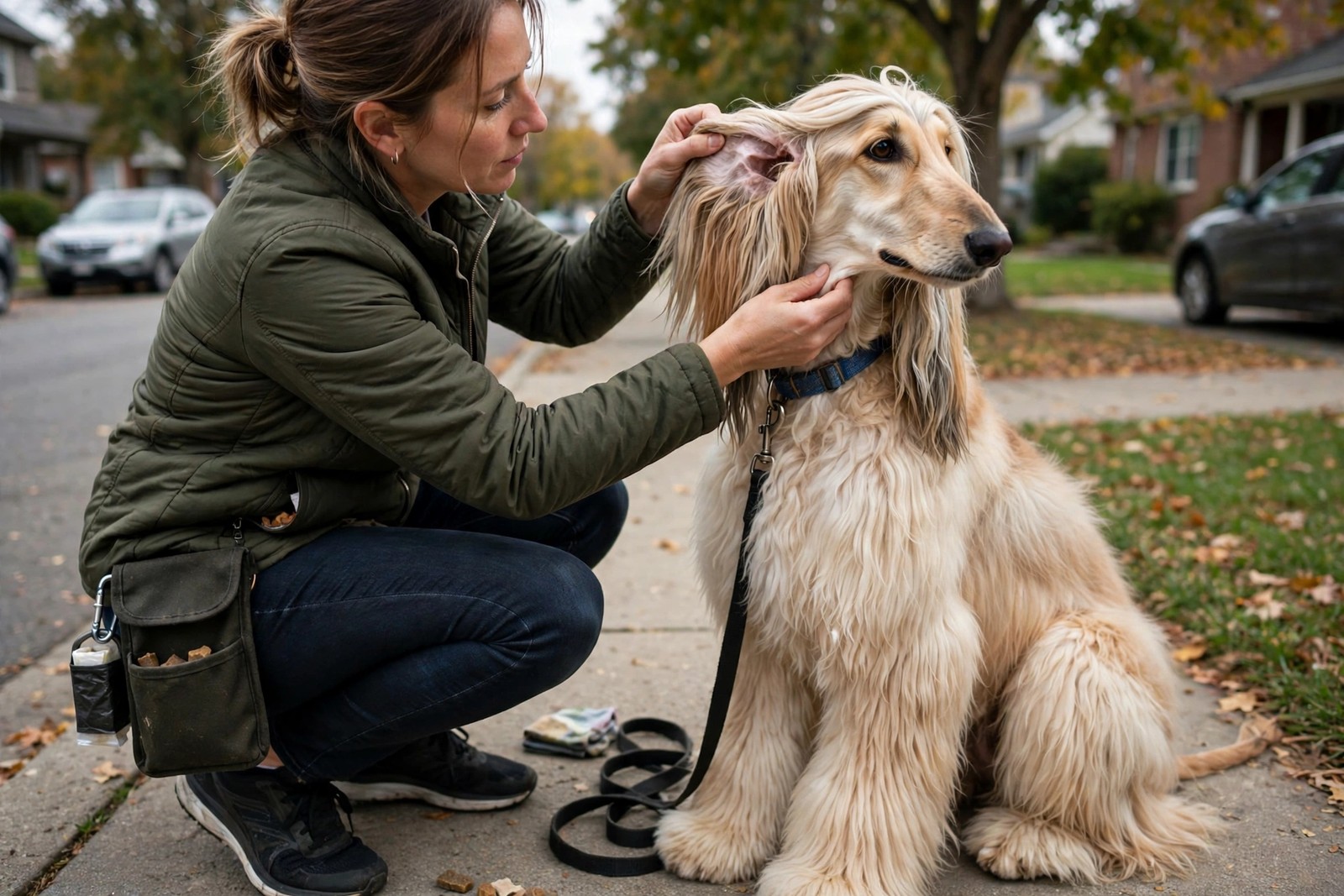
Few owners grasp quite how much upkeep an Afghan Hound's flowing coat involves before the first mat forms. The fine hair must be worked through layer by layer, right down to skin level, several times each week, bathed with conditioner worked in carefully, and dried completely afterwards. Feathering around the ears conceals the canal, so a weekly lift, look and sniff belongs in the same routine, along with an ear cover at mealtimes. Never brush the coat bone-dry for long sessions, and work tangles out with fingers before any brush. Many pet owners keep a slightly shorter trim and a standing professional appointment, which is a sensible kindness, not a failure.
What Owners Need to Know
The underestimation starts with the texture: Afghan hair is so fine that a coat can look smooth on the surface while webbing into felt underneath, especially behind the ears, in the armpits and where a harness rubs. Brushing in layers, lifting sections and working down to the skin, is the only way to know the coat is truly clear. The long ear feathering drags through food and water, which is why a snood or ear cover at meals is practical rather than precious, and why the canal beneath that feathering needs a weekly look and sniff for redness or odour.
A Workable Routine
Work through these in order and give each one time to become routine before you judge it:
- Brush in layers down to the skin several times a week, never only over the surface
- Ease tangles out with fingers first, then brush, rather than pulling through webbing
- Bathe with careful conditioning and dry the coat fully before the final brush-through
- Lift, look into and sniff each ear weekly, and use an ear cover at mealtimes
- Keep a standing professional grooming appointment if the full coat proves too much
An Afghan who learns this routine young, handled calmly and rewarded through it, will stand for the long sessions the coat requires; one who is wrestled through matted grooming learns to dread the brush, and the coat suffers for it.
Keeping It Going
Tie the big brush-throughs to fixed points in the week — after the same walks, on the same evenings — because Afghan coat care postponed for a fortnight becomes a dematting project rather than maintenance. Check the hidden friction spots every time: behind the ears, under the collar, between the front legs. Assign the week's layered brushing and ear checks through Care Teams in KinsLe, and the timestamp beside each finished task shows nothing was missed.