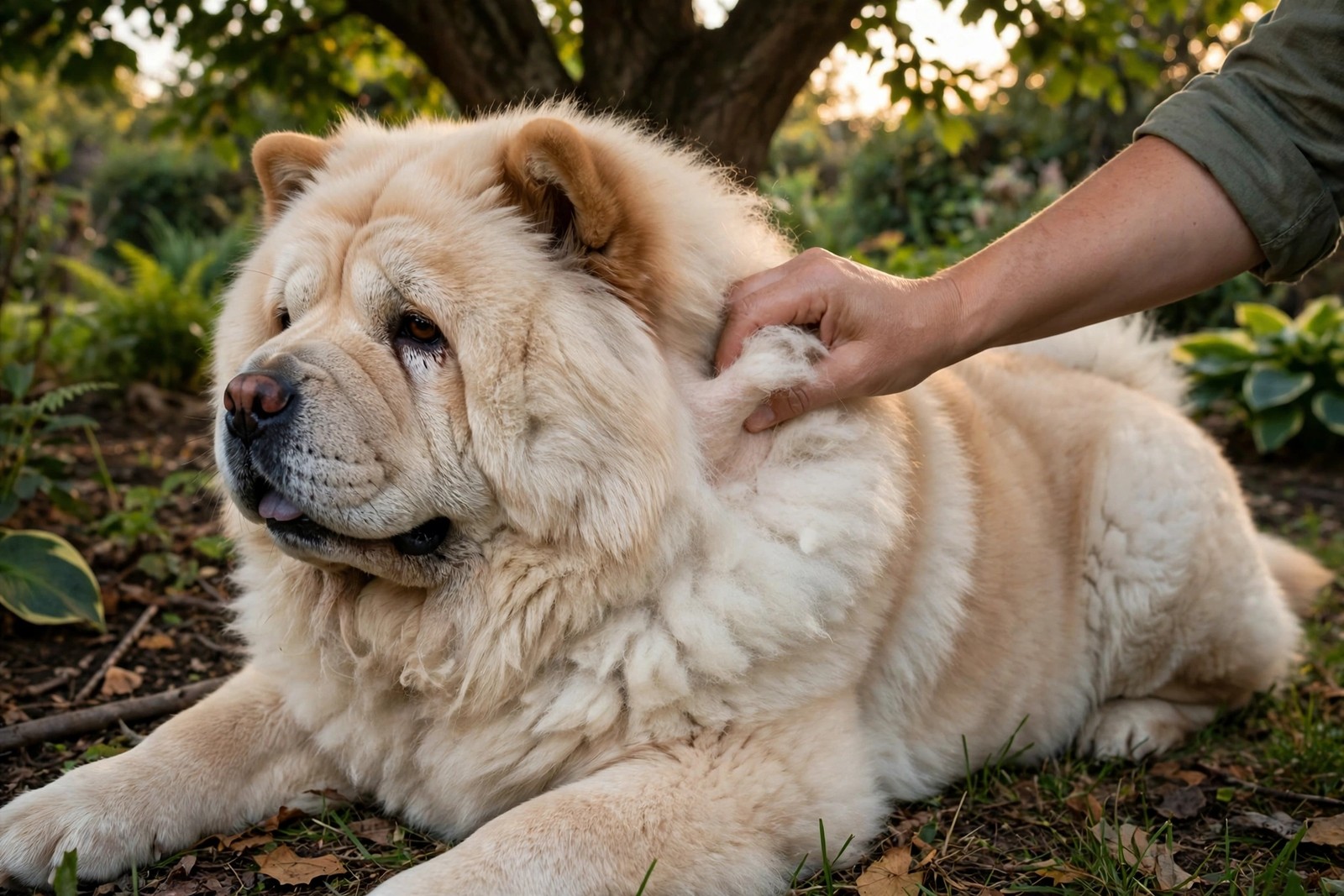
A Chow Chow ages behind a magnificent disguise. The lion-like coat hides weight gain and skin trouble, the breed's self-contained manner hides stiffness and sore eyes, and the thick ruff makes hot days harder than they look. Senior care for this breed is therefore about looking deliberately: twice-yearly senior vet visits, a weekly hands-on check at home, and honest attention to weight, eyes and temperature. Your veterinarian, who can examine your dog, decides what your individual Chow Chow needs.
Eyes First: Lids That Roll Inward
Chow Chows are a breed where entropion — eyelids rolling inward so lashes and hair rub the surface of the eye — deserves real awareness, and ageing, weight change or loss of tone around the eye can make a borderline lid worse. Watch for watering, squinting, pawing at the face, a discharge that keeps returning, redness, or a cloudy patch on the eye's surface. Check the eyes weekly, easing the ruff back so you can actually see them, and treat a painful, half-closed eye as a same-day vet call rather than something to monitor. Do not trim hair around the eye yourself or use leftover drops; only an examination can show whether the surface is already damaged.
Hips, Elbows and Stiff Mornings
Hips and elbows are the joints to track in this breed, and arthritis announces itself quietly in a dog who was never demonstrative to begin with: slower rising after rest, hesitation at stairs or at jumping into the car, a shortened stride, grumpiness when a leg is handled, or sleeping in new positions. Note when stiffness appears — many arthritic dogs loosen after a few minutes of movement and stiffen again after a long sleep, and that pattern is useful information for your vet. Keep walks daily and moderate rather than rare and long, use a ramp for the car if your dog hesitates, and keep nails short so the feet land properly. Weight is part of joint care: feel for the ribs weekly, because you cannot judge a Chow Chow's condition by looking through that coat.
Thyroid, Weight and What the Coat Hides
An underactive thyroid is a conversation worth having in this breed when the pattern fits: weight creeping up on unchanged food, energy and interest dipping, or the coat thinning and losing quality, sometimes with skin that darkens or flakes. None of these signs settles anything on its own — each has several possible causes — which is exactly why the useful owner move is to record the changes with dates and ask your vet whether testing makes sense for your dog. The same weekly session is your skin check: part the double coat down to the skin in several places, looking for flakes, red patches, hot spots under the ruff and around the tail, and any area your dog chews. An ageing Chow Chow who suddenly smells different under the coat is telling you something; a note of where and when helps the vet more than a general report that the skin seems off.
Heat Tolerance: The Coat Cuts Both Ways
That dense double coat insulates against cold, but combined with a relatively short muzzle it makes heat a genuine senior risk, and older dogs regulate temperature less well. In warm weather, walk in the coolest parts of the day, offer water often, and never leave your dog in a car or a sun-trap garden without shade. Heavy panting that does not settle with rest, drooling, wobbliness or unusual dullness in the heat means move to shade, offer cool (not iced) water, and phone the vet promptly. Never shave the double coat down in an attempt to help: the coat protects the skin beneath it, and clipping decisions for an older Chow Chow are better made with your vet or an experienced groomer who knows the breed. KinsLe's Pet Passport holds the eye history, thyroid results, six-monthly weights and coat notes for your Chow Chow in one portable record, so each senior visit builds on the last instead of starting from memory.