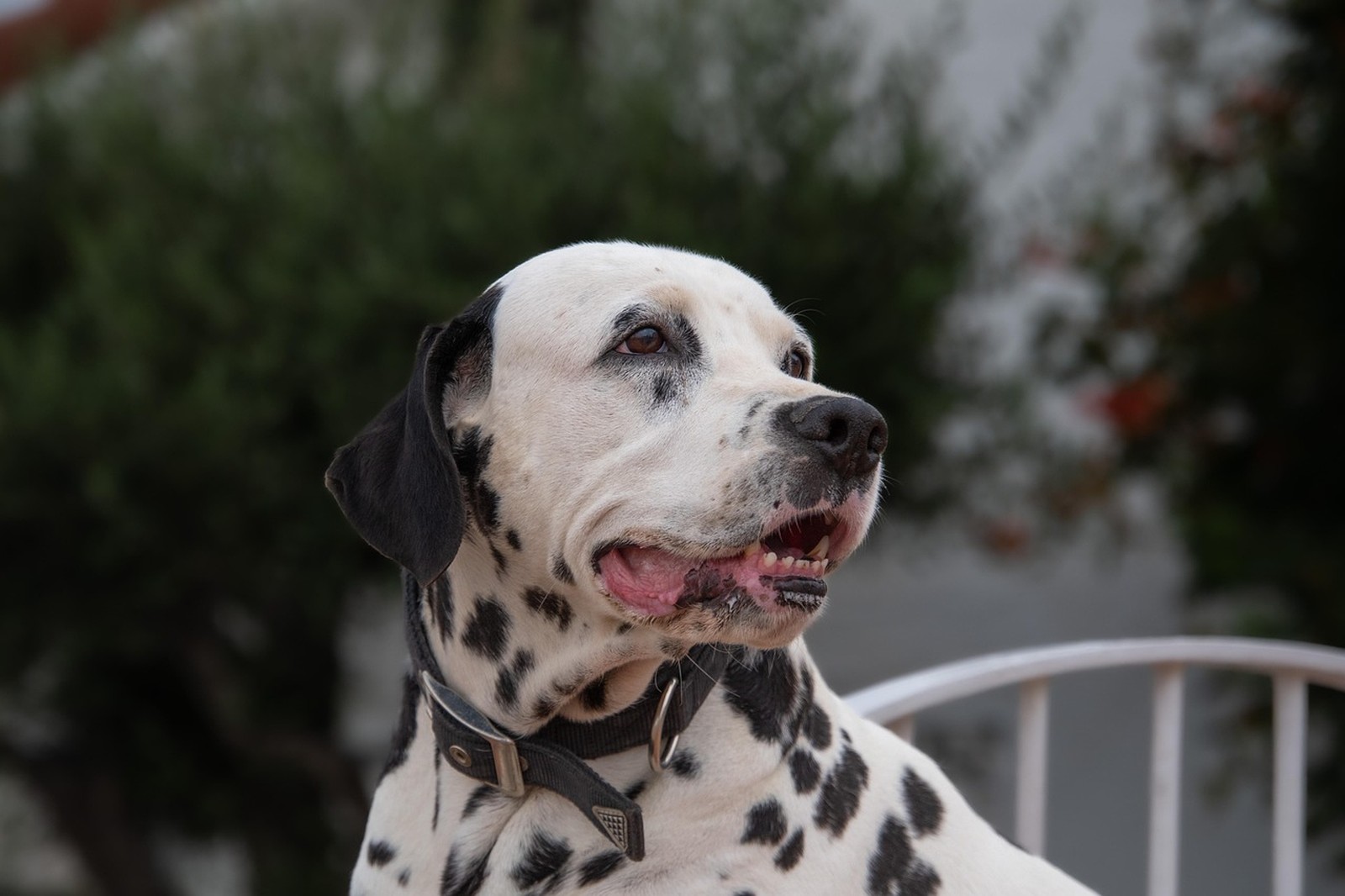
Both dogs are lean, short-coated athletes built to cover ground, and both will dismantle a sedentary household's peace within weeks. The differences lie in what that athleticism was for. The Dalmatian developed as a coach dog, trotting for long stretches beside horse-drawn carriages, then guarding horse and vehicle at stops. The Pointer, including the English Pointer and the related German Shorthaired type, developed to range ahead of hunters, locate birds by scent, and lock into a statuesque point. One is a marathon escort with a guard's eye; the other is a scenting specialist.
Looks beyond the spots
The Dalmatian is unmistakable: white coat, round black or liver spots, born pure white with the pattern arriving as the puppy grows. Its build is balanced and muscular, made for trotting efficiency rather than sprinting. A Pointer is usually slightly rangier, with a chiselled head, a pronounced stop, and a coat in solid or patched colours such as lemon, liver, black, or orange, often ticked. The Pointer's expression turns electric outdoors, nose working constantly. Indoors the Dalmatian often looks more composed; the Pointer looks like it is waiting for permission to resume searching.
What drives each dog outdoors
Take both to an open field and the Pointer's purpose ignites: it quarters the ground in wide casts, and birds, real or imagined, reorganise its entire brain. Recall training around wildlife is serious work because that drive is the breed. The Dalmatian also loves to run and was bred for extraordinary endurance at a steady trot, making it a natural partner for runners and cyclists once adult, but its focus is companionship on the move rather than game-finding. Dalmatians are more likely to keep an eye on you; Pointers are more likely to be a white speck on the horizon still hunting.
Temperament at home
Dalmatians tend to be loyal, watchful, and somewhat reserved with strangers, a leftover of guarding valuable horses and coaches. They can be strong-willed and do best with consistent, experienced handling. Pointers are typically softer with people, famously sweet and sometimes goofy in the house once exercised, but their sensitivity means harsh handling shuts them down. Both breeds are poor kennel-and-forget dogs; boredom in either produces pacing, barking, and redecorating. Neither suits a first-time owner who wants an easy dog, though for different reasons: the Dalmatian tests your leadership, the Pointer tests your schedule.
Exercise, coat, and practicalities
Plan on substantial daily exercise for both, measured in real activity rather than garden access: long runs, field walks, and training that engages the brain. Both shed short, stiff hairs that weave into upholstery all year, despite the tidy-looking coats. Dalmatian owners should know the breed has a distinctive urinary chemistry, so diet and constant access to water and toilet chances are lifelong management points to discuss with a veterinarian. Dalmatian puppies also deserve hearing screening, as deafness in one or both ears occurs in the breed. Pointers are generally hardy but need ear checks after wet field work.
Deciding between spots and point
Choose a Dalmatian if you run, want an eye-catching and watchful companion, and can offer firm, fair guidance plus serious daily exercise. Choose a Pointer if your life already revolves around countryside walks, training a hunting-style dog, or canine sports, and you can give that nose a proper outlet every day. Meet working-line and show-line dogs separately where possible, because energy varies within each breed too. If you take on an adult of either breed, KinsLe makes the change easier through Transferrable Profiles, so exercise routines, feeding notes, and vet records move with the dog.