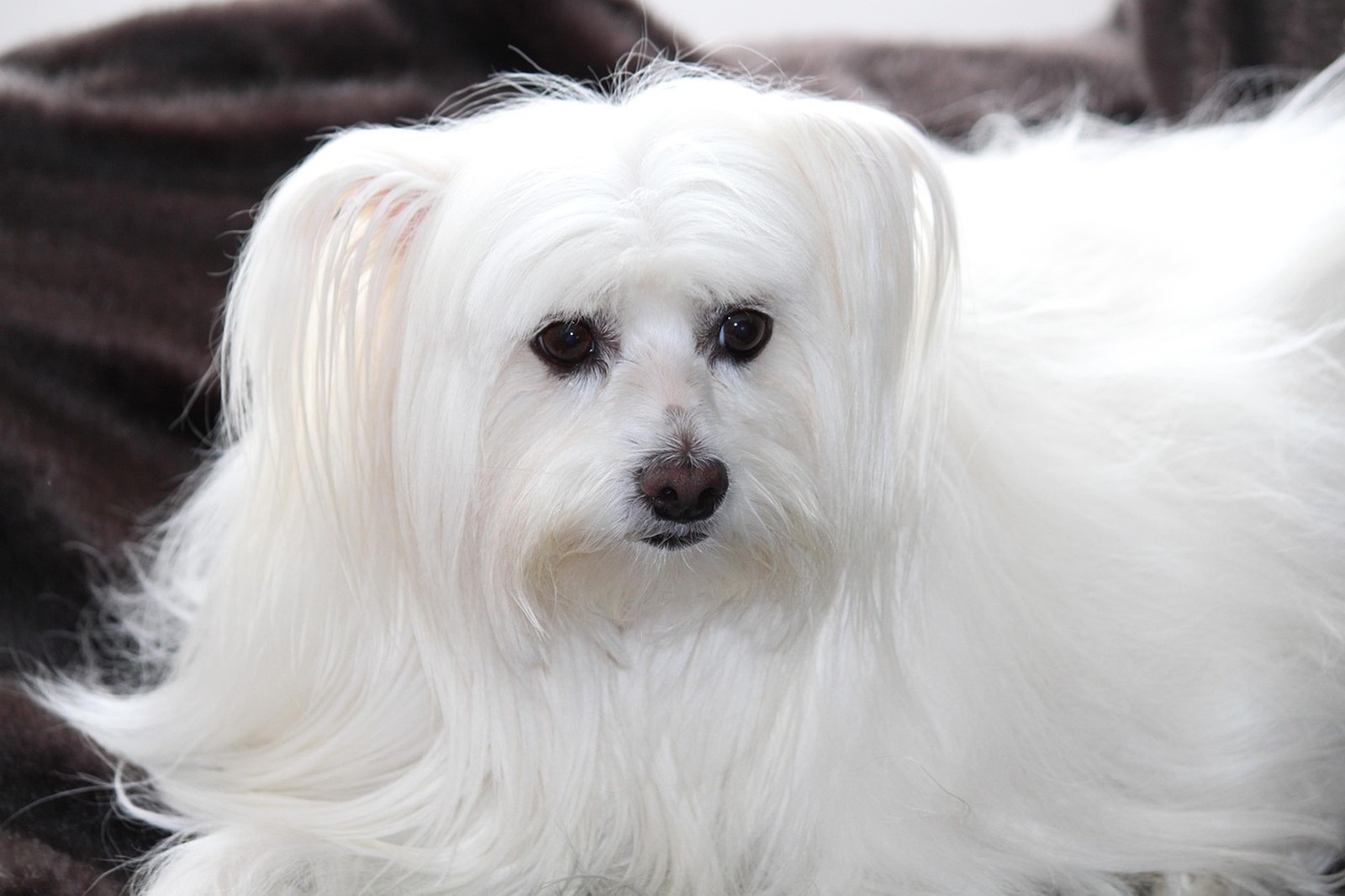
Two small white dogs, two very different coats, and one frequent confusion at the grooming salon. The Maltese is an ancient Mediterranean lap breed whose glory is a single coat of silky, straight hair that would reach the floor if grown out. The Bichon Frise descends from Mediterranean water-spaniel and barbet types refined into a companion with a double coat: soft undercoat, curly outer coat, scissored into a round, plush silhouette. Put them side by side and the Maltese looks like a dog in a silk gown while the Bichon looks like a dog in a cloud.
Build and substance
Maltese are the smaller and finer of the two, light-boned and delicate, with a level back and hair parted down the middle when in full coat. Bichons are a step up in size and substance, with a sturdier body, a plumed tail curled over the back, and a head carried proudly with dark, round, expressive eyes. That extra robustness makes the Bichon a slightly better match for families with sensible older children, while the Maltese's fragility argues for a calmer, mostly adult home where tiny bones are respected and laps are plentiful.
Coat care, compared honestly
Both breeds are low-shedding and both demand work; the work simply differs. Maltese hair tangles into webs if not brushed gently to the skin most days, stains at the eyes in many individuals, and is usually kept in a short puppy clip by pet owners to make life manageable. Bichon coats mat deep at the roots because the curly outer hair traps the soft undercoat, so brushing and combing several times a week plus regular professional shaping keeps that powder-puff outline. Skip sessions with either breed and you will pay a groomer to clip off the consequences. White coats also show every muddy paw print, whatever the breed.
Personality: devoted shadow, merry performer
The Maltese temperament is intimate: devoted, gentle, and happiest as someone's constant companion, with a surprising alertness and a bark that announces visitors far above its weight class. Some Maltese can be picky eaters and anxious if left alone for long stretches. The Bichon is the extrovert of the pair, bred for centuries to charm households and even perform, and it shows in a playful, resilient cheerfulness. Bichons typically greet strangers warmly, play more vigorously, and bounce back faster from surprises. Both breeds dislike long solitude, but the Bichon generally tolerates a busier, more social household with more grace.
Exercise, training, and health notes
Neither breed needs long hikes; short walks, garden play, and indoor games suffice, though the Bichon has more stamina for adventures and training classes. Bichons are smart and enjoy learning tricks, while Maltese housetraining can require patience and consistency, as with many toy breeds. Health conversations differ: Maltese are often discussed in relation to teeth, knees, and tear staining, while Bichons are frequently discussed for skin sensitivities and allergies that make coat care and diet a team effort with a veterinarian. Both are generally long-lived little dogs when kept lean and dentally cared for.
Choosing your white companion
Choose the Maltese for the smallest, silkiest, most devoted lap companion and a quieter home that can keep up gentle daily coat care or a neat clip. Choose the Bichon Frise for a sturdier, jollier, more playful dog whose curly coat you are happy to brush and have shaped regularly. Meet both breeds with their coats in pet trim rather than show presentation to judge real life fairly. Whichever joins your family, KinsLe Transferrable Profiles can hand their grooming schedule, feeding routine, and vet history to you complete when they arrive.