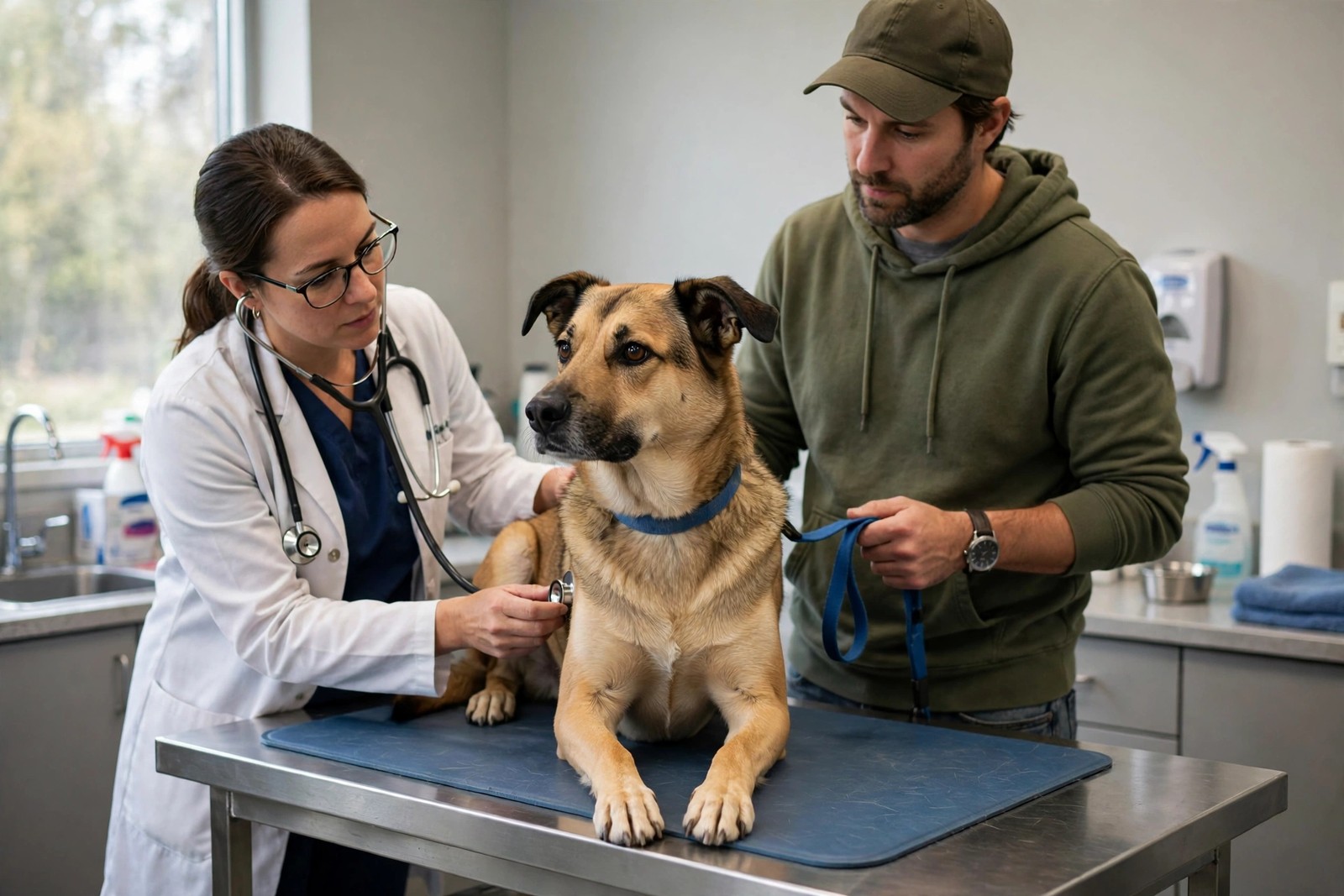
For a newly adopted adult dog, the first vet visit is less a check-up than a starting line: a measured baseline for a dog whose past you may only partly know, against which every future change in weight, teeth, coat, or energy can be judged. Booked within days of his arrival, it turns the rescue's paperwork and your first observations into a clinical picture the practice can build on.
The Examination Itself Sets the Baseline
Expect a full physical examination: teeth and gums, ears, skin and coat, heart and lungs listened to, joints and movement assessed, and weight recorded with a body-condition score. The vet will check vaccination status against whatever records came with him and complete or restart cover where the history is uncertain. Microchip details should be confirmed and transferred into your name at this visit, because a chip still registered to a previous keeper is a reunion waiting to fail. Parasite control — worms, fleas, and anything region-specific — gets reviewed and brought up to date.
Records From the Rescue Shape the Questions
Bring everything the rescue or previous owner provided: vaccination cards, treatment notes, diet details, and any behaviour observations from kennelling or fostering. Gaps in that paperwork are themselves findings — an unknown history may prompt the vet to suggest blood work, particularly for a senior dog or one whose condition does not match his stated age. Arrive with your own short list too: what he eats and how much, how he sleeps, anything you have noticed about drinking, toileting, coughing, or limping in your first days together. Your observations from home often direct the vet's attention to the thing the examination alone would have missed.
What Gets Scheduled Next
A good first visit ends with a plan rather than a verdict: boosters or follow-up vaccinations booked, dental work flagged if teeth need attention, a weight target if he arrived over- or underweight, and a date to recheck anything borderline. Ask what the practice wants to see sooner rather than later, and what can safely wait until he has settled. Settling matters medically as well as emotionally — appetite, stools, and energy in a stressed new home are not yet his true baseline, and the vet may deliberately defer judgement on them until the next visit.
History That Travels With the Dog
When an adopted dog's profile has moved across through Transferrable Profiles in KinsLe, his vaccination dates, past treatments, and feeding routine arrive with him, giving that first examination a complete starting point instead of a blank form.