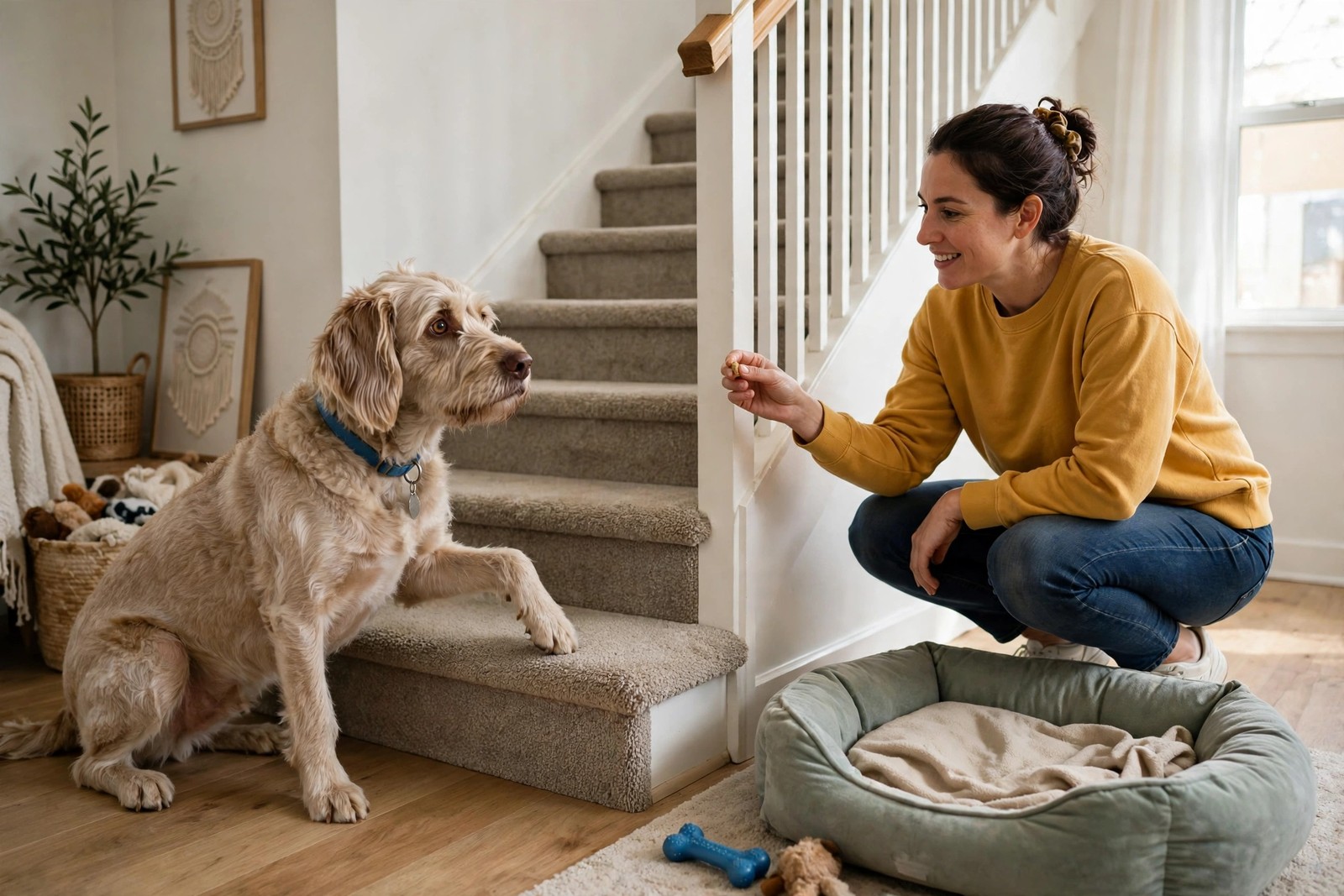
Remove the deadline first: sleep downstairs with her for now, because a dog who must reach the bedrooms tonight will be pressured, lured or carried in ways that make stairs feel even more dangerous. If she is small enough to carry safely and is genuinely calm being carried, that can be a temporary arrangement; if she struggles, is heavy or panics in arms, downstairs sleeping for the household is kinder and safer. Once nobody needs the stairs to work tonight, they can become a training project at her pace.
Check the stairs, and check her body
Before training, look at the staircase through her eyes. Bare wood or laminate is slippery, open risers let a dog see gaps below her feet, narrow turns crowd her, poor lighting hides edges, and a steep pitch that feels ordinary to you can look like a drop to a dog approaching from above. Add secure non-slip treads or a runner where you can, improve lighting, keep the steps clear of shoes and laundry, and fit a gate so access is your choice rather than a daily confrontation.
Book a vet check and say plainly that she fears stairs. Pain in hips, elbows, spine or paws, poor vision and ear or balance problems can all present as refusal, and a dog who associates steps with pain needs that pain considered before any behaviour plan asks her to try harder. If she used stairs before and stopped suddenly, treat that change as a health clue rather than stubbornness.
Start where fear is small, not at the full staircase
Begin away from the main stairs if you can: one or two low, wide, carpeted steps, a kerb, or the bottom step of the staircase in daylight. Reward her for looking at the steps, approaching voluntarily, placing one paw on a step and retreating again, because retreat is information she can use and proof that she is not trapped. Sessions should last a few minutes, end before she worries, and happen when the house is calm, not as the family is heading up to bed.
Let her set the unit of progress. For one dog that is a paw today and a full step tomorrow; for another it is standing relaxed near the staircase for several sessions before a paw appears.
Up is one skill; down is another, harder one
Many fearful dogs manage up before down, because descending puts weight forward, shows the drop and asks for trust in footing she cannot see easily. Teach and reward each direction separately, and do not assume that a dog who climbed up can get herself down; be ready to end a session on a landing, use another route, or carry her if she is safely carryable, rather than leaving her stranded and panicking at the top.
Build height gradually, a step or two at a time across sessions, and practise pausing and turning on a landing or a wide step only when she is ready. Keep a hand near, not gripping, her harness on steeper sections once she is genuinely practising the stairs, and keep other dogs and children off the staircase during sessions so she is never jostled or overtaken.
Live downstairs without apology while she learns
Set up a proper downstairs sleeping arrangement in the meantime, with her bed, water, a night light if she settles better with one, and a person sleeping nearby if separation adds to her distress.
If fear is intense, generalises to other surfaces or heights, or does not shift after patient practice at the easiest level, ask your vet about referral to a qualified behaviour professional, and keep the downstairs arrangement in place while you wait.
With KinsLe's Care Teams, you can assign who sleeps downstairs each night, who runs the short stair-practice sessions and who checks treads and lighting, so she is never rushed by a tired household at bedtime.