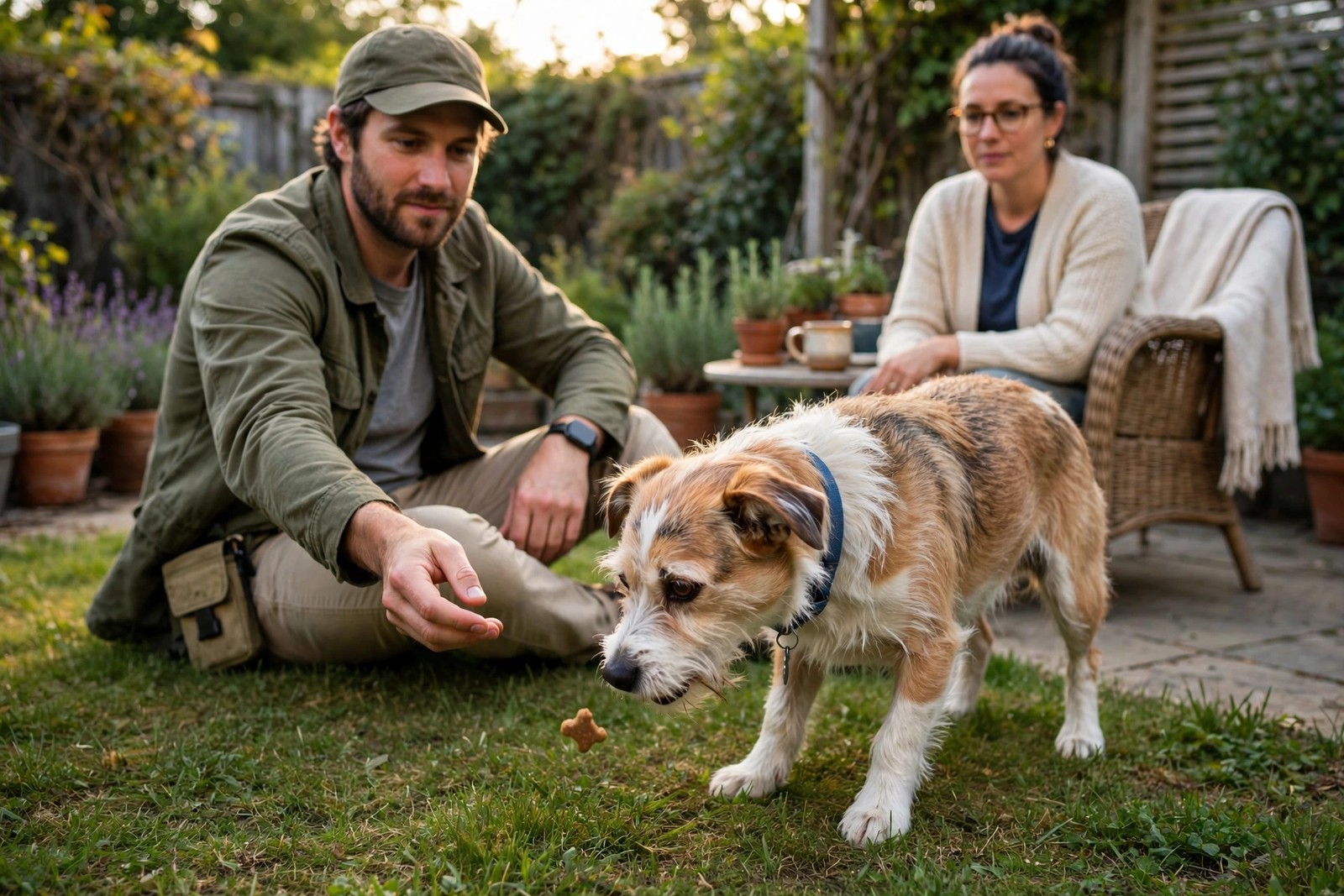
A shy dog does not need a walker who is simply confident; a shy dog needs a walker who becomes familiar in the right order, in the right places, with no stage skipped to meet a start date. The plan below moves from your dog's safest ground, home and garden with you present, to the real job, one small transfer of trust at a time.
Stage One: Home Visits With No Job to Do
Begin with several home visits where the walker has no lead in hand and nothing to ask. Seat the walker sideways rather than facing your dog, let treats be tossed to the floor rather than offered from an outstretched hand, and let your dog choose whether to approach, watch from a doorway, or leave the room. Crouching over a shy dog, reaching for a collar, or following a retreating dog all undo the visit. Short, boring visits that end while your dog is still relaxed teach the key lesson: this person appears, good things fall, and nothing is demanded.
Give the walker your dog's real information at this stage, meaning the cues your dog knows, the distances your dog needs from other dogs and strangers, which treats are worth working for, and what your dog's worry looks like, whether that is freezing, tucking the tail, or going very quiet.
Stage Two: Garden Time and Joint Walks
Move into the garden together once your dog takes treats calmly indoors. Let the walker join the play your dog already enjoys, scatter treats in the grass, and practice a few known cues for easy wins. Then walk together: you hold the lead first while the walker walks beside you, then the walker takes the lead while you stay alongside, then the walker leads while you follow a few steps behind. If your dog keeps looking back for you, that stage needs more repetitions, not more distance.
Keep these joint walks on the familiar route your dog already knows. A new person plus a new route is two challenges stacked, and shy dogs cope far better when only one thing changes at a time.
Stage Three: A Short Solo Walk, Then Length
Only then try a solo walk of ten minutes on the familiar route, timed for a quiet part of the day, with the walker ready to turn for home early if your dog stops enjoying it. Lengthen the solo walk once that goes well, and add busier times of day last. Ask for an honest report after each stage, covering appetite for treats, body language, any lunging, hiding, or refusal to leave the garden, because a walker who reports a wobble plainly is protecting your dog, not failing.
If your dog will not eat in the walker's presence after repeated visits, hides for long periods, or shows growling or snapping as the walker approaches, pause the plan and talk to a qualified behaviorist, and mention the pattern to your vet if it is new or worsening. Some shy dogs need a longer introduction, and a few need a different walker whose pace suits them better.
When the stages are done properly, shy dogs often bond deeply with the person who never rushed them. With KinsLe Care Pass, you can share the staged routine, cues, fears, and contacts with the walker as temporary access for exactly this handover period, so the plan your dog learned with you is the plan that walks out of the gate.