
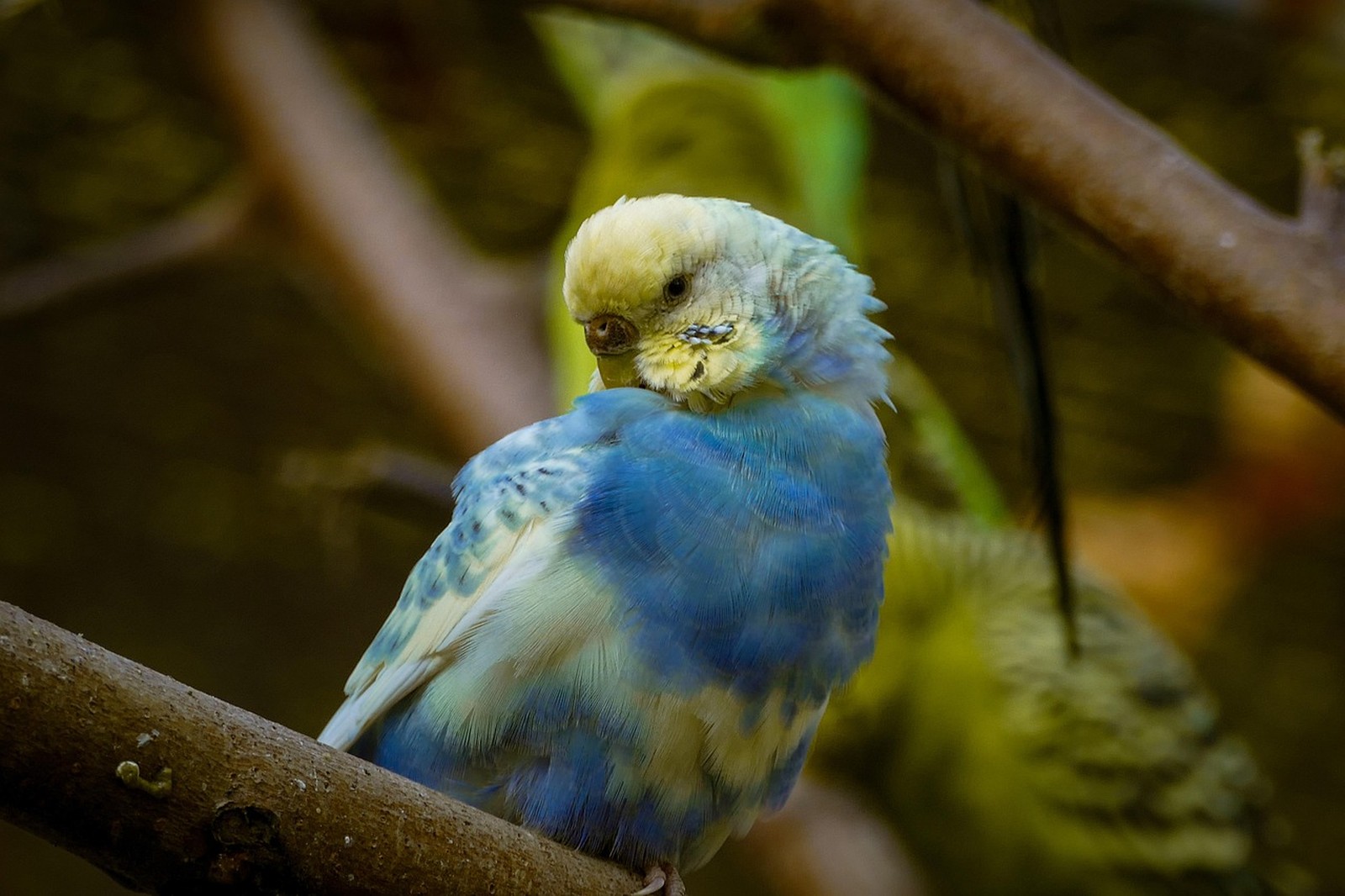
Of all the postures a budgie can show you, this is the one not to watch and wait on. A healthy budgie fluffs briefly — for a short nap, a moment of contentment, or a shake after preening — and then smooths down and gets back to climbing, chirping, and eating. A budgie that stays fluffed and motionless for hours is telling you something is wrong, and with a bird this small, hours matter.
What the Fluffed Posture Means
Birds fluff their feathers to trap a layer of warm air against the body, the way a puffed coat works. A budgie that is cold will do it until the room warms, but a sick budgie does it for a deeper reason: maintaining body temperature while ill takes energy it does not have, so it fluffs, sits still, and spends nothing it can save. In the wild, a visibly weak bird attracts predators, so budgies mask illness as long as they possibly can. By the time one sits fluffed in plain view for hours, it has usually been unwell for a while and has run out of disguise.
Signs That Raise the Urgency
Act the same day if the stillness comes with any of the following: eyes half-closed or the bird sleeping on two feet with its head tucked for long periods, sitting on the cage floor instead of a perch, a tail that bobs with each breath, open-mouth breathing or a clicking sound, droppings that have changed in colour or become watery, food untouched and the keel bone feeling sharp, or discharge around the nostrils. Any breathing difficulty at all is an emergency — keep the bird warm, quiet, and handled as little as possible, and contact an avian veterinarian or emergency clinic straight away rather than trying home treatments or leftover medicines.
What To Do While You Arrange the Vet
Move the cage somewhere warm, calm, and free of drafts, cooking fumes, and scented sprays, and make sure food and water are within easy reach of where the bird is sitting, including on the floor if it will not perch. Note when the fluffing started, whether the bird has eaten, and how the droppings look, because that short history genuinely helps the veterinarian. If the room is simply cold and the bird brightens, eats, and smooths its feathers quickly once warmed, keep a close watch — but a budgie that stays fluffed once warm still needs that call.
Episodes like this are easier to handle when the key facts are already gathered. KinsLe's Pet Passport brings your budgie's veterinary practice, past visits, and health notes together in one packet you can hand over or read from on the phone, instead of reconstructing dates during a stressful call.