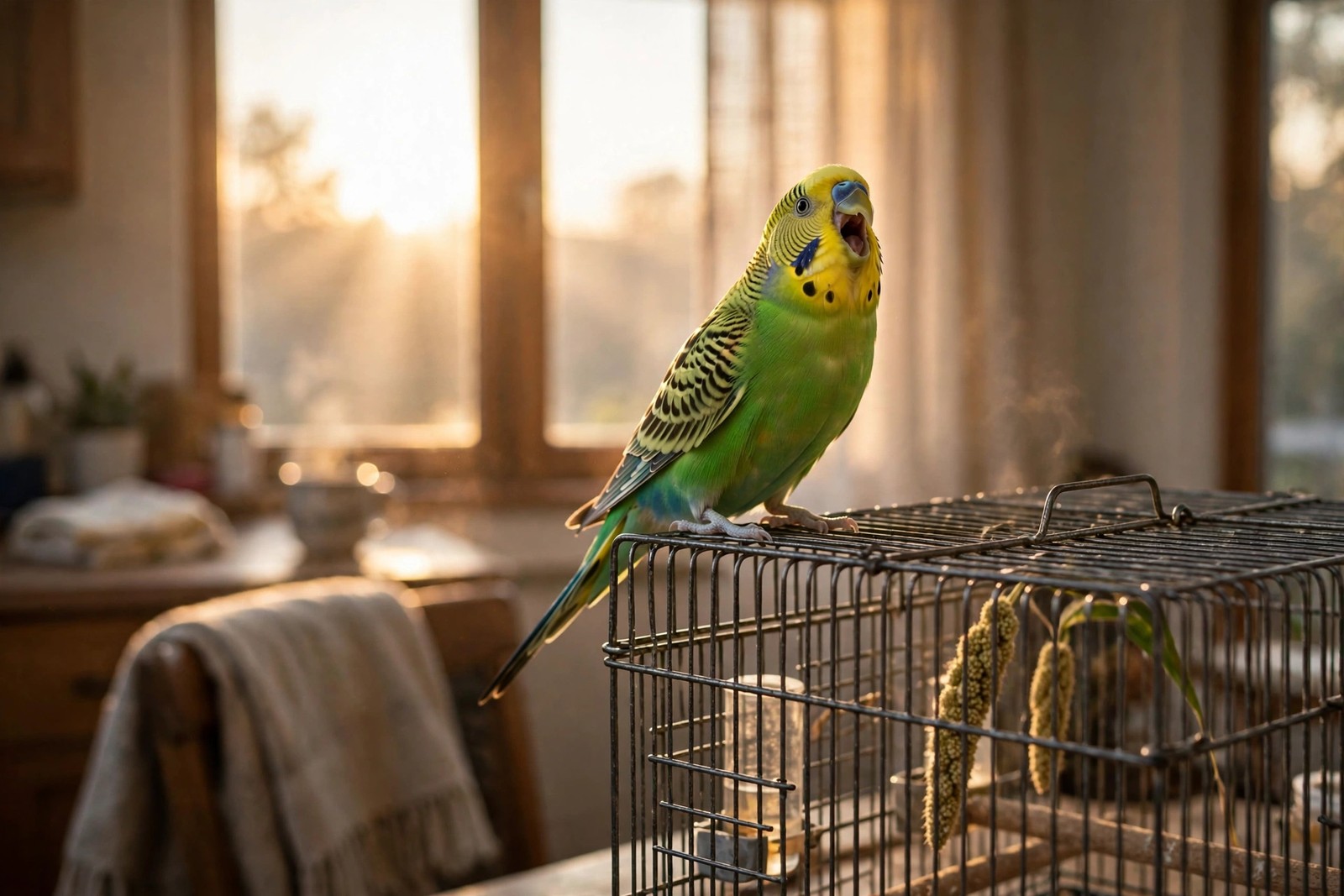
The screaming at sunrise and sunset is one of the oldest pieces of budgie behaviour there is. Wild budgies live in flocks that roost together, scatter to feed, and regroup constantly, and they hold the flock together with contact calls. Dawn and dusk are the two moments that matter most: at first light the flock wakes, calls, and sets off, and as light fades it gathers and settles for the night. Both gatherings are loud. A pet budgie in a living room runs the same programme, calling to the flock it knows, which is you, your household, and any cage companions.
Light is the switch
Because the trigger is light rather than the clock, the screaming shifts with the seasons and with your curtains. A budgie uncovered at dawn will start as the room brightens, while one whose cover stays on until you get up often stays quiet until the cover comes off, then launches the chorus at eight instead of five. Evening calling builds as light drops, peaks, and usually fades once the bird is covered or the room is properly dark. This is why arguments about the bird being noisy at random times rarely fit: plot the episodes and they sit on the light changes, with an extra burst whenever the bird hears its flock, meaning the household, come home or start moving around.
What makes it louder, and what softens it
Volume grows when the call gets an exciting answer. Racing in, shouting back, or dramatically unveiling the cage at the peak teaches a budgie that screaming summons the flock at full volume. A calmer pattern works better: greet the bird warmly once it pauses, keep mornings predictable, and give the peak minutes a job, such as a fresh sprig of millet to work on, a foraging toy, or the morning flight out of the cage. Covering at a consistent evening time, and dimming the room before it, shortens the dusk chorus for many birds. A budgie who screams through the whole day, rather than at the light changes, is telling a different story, often boredom, loneliness, or too little sleep, and a bird whose voice or breathing changes with the calling should see a veterinarian.
You will not train the dawn chorus out of a budgie, and trying to punish it only adds stress to a flock behaviour the bird cannot switch off. Aim instead for a routine the household can live with: steady cover times, a prompt calm greeting, and occupation at the peaks. Recording those wake, feed, and cover times in KinsLe's Care Teams means a partner or sitter keeps your budgie's light routine on schedule, so the morning and evening choruses stay short and predictable rather than restarting at a new hour each day.