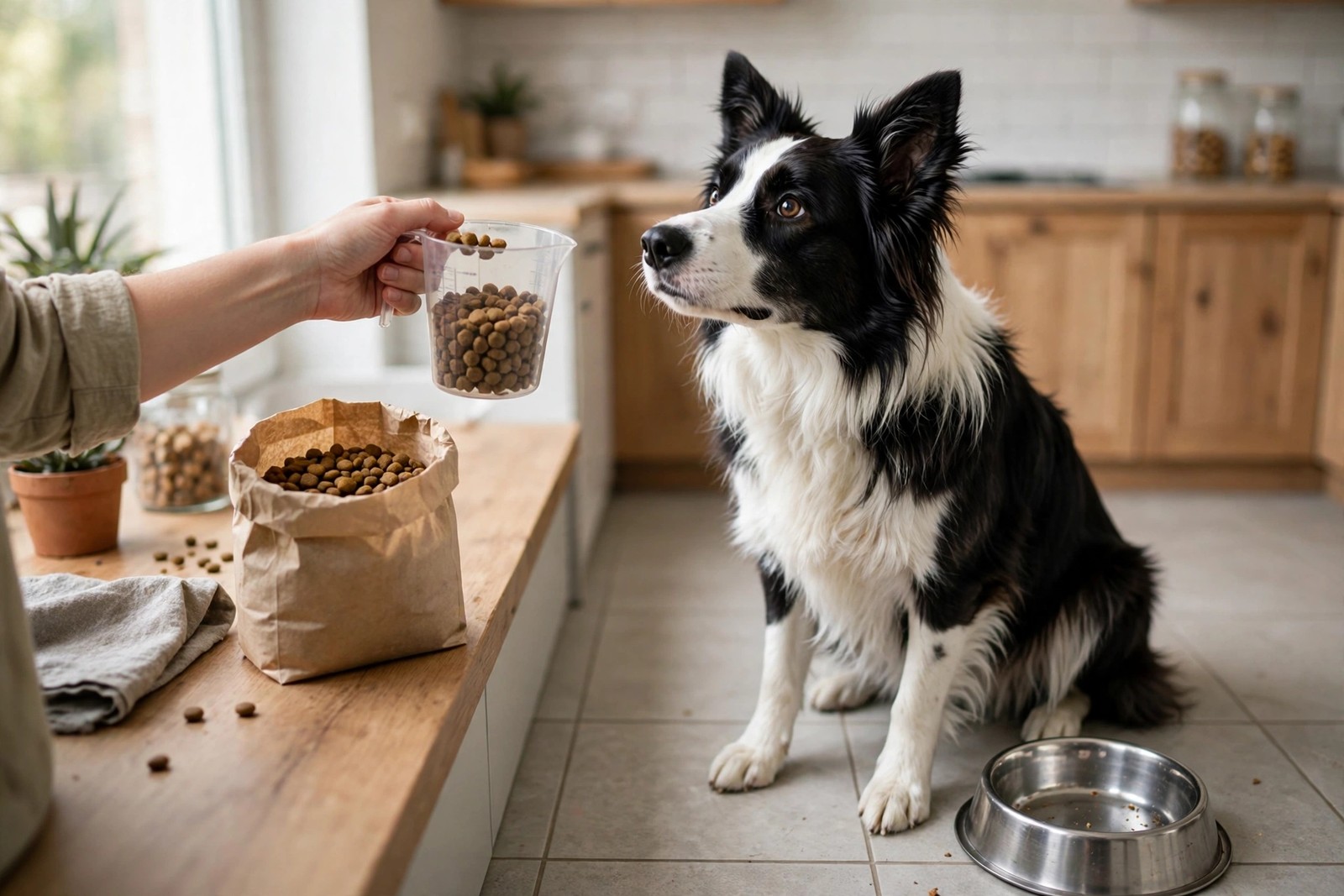
A dog who acts hungry an hour after a full meal is usually not starving, lying, or broken. He is running opportunistic software: for a scavenger, food might vanish at any moment, so eating and asking whenever there is any chance is the strategy that kept his ancestors alive. That instinct sits underneath most cases, but it should not be used to dismiss the others, because the same hopeful face can also be produced by portions that are genuinely short, by a household feeding system with holes in it, by boredom, and occasionally by disease.
The Learned and the Accidental Causes
Begging persists because it works, even occasionally. A single dropped crust every few days is enough to maintain professional-level optimism at the table, and children, guests, and soft-hearted relatives all run their own unrecorded feeding programmes. The most common household accident is the duplicated meal: one person feeds before work, another assumes the dog has not eaten because he is acting, convincingly, as though he has not, and a medium-sized dog quietly receives a large dog's ration. Before changing any food, audit a normal week honestly: measured meals, treats, chews, training rewards, table scraps, and anything scavenged from bins or counters all count toward the same stomach.
Checking Whether the Portion Itself Is Wrong
Acting hungry and being underfed overlap just enough to check properly. Run your hands over his ribs: on a dog at a healthy weight you can feel ribs under a thin fat covering, see a waist from above and a tuck from the side, without hip bones or spine standing out. A dog who is losing weight on his current ration, a growing puppy, a newly active dog, or one recovering from illness may simply need more, adjusted in small steps with weight rechecked over the following weeks. Treats deserve the same scrutiny as the main diet; if extras and chews make up a large slice of the day, he can be simultaneously overfed in calories and underfed in balanced nutrition, and still feel driven to forage.
Boredom Wears a Hungry Face
For an under-occupied dog, food is entertainment, and the kitchen is where the entertainment lives. Dogs with long empty days often develop a convincing hunger routine aimed at whoever is nearest the cupboard, which fades noticeably on days filled with walks, training games, sniffing outings, and food worked for through scatter feeding in grass or a rolled towel rather than delivered in thirty seconds from a bowl. Stretching the time a meal takes and giving appetite somewhere legal to go will not cure a medical problem, but for the bored dog it often reduces the begging more than any portion change.
The Changes That Belong to a Veterinarian
Book a vet visit rather than adjusting food when hunger changes suddenly or arrives with company: weight loss despite a bigger appetite, drinking and urinating much more than usual, a pot-bellied appearance, vomiting or diarrhoea that persists, frantic food stealing from a dog who was previously mannerly, or ravenous behaviour that began alongside new medication, since some medicines are well known for turning appetite up. Conditions affecting blood sugar and hormone balance sit on the vet's list for exactly this presentation, and only an examination and tests can sort them from the behavioural causes, which is why a recent, dramatic change should never be managed by simply feeding more. Once the vet picture is clear, KinsLe's Care Teams closes the household loophole for good: one named feeder per meal, marked done with a timestamp, so your dog's appetite is judged on what he truly ate rather than on his considerable acting talent.