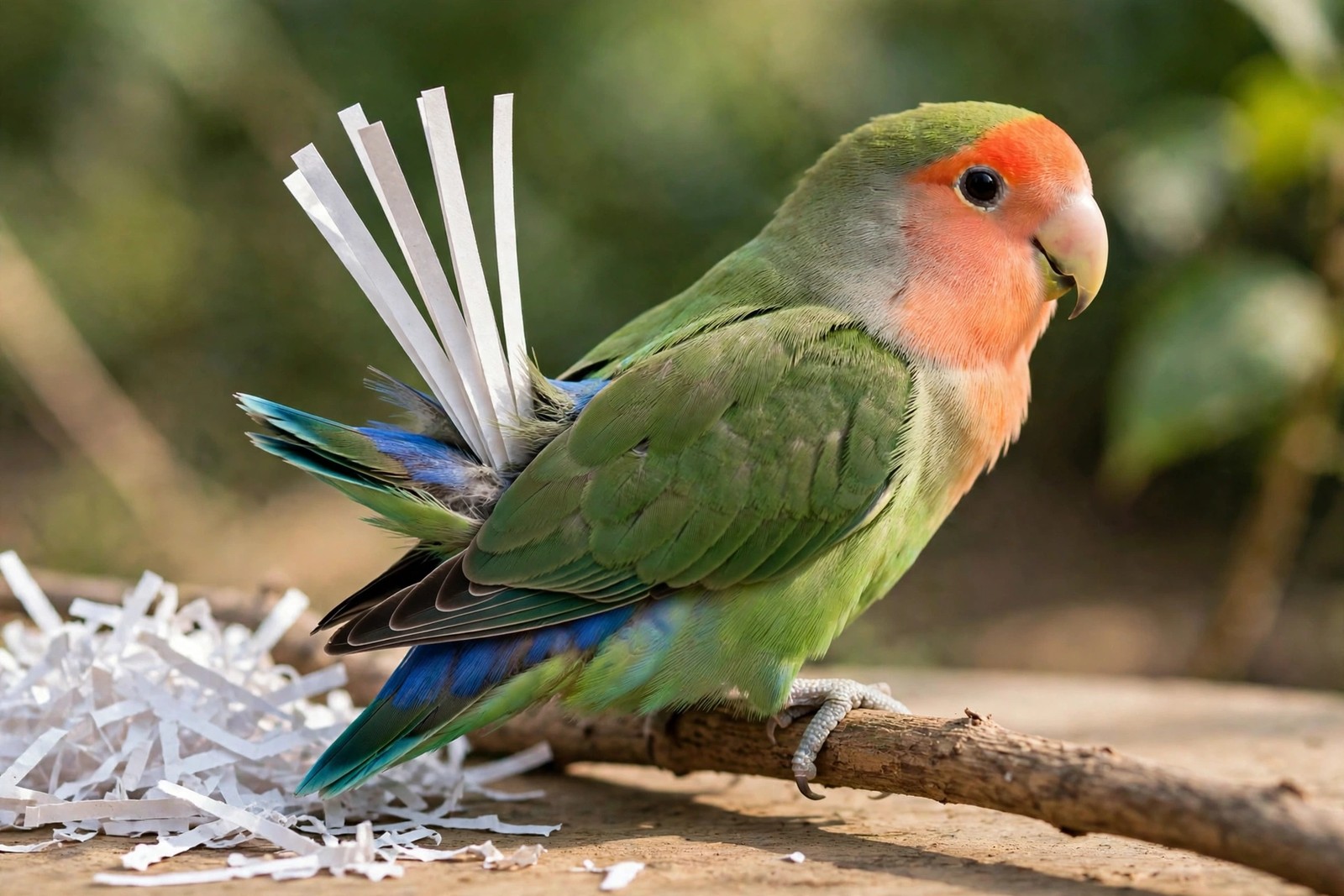
It looks like a costume malfunction: your lovebird backs up to a sheet of paper, works along it with her beak, and flies off with a row of long strips fanned from her tail like a paper skirt. Nothing has gone wrong. She is collecting nesting material using a transport method her species is famous for, and the precision of it, from the cutting to the tucking, is some of the most skilful beak work a small parrot performs.
A Hen's Building Programme
The strip-maker is almost always a hen, and the behaviour switches on when she comes into breeding condition, whether or not a mate, a nest box, or any breeding plan exists in her life. In the wild, peach-faced lovebirds nest in cavities and line them with material such as bark and vegetation stripped from around the site. Your hen is running that same programme on the materials available to her, which is why cage paper, cardboard, and any unguarded envelope get processed with such focus. The cutting itself is deliberate: she works her beak along the paper to produce strips of a fairly even width and generous length, far neater than the confetti a bird makes when simply shredding for amusement.
Why the Tail, Not the Beak
Most birds carry nesting material in the beak, and some other lovebird species do exactly that. Peach-faced lovebirds are the specialists who tuck. A hen works each finished strip into the feathers of her rump and lower back, wedging it firmly among the feather shafts, then flies the whole bundle back to her chosen site in one trip. Carrying several strips at once is efficient, and it leaves her beak free in flight. The system is not flawless: strips work loose and drop, which is why owners find neat paper ribbons on the floor, on shelves, and in corners far from the cage, each one a delivery that did not arrive. She may also shuttle the same strips repeatedly to a corner of the cage, a box, or a dark gap she has chosen as the site, arranging and rearranging them there.
Supporting the Hobby Safely
There is nothing to correct here, and taking strips away or scolding her only frustrates a strong instinct. Set her up properly instead:
- Provide paper that is hers: plain, unprinted paper and simple cardboard she can cut, kept separate from glossy, heavily inked, or adhesive materials, which are not for chewing.
- Expect the chosen nest corner to become defended. A hen mid-project may guard her site and bite fingers that reach for it, so clean that area while she is out of the cage.
- Keep the rest of the routine steady, with regular sleep in quiet darkness, which helps keep breeding condition from tipping into relentless egg-laying.
- Watch the line between hobby and strain. Repeated egg laying, straining, sitting fluffed at the cage bottom, weakness, or a swollen vent area are not part of the paper game, and those signs need an avian vet promptly.
A male may occasionally experiment with a strip, but sustained, skilful tucking is the hen's signature, and many owners take the first paper skirt as the moment their bird's sex became obvious. Supply the paper, sweep up the dropped deliveries, and let her build, and KinsLe Care Teams keeps the small daily jobs behind the hobby organised by assigning the fresh-paper provision and cage tidy to a named family member, timestamped when done.