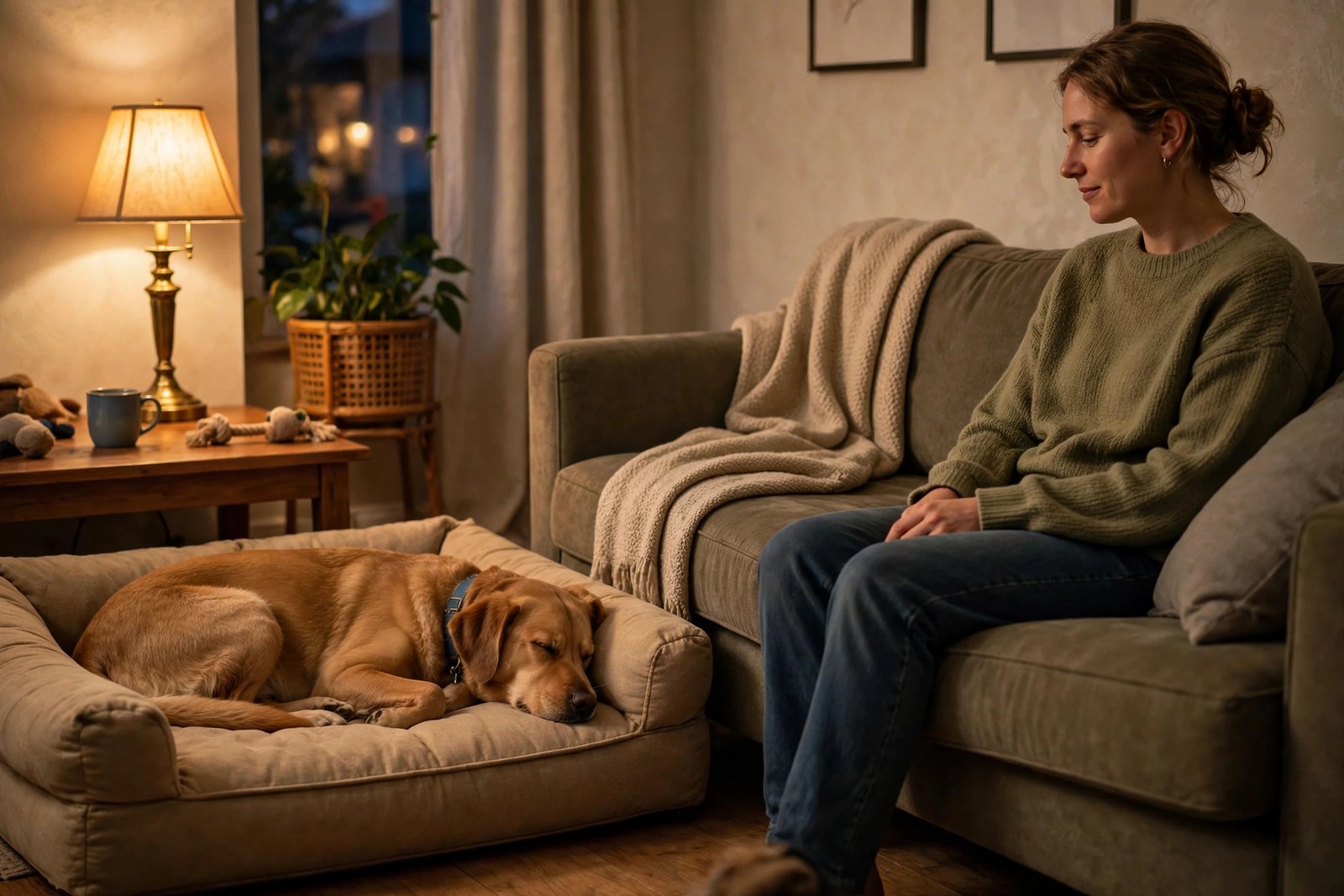
Read the pattern, not the relationship. Evenings change the calculation: a dog is tired, possibly sore, and less tolerant; the sofa is at its most valuable as a warm resting place; and your partner's approach may differ from yours, by leaning over her, pushing in beside her, or arriving after she has already settled. You, her daytime sofa companion, are part of the safety of that spot, while your partner arrives as a change to it. Guarding is about the resource and the moment, not favouritism or spite, and treating it as a loyalty contest will miss the lever that actually changes it.
Why evenings, why the sofa, why your partner
Tiredness lowers tolerance in dogs as it does in people. A dog who shares happily all day may guard in the evening because she has used up her patience, her joints ache after a long day, or she is already half asleep and startles when a new person joins her. The sofa adds value: it is warm, elevated, close to a favoured person, and scented with the household, so losing it feels larger than losing a floor cushion. Sitting down beside a settled dog, leaning over her to reach a cushion, or stepping between your dog and the wall can all feel like pressure, especially if your partner arrives from standing height while you have been sitting beside her for hours.
A new pattern also deserves a health check in the background. Guarding that starts suddenly, grows quickly, or arrives with stiffness, reluctance to jump, appetite change, or sensitivity to touch should prompt a vet conversation, because pain can turn a tolerant dog into a guarding dog.
A sofa plan that lowers the stakes
Pause sofa privileges for a while, for everyone, so the sofa stops being a contested prize. Give her a superb bed beside the sofa, at the same height if possible, with a blanket that carries her scent and a chew or a stuffed food toy at settling time. Invite her to the bed, reward her for choosing it, and let your partner become the source of good evening things delivered to that bed: a calm greeting, a treat placed gently beside her, and then space. Your partner should avoid leaning over her, pushing in beside her, or reaching across her, and should instead approach from the side, speak calmly, and wait for her to shift before sitting nearby.
Teach a reliable off cue separately, in daylight, with a high-value reward and a clear landing place, so 'off' is a trained, rewarded move rather than a nightly argument. Never punish a growl by scolding, cornering, or physically removing her, because a growl is a warning, and a dog who learns that warnings are punished may skip the warning next time. If growling continues, hardens into snapping, or spreads to other resources such as food, toys, or doorways, seek a qualified behaviour professional promptly and keep the management in place meanwhile.
Making the evening routine fair to everyone
Consistency across the household is the part that usually fails. If you allow her on the sofa during the day and your partner removes her in the evening, she learns that evenings bring conflict, and your partner becomes the evening conflict. Agree one rule for the whole household until the guarding eases: the same bed, the same invitation, the same treat routine, and the same calm approach from both people.
That shared approach also protects the relationship in the house. Your partner is not the problem, the dog is not being spiteful, and the evening is not a test of loyalty. The problem is a tired dog, a valuable spot, and an approach that feels like pressure, and all three can be changed without blame. KinsLe's Care Teams supports that shared evening plan, because sofa privileges, bed training, and evening treat deliveries for this dog can be assigned to named family members and marked complete with a timestamp.