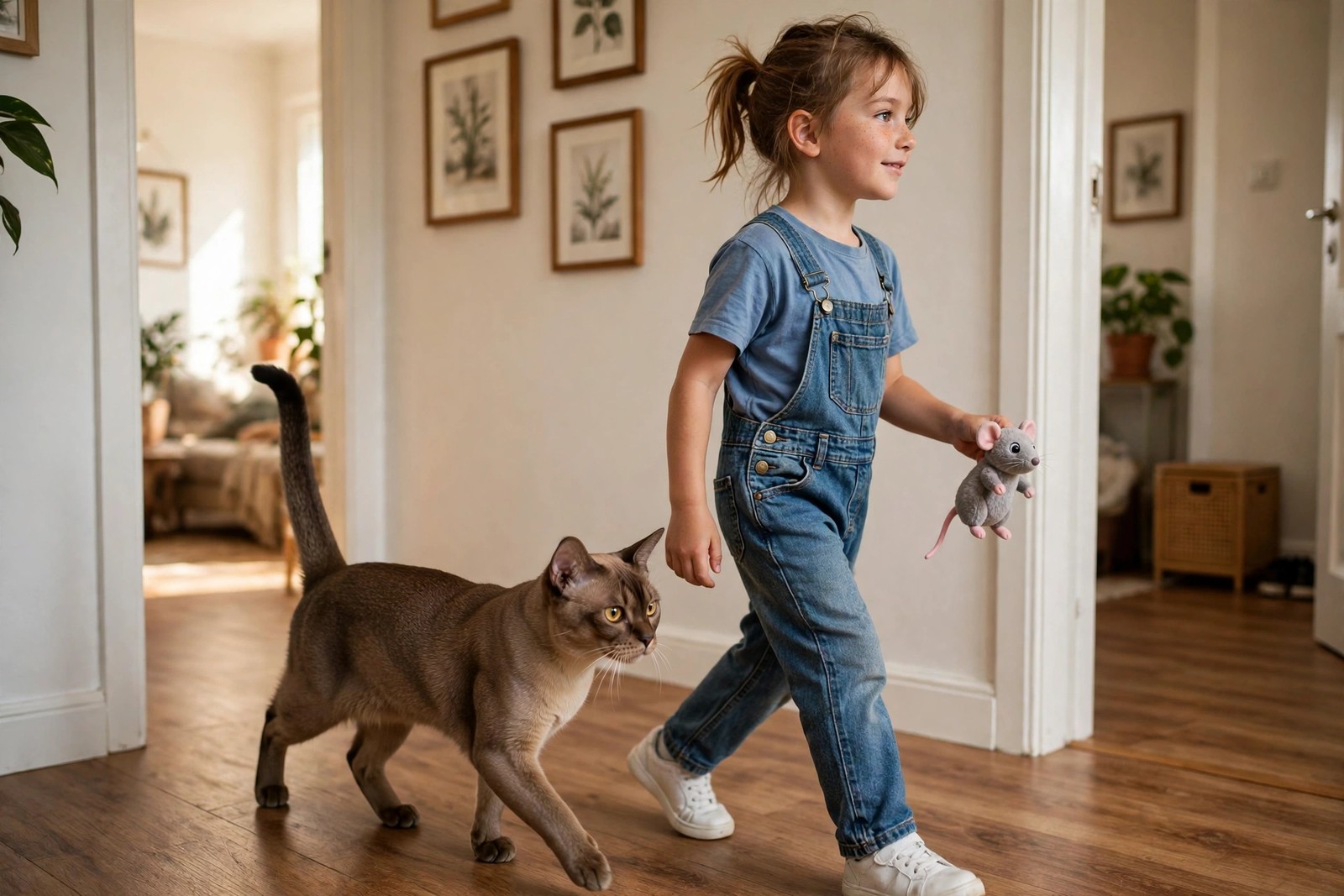
Yes, emphatically — if any breed actively votes in favour of children, it is the Burmese. Where some cats tolerate a family, a Burmese organises its day around one. These are famously people-oriented cats: playful, persistent, affectionate and deeply interested in whatever their humans are doing, and a household with children offers the one resource a Burmese values above all others — available playmates.
A Temperament Built for Family Life
Burmese keep a kittenish playfulness for years, often fetching toys, inventing games and racing to greet people at the door. They are typically confident with household noise and visitors rather than hiding from them, and they form strong attachments to every member of the family rather than choosing a single person. For a child, that means a cat that genuinely participates: following them from room to room, sitting on the homework, riding out a rainy afternoon of indoor games, and sleeping as close to a person as it is allowed.
They are also a solid, muscular medium-sized breed — sturdier than the fine-boned orientals they are sometimes grouped with — which helps in a home where handling is enthusiastic. Sturdy still has limits, set out below.
The Rules That Keep It Sweet
A Burmese's enthusiasm should not be mistaken for endless tolerance:
- Teach children to play with toys, not hands — a people-focused cat taught that hands are toys becomes a grabby adult
- No carrying the cat around the house or restraining it for cuddles; a Burmese that wants a lap will find one itself, constantly
- Supervise toddlers as with any breed, and intervene when play gets frantic on either side
- Give the cat a high perch and a quiet room for retreat, because even a social cat needs an off switch
The One Real Requirement: Company
The genuine caution with a Burmese in a family is not the children — it is the empty house. This breed can become unhappy, vocal and sometimes destructive when left alone for long working days, and families are often out more than they admit once school, work and activities are counted. A second cat, a household member home during the day, or a deliberate rota of attention is close to a requirement. Many owners solve it with two Burmese, who entertain each other lavishly.
If your household is lively, home a fair amount and ready to be adored at close range for fifteen years or more, a Burmese and your children will likely be devoted to each other. KinsLe's Care Teams helps guarantee the company this breed runs on, letting you assign play sessions, meals and check-ins for your Burmese across the family's schedules — so even on the busiest school-and-work day, somebody's turn with the cat is named, notified and done.