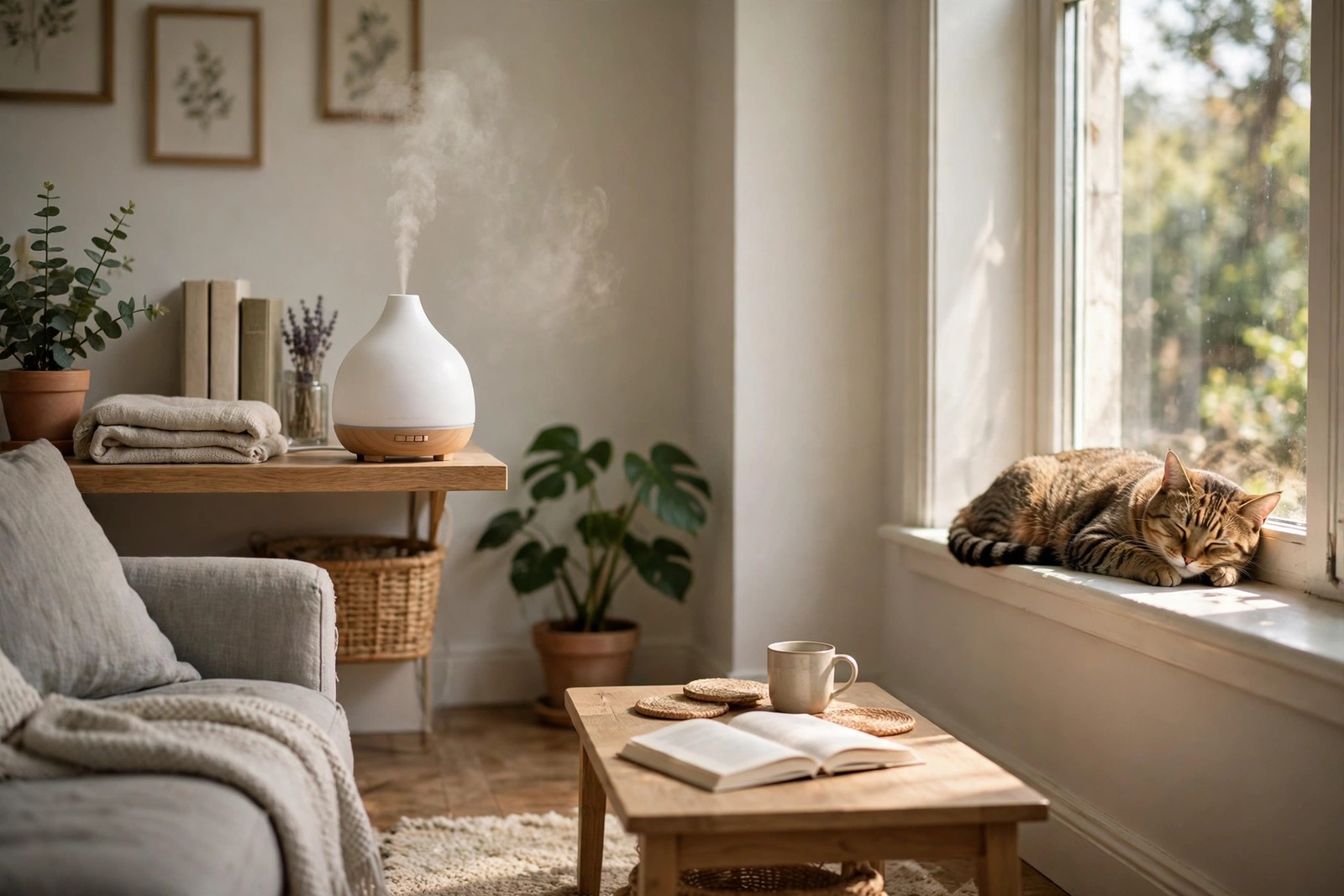
The short answer is that a diffuser is not safe or unsafe on its own. The oil inside it, how the device releases that oil, and whether your cat can walk away from the room decide the risk. A cat breathing scented mist for hours in a closed bedroom is in a very different situation from a cat who passes through a ventilated living room with a reed diffuser on a high shelf.
Why Cats React Differently
Cats are missing a liver pathway, involving an enzyme group often described as glucuronidation, that dogs and people use to process certain plant compounds. Phenols and some monoterpenes therefore linger in a cat's system longer. Tea tree oil is a well-known concern, and concentrated wintergreen, pine, ylang ylang, peppermint, cinnamon, clove, and citrus oils also carry risk, especially in undiluted form. Kittens, senior cats, and cats with liver or breathing problems have even less margin, so a product another household uses without incident can still be the wrong choice for yours.
Passive Versus Active Diffusers
Reed diffusers and simple scent stones release fragrance slowly and stay in one place, which makes them easier to keep behind a closed door. Ultrasonic and nebulising diffusers push tiny droplets into the air. Those droplets can settle on fur, and a cat then grooms them off and swallows them. Heat diffusers and candles add an open flame or hot surface near a jumping animal. If you diffuse at all, choose a passive type, run active devices only briefly, open a window, and never lock your cat in the room with one running.
Rules That Lower the Risk at Home
Keep bottles capped, stored in a closed cupboard, and never apply essential oil to your cat's fur, ears, collar, or bedding as a flea remedy or calming trick. Place the diffuser where it cannot be knocked over onto a sleeping cat, and watch the first sessions closely. Leave the door open every time, because a cat who dislikes a scent will usually leave if leaving is possible. Birds and small mammals in the same home are also sensitive to strong airborne fragrance, so one household rule should cover every pet, not just the cat.
Warning Signs That Need a Vet Promptly
Drooling, pawing at the mouth, watery eyes, coughing, sneezing fits, vomiting, trembling, wobbling, unusual hiding, or sudden lethargy after a diffuser has been running are not wait-and-see signs. Move your cat into fresh air, turn the device off, and call your vet or an animal poison service promptly, taking the oil bottle with you so the exact ingredients are known. Do not try to make your cat vomit and do not apply other oils hoping to counteract the first one. Note the time exposure started, how long it lasted, and what you saw, because that timeline helps the vet judge seriousness far better than a general description given days later.
A Safer Way to Make a Home Smell Good
Many owners find the honest trade is simple: unscented cleaning, an open window, baking-free fresh bedding, and a regularly washed litter area solve most odours without adding anything to the air. If scent matters to you, keep it to rooms your cat does not use, for short periods, with ventilation. The goal is not a perfectly fragranced house; it is a house your cat can breathe in comfortably every day. Recording the oils in your home, the rooms you use them in, and any reaction you ever notice inside KinsLe's Pet Passport means that information travels with your cat to routine visits, boarding stays, and emergencies alike.