Yes. A Manx can be very content as an indoor cat, and indoor life suits a breed that bonds closely to its people and plays like a dog. What a Manx cannot do happily is sit still all day. This is a muscular island breed with hind legs longer than the front legs, a rounded rump, and a springy, rabbit-like hop when it moves fast. Kept indoors without an outlet for that athleticism, a Manx gets bored, noisy at night, and prone to piling on weight. Kept indoors with proper outlets, most settle beautifully.
The Tail Question and Balance
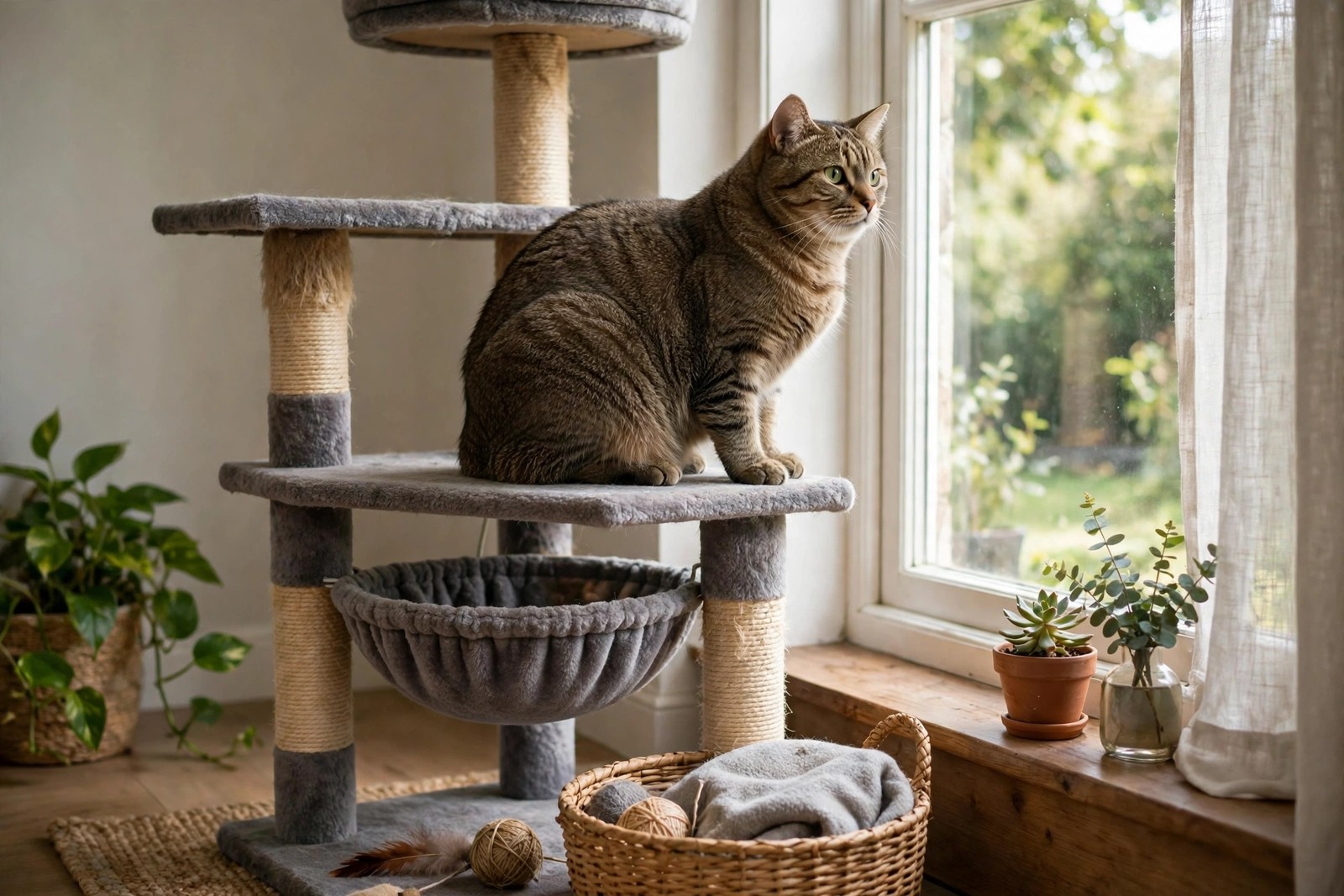
New owners often worry that a cat with no tail, or only a short stump, will struggle to balance on fences, shelves, and narrow perches. In practice Manx cats climb, land, and turn with confidence, because balance depends on the inner ear, vision, and body awareness as much as on a tail. Expect a slightly different style rather than a clumsy cat: powerful jumps from those long hind legs, confident leaps onto high furniture, and a preference for surveying the room from above. Secure tall furniture to the wall, give a sturdy cat tree rather than a flimsy one, and let the cat choose its heights.
What Indoor Life Must Include
Play is the main requirement. Two or three interactive sessions a day with a wand toy let a Manx stalk, chase, and pounce in sequence, and many will retrieve a small toy and drop it at your feet for another throw. Rotate puzzle feeders so part of the daily food is earned rather than simply served, and keep a window perch free so the cat can watch birds and street life. A second pet can suit this social breed, provided introductions are gradual, but human company matters most: a Manx left alone for very long working days, with no midday visit or play, is the setup most likely to produce a frustrated cat.
Watch the Manx-Specific Points
The gene that shortens the tail can, in some cats, affect the spine and nerves, so choose a kitten from a source that can talk honestly about health, and mention any litter-box difficulty, hind-leg weakness, or hopping gait that changes to a vet promptly rather than treating it as a breed quirk. Adult Manx cats also gain weight easily once the kitten energy fades, so weigh yours every few months, feel for ribs under a light covering of fat, and adjust portions in small steps if the rounded body turns soft rather than muscular. Indoor living makes that easier, because every meal and treat is one you served.
For the right home, then, the answer is a comfortable yes: a Manx indoors is a playful, devoted, slightly dog-like companion, provided the home supplies height, hunting games, and people. For a cat this active indoors, KinsLe Family Sharing handles the profile side: relatives you pick get their own access to the Manx's profile.